US must play by FDI rules
The fifth China-US Strategic and Economic Dialogue, held earlier this month, has produced tangible results in a wide range of areas of long-term strategic importance. One of the most important outcomes of the meeting was the decision to resume negotiations on a "Bilateral Investment Treaty", because it will have a great impact not only on China and the US, but also on many other trading countries.
For more than two decades, China has been the largest recipient of foreign direct investment (FDI) in the developing world. Now, it is emerging as an important source of outbound direct (ODI) investment. The US, on its part, has been the leading country in terms of both FDI inflows and ODI outflows for decades, and thus still wields great influence on global trading rules.
So, if China and the US agree to a BIT, it will serve as a model agreement for China and most of its trading partners. Part of the treaty could even be incorporated into regional economic integration and World Trade Organization agreements.
But it's the US that holds the key to bilateral negotiations. Among the existing bilateral agreements on reciprocal investment, an exchange of notes in the early 1980s guarantees protection to US investments in China based on the US overseas investment insurance policy. But there is no bilateral agreement or exchange of notes to protect Chinese investments in the US.
Over the past decades, China has been taking measures to attract FDI by creating a favorable environment for foreign businesses in the country. It offers a series of preferential policies to foreign-funded companies, which has immensely benefited US-invested businesses. China has also been taking steps to further improve the investment environment and will continue to welcome law-abiding investors from around the world, including the US.
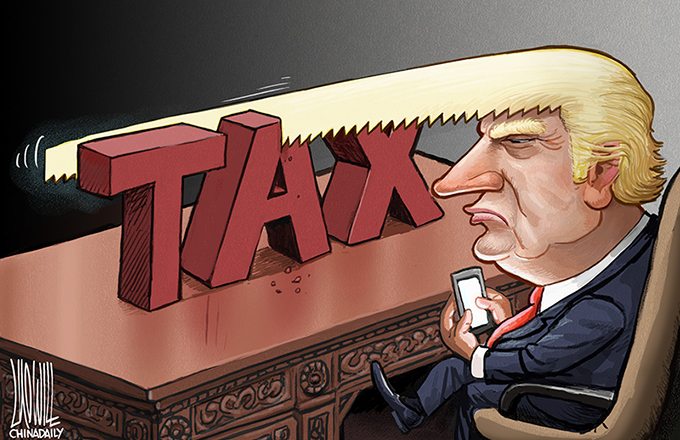
In comparison, the treatment meted out to Chinese investors by the US is step-motherly, to say the least.
Former US president Calvin Coolidge said the chief business of the American people is business. Indeed, the US has the most liberal policies toward business, which helps it attract foreign capital and talent. It also offers a sound business environment in which licensed domestic and foreign-funded companies don't have to worry about social unrest and other problems that are common in developing countries. The US, however, is also known for its political censorship in the name of national security.
Chinese direct investment in the US started in the early 1990s. But over the past few years, the US has been trying to stop Chinese companies from tapping the American market, because it wrongly sees China as a security threat and Chinese businesses as unfair competitors of American companies. In more ways than one, the US has become a politically unfriendly destination for Chinese investors.
The US' history of unfriendliness started in February 1990, with former president George H.W. Bush exercising his executive powers under the Exon-Florio Amendment, a law enacted to review foreign investment in the US, to nullify the sale of aircraft spare parts by Seattle-based Mamco to China National Aero-Technology Import and Export Corporation. Bush's contention was that the Chinese company might impair national security.
In 2003, Hong Kong-based conglomerate Hutchison Whampoa dropped its plan to acquire American telecom company Global Crossing after the Committee on Foreign Investment in the United States launched an investigation into the deal citing national security concerns.
In 2005, China National Offshore Oil Corporation had to drop its acquisition bid for California-based oil company Unocal because of American politicians' opposition, which was based on fears that the deal would pose a national security threat.
In 2008, Chinese information and communications technology solutions provider Huawei partnered with US asset management company Bain Capital to acquire US-based digital electronics manufacturer 3Com. But the deal fell through, again, because of US national security concerns.
In 2010, Huawei was stopped from purchasing the mobile wireless network division of Motorola. And in 2011, it had to pull out of a deal to acquire bankrupt US server company 3Leaf Systems on the recommendation of the inter-agency committee.
Not content with blocking Chinese investments in the US, some American politicians have even criticized Chinese companies' forays into other countries. Back in the 1990s when Hutchison Whampoa acquired control of two ports on the Panama Canal, some US politicians said giving exclusive rights to the company to run the ports could provide cover for China's spying network.
When PetroChina launched its initial public offering road show in New York a few years ago, some people started a disinvestment campaign against the company and even lobbied fund managers to avoid its shares because its parent company had business in "genocide-wracked" Sudan.
The US' political censorship in the name of national security concerns is the major stumbling block for Chinese investors in the US. Of course, the US has also paid the price for its actions by losing huge amounts of investment inflows, which could have created many jobs and earned the government handsome tax revenues.
With the unemployment rate still high, the Barack Obama administration is keen on attracting foreign investment to stimulate the labor market. And SelectUSA, which highlights the advantages of the US as an investment destination, lists emerging countries like China as the key targets. Therefore, the two countries would gain immensely if they agreed on a BIT and Washington played by the rules in clearing Chinese investments in the US.
The author is a researcher at the Chinese Academy of International Trade and Economic Cooperation, affiliated to the Ministry of Commerce.
(China Daily 07/24/2013 page9)