Progress in China's human rights
Citizens' right to health is better protected. China has established a medical care system that covers both urban and rural areas, which comprises the public health service system, the medical service system, the medical security system and the drug supply system. By the end of 2012 there were 950,000 medical institutions, 6.686 million medical workers and 2.619 million certificated (assistant) doctors, an average of 1.92 doctors for every 1,000 people. There were 2.5 million registered nurses - or 1.83 for every 1,000 people. There were 5.73 million beds in medical institutions - or 4.19 beds for every 1,000 people. In 2010, the average life expectancy of the Chinese people reached 74.8 years. The proportion of personal medical expenses paid in cash declined from 57.7 percent in 2002 to 34.8 percent in 2011. Marked improvement has been witnessed in equal access to basic public health services. The per-capita allowance for basic public health services was raised from 15 yuan in 2009 to 25 yuan in 2012. The state provides 41 types of basic public health services in ten categories gratis to all residents. In 2011, the national vaccination rate under the state immunization program reached 90 percent and higher, and the hospitalized delivery rate stood at 98.7 percent. In 2012 the NPC Standing Committee enacted the Law on Mental Health, aiming to protect the legal rights and interests of people with mental disorders, developmental health services, ensure the mentally-ill to have access to medical treatment and promote citizens' mental health. China has formulated the Working Plan for the Prevention and Treatment of Chronic Diseases (2012-2015) and a series of other policy documents and guidelines on the prevention and treatment of such diseases. Patients infected with major infectious diseases such as HIV, tuberculosis, schistosomiasis, echinococcosis, leprosy and malaria can get free medication. China has taken the lead in eliminating filariasis among 83 countries and regions where it is endemic. Since 2010 the state has poured 53.04 billion yuan into strengthening the building of a grassroots medical health service system. By 2012 there were 912,000 grassroots medical and healthcare institutions, which included 8,176 community health service centers, 25,000 community health service stations, 37,000 town and township hospitals and 653,000 village clinics, with a total of 1.234 million beds. The state has also carried out a project to send 10,000 doctors to support rural medical work. From 2009 to 2011 over 1,100 Grade-A hospitals in cities gave assistance to 955 county hospitals, and medical institutions above Grade B in cities in central and western China gave assistance to over 3,600 town and township hospitals every year. By the end of 2012 the basic drug system had gained a full coverage, with all grassroots government-run medical and health institutions supplying essential medicines without adding a surcharge for the resale of the drugs. This system is now being extended to the village clinics and non-government medical and health institutions.
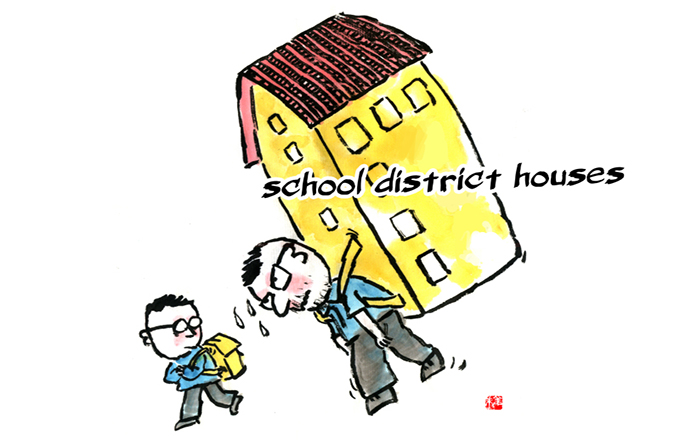
Citizens' right to education is further protected. The state has promulgated the Outline of the State Medium- and Long-term Program on Education Reform and Development (2010-2020). Since 2010 the government spending on education has been increasing rapidly. The expenditure from public finance on education increased from 1.255 trillion yuan in 2010 to 2.1165 trillion yuan in 2012. The newly added educational expenditure goes mainly to the rural areas, with 246.5 billion yuan for rural compulsory education from the central budget. The state has successively put into force a program to ensure safety of all primary and secondary school buildings across the country and a program to upgrade rural schools with poor compulsory education conditions. The state has put in place a system of assistance to students with financial difficulties, covering every schooling stage from preschool to postgraduate education, with subsidies close to 100 billion yuan every year, benefiting about 80 million students. By 2012, about 120 million rural students receiving compulsory education benefited from exemption of all tuition and miscellaneous fees as well as free textbooks, and over 13 million rural boarders from poor families received subsidies. The state has also launched a nutrition-improvement plan for rural students receiving compulsory education. By the end of 2012 the central finance allocated a special fund of 19.1 billion yuan for the plan, benefiting about 30 million students. Since 2010 the central government has invested a total of 29.7 billion yuan to support more than 10,000 schools in building or renovating facilities such as student dormitories and dining halls. The nine-year compulsory education has been implemented in all counties in China, covering all the population and benefiting 160 million students. In 2012, the number of students graduating from primary and middle schools reached 91.8 percent of the total enrollment, and the average years of schooling for people above 15 reached over nine years, surpassing the world average level; the gross enrollment ratio of senior high schools was 85 percent, equivalent to the average level of developed countries; and the higher education gross enrollment ratio was 30 percent, with the on-campus student population reaching 33.2521 million, ranking first in the world. The number of students applying for admission into universities and colleges was 9.22 million and 6.91 million were admitted, with the national average admission rate standing at 75 percent. There are altogether 139,900 non-state-run schools (educational institutions) at different levels, with an on-campus student population of 39.1101 million. There are 13.9387 million children of rural migrant workers receiving compulsory education in cities, accounting for 9.7 percent of all the students who are receiving compulsory education, and 80.2 percent of them attend government-run schools. Different kinds of complete educational systems from preschool education to higher education have been established in areas inhabited by ethnic minorities in compact communities, and the schooling years of ethnic minorities have been markedly increased. By the end of 2012, the total number of on-campus ethnic-minority students at all levels had reached 23.8448 million, 9.27 percent of the national student population. There are 15.1546 million ethnic-minority students receiving compulsory education, with those receiving secondary education accounting for 9.39 percent of the national total and those receiving elementary education accounting for 10.7 percent of the national total.