Defeat challenges, realize Chinese Dream
After being elected China's president, Xi Jinping left the world speculating when he spoke of "striving to achieve the dream of the great rejuvenation of the Chinese nation". One Western newspaper even said that it was a collective national dream, unfavorably contrasting it with the "American dream" of giving individuals equal opportunities.
But for the Chinese, the dream of the nation's rejuvenation is a reminder of the collective humiliation they suffered during the colonial era. For them, it means winning back China's place as a world leader in science, technology, economy and culture.
High economic growth in recent decades may have made China more confident of realizing the Chinese Dream, but the country's new leaders face serious challenges that could hamper their efforts to realize the goal.
First and foremost is the need to fight widespread corruption. Making this his main priority, President Xi warned that corruption could lead to "the collapse of the Party and the downfall of the State". New leaders generally vow to eliminate corruption, but few have succeeded because of various factors, not least being the machinations of vested interests. If President Xi wins this battle, it would be a great achievement.
Second are the administrative procedures and abuse of official power, resulting in inefficiency and injustice right down to the local level, which in a way are related to corruption.
At his first press conference, Premier Li Keqiang promised to shake up the system, though he acknowledged the difficulties in "stirring vested interests". Li promised that a third of the 1,700 items that require the approval of government departments would be cut.
Frugality is to be the new hallmark. Spending will be reduced in government offices, buildings, travel and hospitality (no more large official banquets), and the savings will be redirected to social development.
Third are the complexities of running China's large and complicated economy. China aims to grow at a steady rate of 7-8 percent a year. This could be a problem because the rest of the global economy is in a bad shape. The country, therefore, has to shift from export-led to domestic-demand-led growth, and from investment-led to consumption-led domestic growth. But implementing this new growth strategy, which the government has accepted, will not be easy.
There are also the challenges of managing the currency, the huge foreign reserves and the regulation of capital flows, with the aim of having finance serve the real economy without becoming a source of instability.
In foreign trade, China has built a powerful export machine. But growth of exports to the West is slowing down because of near-recession, and Western developed countries are using new forms of protection (such as tariff hikes using anti-dumping and anti-subsidy measures) against Chinese imports.
At the same time, other developing countries are becoming wary of increasing imports of cheap Chinese goods. How can China be sensitive to their concerns, strike a balance and ensure that the benefits are mutual?
Fourth are China's social problems. Poverty is still significant in many areas. The rich-poor gap has been widening and the urban-rural development imbalance is severe, which could be politically destabilizing. Diverting wealth toward the lower income groups can meet two goals. It can reduce social inequalities and provide the demand base for consumption-led growth. The policies can include wage increase, government provision for social services and transfer of income to the poor.
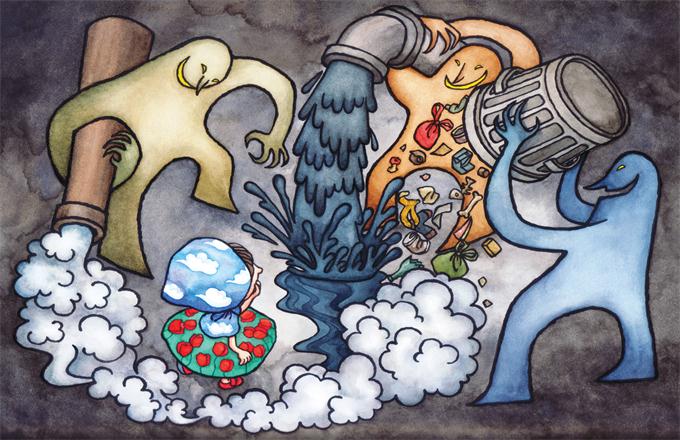
Fifth is the need to tackle China's environmental problem, which includes emerging water scarcity, increased flooding, and air and water pollution. Recent studies show the health dangers posed by air pollution, and link it to 2.6 million people who die from cancer annually. And since many of the mass incidents in China in recent years have been over environmental issues, including polluting industries, the challenge for China is to integrate ecological concerns into its development strategy.
Sixth are China's foreign relations. Xi has reaffirmed China's principle of "peaceful development" and that the country will never seek hegemony. But to win the trust of its neighbors, China has to settle its territorial disputes in the East China Sea and South China Sea peacefully. China, which is still a developing country in terms of per capita income and other characteristics, also needs to stand with the rest of the developing world in international negotiations.
China is a rising power and is viewed as a rival by countries that fear losing their dominant status. Maintaining political stability with such powers is important for China, although the onus for that is not on China alone. Most difficult for China would be managing foreign relations with developed countries, especially the United States.
These are only some of the hurdles China faces on the road to realizing the dream of national rejuvenation. As with any dream, it can be realized but the road ahead is long and difficult.
The author is executive director of South Centre, a think tank of developing countries, based in Geneva.
(China Daily 03/28/2013 page9)