Japan must cure its amnesia
Instead of paying tribute to past militarism, Abe should acknowledge the historical atrocities and officially apologize
About 10,000 people attended the event to mark the 75th anniversary of the Nanjing Massacre on Dec 13, at the Memorial site in Nanjing. Among those attending were the remaining survivors.
These men and women experienced and witnessed the savagery unleashed when Japanese troops entered the city 63 years ago. They have not much time left; they want an official apology from Japan recognizing what their soldiers did to them and thousands of fellow Chinese in the city.
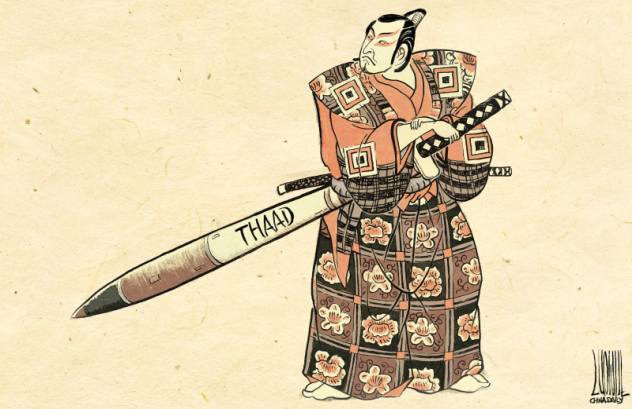
The refusal of the Japanese political class to officially recognize the imperial record of terror in China and other parts of Asia was illustrated in a remarkable way by Shinzo Abe when he was selected to lead the Liberal Democratic Party in October last year. He immediately visited the Yasukuni Shrine in Tokyo. The shrine has become a permanent monument to the horrors of Japan's militarism since 1978 when A1 war criminals of World War II were enshrined there. Abe also announced last year that he would, if elected prime minister, revise the so-called Kono Statement, an official apology that Tokyo made in 1993 for the military's sexual enslavement of women during World War II. And since he became prime minister he has not said that he accepts the Judgment of Tokyo, which confirmed the historical record of imperial violence, including the figures of the estimated 300,000 dead and 60,000 women raped in Nanjing in December 1937.
It was the late Chinese-American author Iris Chang, whose statue stands today outside the memorial building who dramatically changed Western perceptions of Nanjing with the publication of her book, The Rape of Nanking, in 1997. Chang provoked attention, especially in the United States where the book was first published, by calling the Nanjing Massacre the "forgotten Holocaust of World War II". Chang contrasted the official Japanese refusal to openly deal with the record of Japanese terror with Germany's acceptance of its past.
The Japanese argue that the Japanese were unlike the Germans because the Germans were aggressively racist, while the Japanese were fighting for the liberation of Asia from Western imperialism and capitalism. But a walk through the Nanjing Memorial exhibition makes it quite clear that the events of Nanjing were characterized by similar racist attitudes toward the Chinese.
There was no difference between German and Japanese attitudes immediately after the war. Both the Germans and the Japanese responded to the judgments of the International Military Tribunals as victor's justice. Like the Nazi leaders, Emperor Hirohito did not apologize in his speech on Aug 15, 1945, for any actions of the Imperial army in China and his own role in the war. Yet the Americans, who had portrayed him during the war as one of the three major war criminals, along with Hitler and Mussolini, did not want him to be prosecuted for war crimes at the International Tribunal in Tokyo. General Douglas MacArthur kept the imperial system and its head, Hirohito, in place, as the United States wanted to retain a semblance of legitimate national authority in order to facilitate the administration of the country. Hirohito had, by US decree, become untouchable, and he presided until his death in 1989 over collective Japanese amnesia. By protecting Hirohito from prosecution as a war criminal, the US laid the foundation for Japan's refusal to acknowledge its war guilt and war crimes. This official amnesia was also facilitated by the nuclear bombs dropped on Hiroshima and Nagasaki in August 1945, as the Japanese have seen themselves as victims, although there were twice as many casualties in Germany as a result of the allies' firebombing of cities.
In the peace settlement of 1952 between Japan and most nations, except the People's Republic of China and the Soviet Union, Japan agreed to pay reparations. But the plans for the wholesale transfer of industrial plants to ravaged countries that were discussed immediately after the war and were, for example, carried out in Germany, were not carried out in Japan. China followed the US' example by forgiving the "moral debt" and agreed after the normalization of relations with Japan in 1972 to forgo government claims to reparations.
The 75th anniversary of the Nanjing Massacre showed that the pain of the past remains. The Japanese political class has to realize that they will not gain anything from denying the historical record.
Unlike the Japanese, the Germans have come to terms with their past. They were able to break out of the silence and amnesia they shared with the Japanese and face their record of evil and make peace with their neighbors whom they had invaded, occupied and, in some cases, violently terrorized. And, most importantly, they were willing to recognize 60 years ago the claims of the large number of non-state victims and are still accepting compensation claims today, having already paid roughly $89 billion.
The Japanese government has to officially repent for the violence perpetrated on China and other nations and take responsibility for the militarism. They then have to establish funds that will pay the aging survivors of Nanjing, as well as Korean and Chinese comfort women and other victims, decent compensation. The Japanese government should also establish well-endowed foundations to promote reconciliation all over Asia.
The author is professor of political science at the University of Hawaii.
(China Daily 02/26/2013 page8)