Issue of trust between doctors, patients in China
Updated: 2011-09-27 17:10
By Henri Lee (chinadaily.com.cn)
|
|||||||||||


In most countries, a medical doctor carries the status, knowledge and certainly the good heart for his or her patients. The profession is vital to the whole health system; the doctor involved is also highly respected. At least, the respect is a genuine one, without any attachments such as the hongbao from patients or unnecessary stress from supervisors or bribery from pharmaceutical companies.
Getting into medical school is difficult enough. Usually, it involves years of academic courses. Quite often, these medical students are in the upper echelons of all students with high distinctions in nearly all subjects. This is, at least, true in most overseas Chinese communities. Not only do they have to study extremely hard for the university entrance examination, they also have to endure years of hardship, lonely nights and cramming for all the teaching materials.
The dedication and devotion of serving patients and saving lives are the most important objectives of being a medical doctor, independent of the country that he or she is in. This is how it should be.
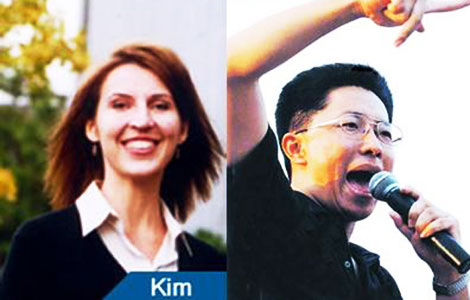
However, the recent incident of attack on the consulting doctor by his patient in Beijing indicates that the attitude displayed by patients may not be reciprocal. A number of doctors at Beijing Tongren Hospital allegedly stopped work for one hour to protest against violence in the workplace in September 2011. Law professor Yang Weidong (of the Chinese Academy of Governance) suggested that the root of this problem was the distrust between doctor and patient.
In this incident, the attacker involved firmly believed that his consulting doctor did not do a proper job. The doctor failed to remove the entire tumor, so his cancer spread and caused him to lose his voice. The patient could only blame the doctor who changed him from a talkative and knowledgeable artist to a dumb and disabled person. Worse, even though the patient sued the hospital in court for medical malpractice, the case was indefinitely adjourned. The patient stated that the hospital fabricated his medical records. The truth may never surface under the present legal and medical systems.
Following the health reforms introduced in recent years in China, patients sometimes feel that doctors always try to persuade or introduce them to choose more expensive medications or procedures. In China, the social status and financial reward of being a doctor is relatively low (compared to other countries). Bribery and corruption of the health system by doctors are not uncommon. A combination of these factors seems to create the atmosphere of mistrust between doctors and patients.
Expectation of 100% recovery is very high from the patients’ point of view. Therefore, they believe that financial bribery SHOULD guarantee top level consultation and management of any medical problems. However, such expectation may not be matched by the limited medical technology in China. The author has visited quite a few countries in the last 30 years; medical technology and top equipment are usually spread more evenly and openly to the citizens. They are not, in any way, limited and centralized in the hands of only a few hospitals or departments. The usage of such technology depends on the needs of patients; this is how it should be.
Violence is certainly condemned and feared by most people. Unfortunately, the underlying reasons cannot be easily addressed. Most people in China can attain only a primary education; the understanding of more complicated medical problems may not be easily handled. Therefore, doctors choose to show and tell limited stories to their patients. In situations where the results do not match the expectations, the feedback and responses may turn into revenge and violence.
Being a medical practitioner myself, I believe that mutual respect and acceptance of limitation are the keys to unlock this entanglement. Trust builds on this respect. Patients can understand if the doctors choose to explain more in detail. I believe genuine understanding and full explanation are the most important tools to prevent ambiguity and misconception of the involved issues. Let the doctors do their proper jobs without any interference. Hopefully, we live happily ever after.
Dr Henri Lee from Australia, a freelance scholar and researcher into Chinese entrepreneurship, swisscoat@gmail.com