Raymond Zhou
Reader beware ...
By Raymond Zhou (China Daily)
Updated: 2009-12-25 07:17
 |
Large Medium Small |
While the Internet is a valuable platform for news and views, it is also a tool for deceit and demagoguery ...
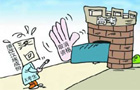
To those who believe the Internet is the most vibrant democracy of all, the following news may come as a rude awakening. In China there is a cottage industry that pays people to act as if they are the voices of the public.
I'm not talking about experts and columnists whose opinions are so valued that websites pay them to write. Nor am I referring to public relations notices that tout specific products or services.
The people in question extol something not because they truly feel it is good, and they rage not because they are indignant. Rather, they are a hired army of public opinion imposters.
A recent report revealed that the going rate for such a campaign averages 50,000 yuan ($7,315). One firm boasted it has the most "experienced team", with access to 100,000 freelancers, that can post thousands of articles on up to five popular forums and blog hosting sites, creating 200,000-400,000 visits. And they guarantee a quick sensation.
It seems the current pay for one posting is 50 cents. A typical job posting for this type of work says you can make 40 yuan a day by working two hours, which they say translates to 80 posts. It is my impression this is probably a short paragraph copied and pasted at lightning-fast speed with absolutely no customization.
In a September piece, Time magazine reported on a company that pays for "sponsored tweets". It had signed up 7,000 Twitter users. The biggest difference with the hired guns in China is the lack of proper disclosure.
Chinese marketers would laugh their heads off if their online pluggers were so foolish as to announce their true identity. The beauty of online plugging is hidden identity. Call me a cynic, but I never harbored any illusion about the Internet as a democratizing platform. Back in the days of Web 1.0, I witnessed how people manipulated it to their benefit.
A person I know worked at the entertainment channel of one of the most popular portal sites in China. Talent agencies would wine and dine him, beautiful starlets would snuggle up to him, red envelopes would be slipped into his pockets - all for the purpose of masquerading press releases as entertainment news. Pretty soon the guy was so flushed with money he opened a side business in a busy shopping district.
And this happened when outsiders lauded the media outlet he worked for as an open and democratic alternative to the establishment.
It doesn't really take inside information to know that most of the entertainment articles on China's major websites are not really news. But ordinary netizens cannot tell the difference. As long as what's posted is not too outrageous or dumb, people will buy it and nobody will feel it's a violation of their right to accurate information.
What's happening now is much worse, or the perpetrators wouldn't be called an "online black society". As the Internet is flooded with all kinds of rubbish, it is more difficult to hype something than to attack it. So, instead of raving about how wonderful your product is, it is better to wage a smear campaign against your rival. So, you say, your neighbor's toddler got sick from using that product and see its sales plummet. By the time the rival company clears things up and government agencies have come forward, the damage is done and there'll be an inkling of odium forever associated with that brand.
I can understand why people are willing to take on this kind of job. It's determined by supply and demand. Most of the job ads target "college graduates", testifying to the gloomy job prospects for this demographic. It is much more interesting to dissect why this kind of guerrilla tactic works on those who receive it - I assume it works better in China than elsewhere.
We don't have a tradition of fair play in the media industry. Whoever controls information has a natural inclination to twist it to their own advantage. For example, our press has the habit of mixing reporting with commentary. We use colorful adjectives to describe something that should be reported without bias or judgment. We equate one man's opinion with the stand of the outlet that published it.
The result is a double whammy: Many words have turned into clichs and lost their effectiveness; but many in the audience are accustomed to the practice and they no longer use analytical power when sifting through the ever larger flow of information. They used to be wary of the spin of what they read or watched, but are now so carried away by the "anyone can shout" environment of the Internet they have relaxed their vigilance. Because Web content is less censored it is more credible, they assume.
While it may take years to lead a large population astray with deliberate disinformation on traditional media platforms, it sometimes takes just one writer and one editor to launch a massive misinformation campaign on the Web. Someone fabricates a sensational story, the editors give it prominence and voila, an online rebellion is born.
It happened to me recently. The Chinese translation of a column of mine was reposted by a popular blogger who attacked me for being one of these "50-cent guerillas", working for the establishment. The funny thing is, he interpreted my argument to mean the opposite of what I meant. Either he did it deliberately, or he did not read to the end, or he did not get the message of my article. Of the hundreds of thousands who left feedback, most simply heaped vituperation on me, and only a handful said: "Wait a minute. This is not what Raymond Zhou meant. He was misinterpreted."
A week later, I posted a paragraph-by-paragraph clarification of my original article, and the abovementioned blogger sent word that he understood me perfectly, but it did not matter. There was never a chance for rational discourse.
Independence of thinking is paramount in a civic society. But it'll be a long time before China's Internet world reaches that stage. As it stands, it is a hotbed for deceit and demagoguery, often overwhelming content with value. Just as panhandling kids on Chinese streets are usually controlled by gangs and therefore abuse our charity, the melodramatic stories that surface online are not to be trusted - unless you first trust the sources.