Having Cold Food Only
In 636 BC, Duke Wen, a ruler of the Jin State in ancient China, forbade, in commemoration of his virtuous official Jie Zitui, all households from using fire for cooking on the anniversary of Jie's death, which falls 105 days after the arrival of winter and one day earlier than the Qingming Festival proper. Over time, it became customary to have certain kinds of cold food on this occasion, known as the "Hanshi Festival", or the Cold Food Festival.
In ancient times, the most popular foods for the Cold Food Festival were porridge and noodles, along with cakes, molasses, pulped grains and blueberry leaf juice-soaked glutinous rice. The drinks included spring water (crisp and sweet), tea (made with freshly-picked young leaves) and wines (brewed since last winter for spring consumption). While apricot pulp and the porridge cooked with peach petals were among the royal festival gifts, fine barley, paste in the image of a rabbit (symbolic of Jie Zitui, the filial son) intertwined with a snake (symbolic of his loving mother) and date-stuffed cakes were used for ancestral offerings.
Worshipping Ancestors
With the arrival of the Qingming Festival, it is customary for Chinese people from various ethnic groups, at home and even abroad, to travel whatever distance it takes to return to their hometowns for ancestral worship, representing the world's most significant cultural practice of “root-seeking”. The procedure begins with the rituals of making offerings, performing kowtows, and burning incense and joss paper for their ancestors. Then follows some cleaning and reorganizing, such as weeding the grave and adding soil to the burial mound.
Giving Fire
In ancient China, mostly during the Tang Dynasty (618–907 AD), the emperor would bestow fire upon their subjects , right after the no-fire Cold Food Festival, to show their grace and favor. Then the custom was established that the superiors granted fire to the subordinates, the elder to the young, friends and neighbors to each other.
Early Spring Outing
Prevalent mostly in the Tang and Song Dynasty (ca 7th -13th century AD), taqing (literally "treading on the greenery"), or early spring outings are practiced during the Qingming Festival, either for their own sake or to coincide with visits to the grave. Since it was made a statutory holiday by the Chinese government in 2008, the Qingming Festival has become a travelling day nationwide.
Appreciating Flowers
The Qingming Festival is a great time for appreciating flowers in springtime, with the blossom of apricots, azalea, camellias, magnolia, oranges, peaches, peonies, plums, tulips, Chinese crabapples, cotton roses, roseleaf raspberries and tung trees. Meanwhile, various flower fairs are held annually nationwide.
Planting Willows
As befits the name of the harbinger of the Qingming Festival, willows, which sprout at the advent of the Qingming, are gracefully called “Qingming willow”; so it is fairly seasonable to plant cuttings of willow. This time-honored tradition has nowadays become an important part of nationwide afforestation efforts.
Playing on a Swing
A swing was initially a recreation during the Cold Food Festival for women in the royal court of ancient China. Nowadays, playing on a swing during Qingming still attracts some ethnic minorities in China's southwestern and northeastern border areas.
Playing Cuju
Cuju was an ancient Chinese competitive game involving kicking a ball through an opening into a net, and reached its height of popularity in the Tang and Song Dynasties. A famous ancient Chinese painting depicts Emperor Taizu of Song, the founder of the Song Dynasty, playing Cuju in the royal courtyard. Cuju, often played on the Qingming Festival, later evolved into football that swept around the world.
Tug of War
According to legend, tug of war traces its origin to an aquatic weapon in the Spring and Autumn Period (ca the 8th- 5th century BC) –a weapon that used traction to keep the enemy ship it was hooked onto from drifting downstream in retreat.
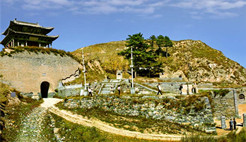
Tug of war in celebration of the Cold Food and Qingming Festivals has long been the order of the day in Jiexiu (in Shangxi province), since the city's Mian Mountain (where the virtuous official Jie Zitui lived in seclusion) tourist site was open to the public. In 1985, a large-scale tug-of-war match was held in Jiexiu, creative in both form and content.
Flying Kites
At the time of the Qingming Festival, flying kites is also a routine practice during the early spring outing on sunny and breezy days.
Sipping tea
The custom of tea-tasting during the Qingming Festival emerged in the royal court of the Tang Dynasty. The freshly-picked young tea leaves were offered as tributes by regional authorities and such tribute payment was carried on into the Song Dynasty. Nowadays, tea freshness still brings enjoyable experiences to Chinese people at the festival.
Kicking the Shuttlecock
Kicking the shuttlecock is a time-honored practice and became widely spread in the Ming and Qing Dynasties (ca the 14th -19th century AD). It was listed as one of the competition events under Chinese martial arts in the 6th 1935 National Games of the Republic of China (1921-1949 AD). Nowadays, shuttlecock kicking has become one of the most favored recreational sports nationwide.
Other Activities
Among other things, falconry, horse riding, cock fighting, cricket fighting and egg painting all once played important parts in the traditions of the Cold Food and Qingming Festivals over the centuries.