Tourism fuels booming Shandong cultural industry
Shandong in East China saw the added value of the province's cultural industry jump from 183 billion yuan ($27 billion) in 2013 to 312 billion yuan in 2017 at an average annual growth rate of 15 percent -- higher than the provincial GDP growth rate. It was attributed in part to Shandong's successful integration of cultural activities into the tourism calendar.
The portion the added value of cultural industry contributes to Shandong's GDP rose by 3.32 percent to 4.29 percent over the five years from 2013 to 2017.
These data were cited by Wang Lei, head of the Shandong provincial department of culture and tourism, who mentioned that in recent years the cultural industry in Shandong has been transitioning from high-speed growth to high-quality growth.
The province is pursuing high-quality development driven by cultural and tourism engines. Scientific planning has been made to guide the industries slated for integrated development. There was also strong policy and funding support.
According to Wang, Shandong has developed cultural and tourism industry clusters that are considered important for rural revitalization and educational practice and that also help accelerate the shift in the driving forces of development. Related projects are prioritized in key work layouts of the provincial Party committee and the provincial government.
The Shandong Provincial Department of Finance has allocated 350 million yuan of special funds to support tourism development annually since last year.
In early 2018, the State Council approved the Overall Plan for the Construction of a Comprehensive Experimental Zone for New and Old Kinetic Energy Conversion in Shandong Province and both the provincial Party committee and the government regard it as a major program guiding socioeconomic development. It was proposed that efforts should be made to develop “top 10 industries” including cultural and creative industry and boutique tourism.
The Shandong Province Cultural and Creative Industry Development Plan (2018-2022) and Shandong Province Boutique Tourism Development Special Plan were released last year to set general goals and a strategic layout for the two major industries. Specific measures were also outlined to promote key projects.
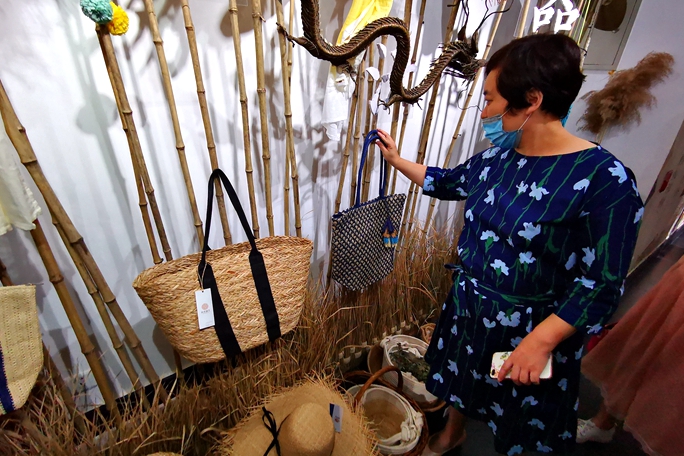
Meanwhile, traditional handicrafts unique to Shandong have been widely promoted through online and offline channels. There are more than 1.1 million traditional craft enterprises and self-employed households in Shandong, employing about 3.5 million workers. The businesses, especially those in rural areas were encouraged to “go online”, and currently involve 5,661 e-commerce operators throughout Shandong.
The province is also developing and tapping into rich Qilu cultural resources (Qilu is a common nickname for Shandong), excellent traditional culture and the Yimeng “red” cultural heritage (“red” culture embodies China’s revolutionary spirit). The abundance of cultural resources will lead to advantages in the industry’s development, according to a local official.
With a total input of 343 million yuan in the field in the past few years, 171 outstanding traditional cultural heritage development projects have been funded and accelerated. Chief among them is the Confucius Museum that has started soft operation in Qufu. A number of public welfare projects such as the China Teacher Museum were also launched.
Shandong is also proving attractive to cultural investors. The province clinched six projects worth a total of 56.6 billion yuan at the 14th China (Shenzhen) International Cultural Industries Fair held last May. The 2018 Conference for Confucianism and Entrepreneurship held in Jinan in September last year brought to Shandong 13 boutique tourism projects valued at 120 billion yuan and 11 cultural and creative projects with a total investment of 28 billion yuan.
Data show that Shandong has built 33 national and 168 provincial-level cultural (including publishing, film and television) industry demonstration parks (bases). Leading them are the Confucius Institute Headquarters experience base, Nishan Holy Land, and Oriental Movie Metropolis. They all cost more than 10 billion yuan and are now operational.
A series of events including the Qufu International Confucius Culture Festival, the Nishan Forum on World Civilizations, and the Fifth China Intangible Cultural Heritage Expo have enhanced Shandong’s image and greatly promoted its cultural and tourism products.
Shandong also has robust cultural consumption encouraged by generous subsidies. The Second Shandong Cultural Consumption Season further enhanced public awareness of cultural consumption and promoted the upgrading of the structure of cultural consumption. The events were participated in by 240 million people.
Wang said that during the two Seasons, the provincial and municipal financial authorities put 200 million yuan into guiding cultural consumption which drove direct consumption of 790 million yuan and resulted in further consumption of 28.85 billion. It has become the largest event of its kind in the country with the widest enterprise participation and most widely distributed consumers. It also features the newest platform model, Wang explained.
Local characteristics are cherished as shining treasures in the cultural industry. Full unitization of unique cultural resources and industry advantages in an exploratory spirit is therefore encouraged. Taierzhuang, Qingzhou and Qufu have set good examples for excellent cultural and tourism integration.
Wang called for a combination of various cultural activities and tourism in order to extend the industry chain and value chain. Specifically, famous events such as the Taishan Mountain International Climbing Festival, the Weifang Chinese Painting Festival and the International Kite Festival should continue on a larger scale while public cultural venues such as art galleries, cultural centers, museums, and historical and cultural exhibition halls at all levels should be incorporated into local tourism routes, Wang added.
 Shandong Culture and Tourism Consumption Season
 Culture, tourism sectors pick up in Shandong as epidemic wanes