Law encourages NGOs to play useful role
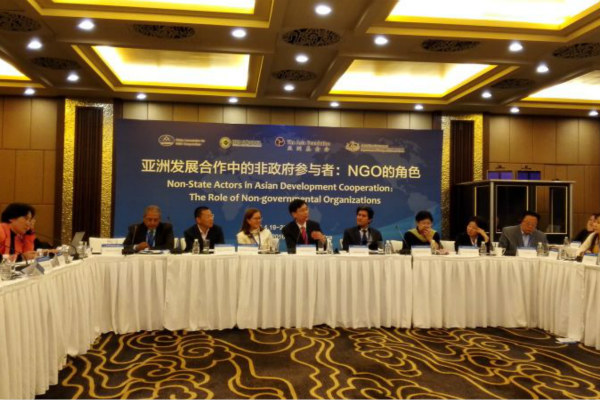
The first law to regulate overseas NGOs' activities in China, which the 12th Standing Committee of the National People's Congress approved last week, will take effect on Jan 1, 2017. The NPC Standing Committee reviewed the draft twice, in December 2014 and April 2015. After the second review, the draft was released to solicit public opinions, and national legislators held several meetings with overseas non-governmental organizations working in China to seek their suggestions.
Compared with the first and second drafts, we can see significant changes in the final law. As its name overseas NGO management law suggests, the law applies only to and is aimed at regulating overseas NGOs' activities in China, including foreign foundations, social organizations and think tanks, rather than schools, hospitals and academic, scientific, engineering and technological research institutions. Also, the law eases restrictions on overseas NGOs in terms of organizational capacity and staff recruitment.
By incorporating some suggestions of NGOs and the public, the law has reflected the spirit of scientific and democratic legislation.
As a developing country, China has made great economic and social achievements in recent years. Still, it faces challenges in social management, such as how to evaluate overseas NGOs' activities.
Overseas NGOs are significant players in the Chinese society today, but some legislators, government administrators and social sectors have different attitudes toward such active social players.
China has maintained a "big-government" pattern for a long time. Despite this, social organizations, especially NGOs, have played an important role in improving social structures. But many domestic NGOs lack experience given that they are latecomers in the field. In contrast, overseas NGOs' long experience and abundant funds give them a big advantage-and they do have great influence in China.
However, some overseas NGOs operations in other countries cannot be put to practice in China, because those may not suit the country's actual conditions and could even create problems. For instance, human rights scholar Manfred Nowak has cited 22 prominent international human rights NGOs, and only three of them are based in developing countries. Besides, many of these NGOs adopt antagonistic even humiliating operating methods, which are unwelcome by many countries including China.That's why China's law to regulate overseas NGOs' activities is aimed at striking a balance between protection of rights and legal restrictions. This shows that, instead of shutting overseas NGOs out, the authorities want to encourage them to play a constructive role in society.
The government requires overseas NGOs to comply with the country's laws and regulations, rather than simply applying their experiences in other countries to China.
The Chinese authorities face criticism from some overseas NGOs and media during the legislation process because the latter, failing to realize the significance of the legislation, were worried that the government would expel them from the country. Their fears were unwarranted, though, because China deals with social management issues in a mature manner.
Rule of law, sustainable development and human rights are the three objectives of the path China is taking, and they are interrelated. So China will neither give overseas NGOs carte blanche to do whatever they want nor totally ban them from operating in China.
Rule of law is an important aspect of society, and among other things it also protects NGOs' legal rights. And since the overseas NGO management law balances the three objectives, it will ensure overseas NGOs play a constructive role in China. We can thus expect overseas NGOs' activities in China to be well managed to achieve the legislative objectives.
The author is executive director of the Center for Human Rights Studies at the Chinese Academy of Social Sciences.