|
Mount Huangshan was originally called Mount Yi because according to the legend, the first ancestor of the Chinese nation — the Yellow Emperor became a god on this mountain. On July 16, in 747 during the reign of Emperor Xuanzong, the name of the mountain was changed to its current name, and the day was also declared as the birthday of Mount Huangshan by the Emperor Xuanzong. Mount Huangshan is well known in the world for its majestic, beautiful, and fantastic landscapes, and it is also a national-level scenic area and a health and summer resort with abundant resources, an intact ecosystem, and has significant scientific and ecological value. It is a place with both wonderful natural and cultural landscapes.
Mount Huangshan covers all the special characteristics of the other well-known mountains of China, including the majesty of Mount Taishan, the steepness of Mount Huashan, the freshness of Mount Emei, the splendid waterfalls of Mount Lushan, the delicate rocks of Mount Yandang, and the floating clouds of Hunan Province's Mount Hengshan. On Mount Huangshan, there are a lot of towering peaks, including 36 large and 36 small peaks. Of them, the elevation of the Lotus Peak, the Tiandu Peak, and the Guangming Peak all exceed 1,800 meters.
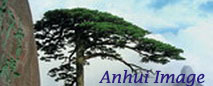
Mount Huangshan is outstanding for its changeful sceneries in different seasons. The landscapes always change as the seasons change, and are different at different altitudes and different time of day. In the early spring, there are colorful flowers that bloom like a piece of brocade. The red azalea flowers are all over the mountain and the pink peach blossoms can spread up to five kilometers. In the midsummer, there is spring water on the ground, waterfalls off steep cliffs, emerald green peaks, countless green trees, and sweet-scented grass and flowers. In the golden autumn, there are seemingly flaming maple trees and scattered beautiful mountain flowers. In the winter, the mountain looks like a heavenly world with the land and trees covered by ice and snow. The unique granite forests of Mount Huangshan can be seen from every peak and valley. The Huangshan Pines of various shapes, the vivid, bizarre stones, and the mysterious seas of cloud is picturesque with both static and dynamic elements, and gives an artistic charm, inspiration, and grace to the mountain. The great explorer of the Ming Dynasty Xu Xiake once said, 'I have seen many mountains in the world, but none of them can match Mount Huangshan. When I was standing on its peak, it felt like there were no other mountains in the world except for Mount Huangshan.' Based on Xu's comment, a person of later generation made such a comment, 'The people who have visited the Five Famous Mountains will lose the interest of visiting other mountains; but the people who have visited the Mount Huangshan will even lose the interest of visiting the Five Famous Mountains.' On Mount Huangshan, there are over 1,450 plant species, over 470 animal species, and over 200 ancient temples, pavilions, and stone tablets in total.
Cultural heritage value:
The long history of religious culture in Mount Huangshan
Mount Huangshan has a close connection with religion. In the ancient Taoist books of the Tang Dynasty, there are stories of the Yellow Emperor, Rongchengzi and Fuqiugong visiting the mountain to develop pills of immortality and try to become supernatural beings, and they finally made it, which have been handed down from generation to generation and influenced many people. Even today, there are some mountains that have been named after these stories, such as Xuanyuan Peak, Fuqiu peak, Liandan Peak, Xianren Peak, Shangsheng Peak, Xiandu Peak, Daoren Peak and Wangxian Peak. The name of Mount Huangshan is also connected with the story of the Yellow Emperor once cultivating his morality and developing pills of immortality here. Fuqiu Temple and Jiulong Temple are the earliest temples that Taoism established on Mount Huangshan. Zhang Yinfu, a Taoist from the late Song Dynasty, tried to become a supernatural being and founded the Songgu Taoist Temple. But after the late Ming Dynasty, there was no Taoism on Mount Huangshan. According to the 'Graphic Book of the Mount Huangshan', Buddhism reached Mountain Huangshan in the Liu Song period of the Southern Dynasties and nearly 100 temples were built in the past dynasties. Among the temples, the Xiangfu Temple, Ciguang Temple, Cuiwei Temple and Zhibo Temple are known as the 'four famous Buddhist monasteries'.
Furthermore, there were many monks who were good at painting, for example, Dao Yun in the Tang Dynasty, Hai Neng, Hong Zhi, Yin Ke, Yuan Ze and Wang Yan in the Ming Dynasty, Da Jun, Da Han, Bo Yan, Jian Jiang and Xue Zhuang in the Qing Dynasty, whose works are handed down from generation to generation.
The excellent artworks in Mount Huangshan
The natural beauty of Mount Huangshan attracted a large number of poets, painters and other artists. They all marveled at the beauty and left a lot of works. More than 20,000 poems, which praised the beauty of Mount Huangshan over a period of about 1,200 years during the heyday of the Tang Dynasty to the late Qing Dynasty, can be found today. The content and literature style of art works on Mount Huangshan are abundant. These art works reflected and enriched the beauty from all aspects and are treasures of China’s literature. In terms of poems, famous writers, such as Li Bai, Jia Dao, Fan Chengda, Shi Tao, Gong Zizhen, Huang Yanpei, Dong Biwu, Guo Moruo and Lao She, left many works. And in terms of essays, Xu Xiake’s “Huangshan Travel Dairy,” Yuan Mu’s “Huangshan Travel,” Ye Shengtao’s “Three days in Mount Huangshan,” and Feng Zikai’s “Shang Tiandu” all reflect the beautiful scenery of Mount Huangshan. In addition, there are many stories and legends about Mount Huangshan, for instance, “Huangdi makes pills of immortality,” “Drunken Li Bai,” “Fairy points the way” and “Fairy embroider flowers.” The Huangshan Painting School, which showed the beauty and tranquility of the Mount Huangshan in paintings, is an excellent branch of Mount Huangshan culture. The masters continued to enrich their works by carefully watching Mountain Huangshan, and formed a special position in the painting world with their concise articles, beautiful composition, self-contained and tragic style and deep will. Mount Huangshan cultivated many artists in the past ages and artists also give Mount Huangshan artistic life in return.
|