App can help smokers kick the habit
 |
|
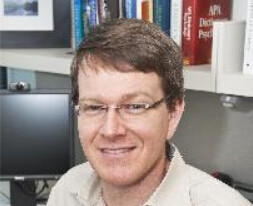
Jonathan Bricker, PhD, associate member, Division of Public Health Sciences, Fred Hutchinson Cancer Research Center. [Photo provided to chinadaily.com.cn] |
During Chinese President Xi Jinping's state visit to the United States, first lady Peng Liyuan visited the Fred Hutchinson Cancer Research Center in Seattle on Sept 24.
Peng was informed about a smartphone application that the center's researchers developed to help people quit smoking.
Peng, also an ambassador for the Chinese Association on Tobacco Control, said,, "In my own family there are some smokers, and I hope they can find better ways to quit."
Jonathan Bricker, a researcher at the center's Public Health Sciences Division and lead developer of the "SmartQuit" app, talked with Shan Juan of China Daily about introducing the application into China and his meeting with first lady Peng.
1. How's the smoking epidemic in the US today?
In the US, tobacco use is the single most preventable cause of premature death. There are 42 million smokers in the US.
2. What are the widely used smoking cessation tools and methods in the US?
The most widely used methods to quit smoking are quitting on one's own. Sadly, only 4% of people succeed this way. Most people don't use methods that are proven to work, such as medications like the nicotine patch or gum and skills to cope with cravings, prevent relapse, and stay motivated. The combination of skills and medications to quit give people the very best chance of quitting smoking—boosting your chances to about 20% to 25%. So we have proven methods that most people don’t use. But even proven methods have a lot of room for improvement.
3. I saw "light smoker"in House of Cards and I am curious. Is it that widespread among the upper class?
Hollywood glamorizes smoking. And science shows that smoking on TV and film leads people to take up smoking. So there is a great danger in seeing Claire and Francis Underwood of House of Cards sharing a single cigarette at night. Its makes us say to ourselves, "I can do that too and not get hooked." It looks very sophisticated. But the truth is that only a quarter of all smokers in the US can smoke intermittently. While they do have somewhat higher income than frequent smokers, I would not say they are "upper class." And the pattern is the opposite in lower income countries; people who smoke less tend to do so because they have less money to spend on cigarettes. So rather than being seduced by that image, keep this in mind: there is a good risk that you can escalate up to heavy smoking and become addicted to cigarettes. Hollywood is great at telling us only part of the story.
4. What do you think are the most effective policies and measures taken in the US to curb smoking?
The best US policies to curb smoking have been bans on cigarette advertising, smoke-free workplaces and public places and taxation of cigarettes. They have helped a lot. But they are only part of the story. We in the US have a long way to go in making quit smoking programs more effective. And proven quit smoking programs are not reaching smokers. So the next frontier in the US, and worldwide, is in making effective programs available to smokers. That, combined with proven policies, is how to make the greatest public health impact.
5. About the SmartQuit,app, how did you get the idea to develop an app to help people quit?
A mission of my research team at Fred Hutch is to make an impact by saving millions of lives. There are nearly two billion smartphone users worldwide, and a large fraction of them are smokers. So the idea of an app to quit smoking was easy. What's novel is the method offered in the app. We offer a new way to deal with cravings and stay motivated that is based on the principles of acceptance and commitment therapy. The goal of a scientifically proven, new and improved way to quit smoking delivered on an app to many millions of smokers would help us make an impact—saving millions of lives.
6. How many users does it have now? Is it free?
A trial version of SmartQuit is completely free. The full version is 50 US Dollars. Since it was released in November in the US, it has been downloaded 10,000 times.
7. Is there a Chinese version?
Not yet. We are looking for partners; specifically, top Chinese firms with expertise in user design, Chinese government health agencies to partner with us for scientific research on the app, and partners to distribute the app in China. We welcome inquires and we look forward to a Chinese version in the future.
8. We know that you met with China's first lady, Peng Liyuan, during her visit to Seattle. What's your impression about her?
Meeting Madame Peng was an experience I will never forget. She was gracious, attentive, and so natural in her manner. We connected on the need for more effective programs to help people quit smoking - especially in China. I especially appreciated hearing her tell me that she has family members who smoke and she wishes for more effective programs to help them quit. To me, that showed great passion for the cause of quitting smoking. So I am hopeful she will help our mission.
9. China has more than 350 million smokers but few go to a physician or therapist for cessation help. What's the situation in the US? Is the medication for smoking cessation covered by health insurance?
This problem in China is similar in the US. Few smokers see a physician or counselor to help them quit. We are trying to change that - especially with our TALK research on a quit smoking hotline, the WebQuit website, and now with the SmartQuit app to quit smoking. The recent Affordable Care Act is supposed to make quit smoking medications be covered by insurance but the guidelines are broadly written, so coverage by individual insurance companies is not consistent. And, unfortunately, many people actually have coverage for quit medications but are not aware they do.
10. Do you have any plan to promote SmartQuit in China to help Chinese quit?
See my response above in Question 7. One day, I hope so! Our first needed work is to adapt it so it is fits Chinese culture and smoking patterns, and then prove it works with a randomized trial.