Comments
  Print
Print  Mail
Mail  Large Medium Small

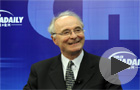
Michael Sandel adopts a novel approach to address the age-old question of the moral limits of markets in his bestseller. Chen Yingqun explores further.
Market principles should not be allowed to invade our civic, social and family lives, says Michael Sandel, a political philosopher and a professor at Harvard University's Department of Government. Sandel, author of the bestseller What Money Can't Buy: The Moral Limits of Markets, says there is often a misconception that markets represent the public good.
"When people believe that markets and market logic can by themselves define the public good, there is a temptation to avoid moral and ethical reflection and discourse in public life," he says.
Sandel opines that over the past two to three decades people have not reflected on the matter because they consider such a process messy, uncertain and controversial.

He runs the popular Justice series of courses at Harvard, and taught more than 15,000 students over 20 years. It was also the first free Harvard course to be made available on public television and online.
Much of the course's popularity can be attributed to the discussion-oriented format and the engaging style of incorporating context into discussion.
Sandel uses case studies such as whether people can hire others to line up for them to buy a train ticket during the Spring Festival. Another scenario is whether universities can enroll students whose families donate money.
He has held discussions with college students in Beijing, Shanghai and Xiamen, often encouraging them to reflect on and debate the moral limits of the markets.
Sandel's latest book has been perceived by many to be a strong challenge to mainstream ideas like utilitarianism, market triumphalism and libertarianism. He was recently in China to promote the Chinese version.
"All these ideas support, in one way or another, the unrestrained extension of markets and market thinking in daily life," he opines.
The biggest drawback of such an existence has been the steep erosion of values in daily lives. This tendency has been growing steadily in the past 30 years, especially in the West and in China, he says.
"After the end of the Cold War, many people misinterpreted the meaning of the end of the Cold War, thinking there's only one system left standing: that is, capitalism.
"My book challenges and tries to inspire discussion about mainstream market assumptions, especially the market-driven assumptions. I think it is important to have a thorough discussion and debate on whether the money and markets actually serve the public good and where they don't belong," he says.
Through keen observation, Sandel has collected many examples in his books that he uses to illustrate how market logic seeps into every corner of life, and starts to dominate, and even corrupt, important areas.
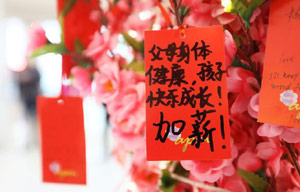
Selling a kidney to buy a smart phone, using cash to encourage children to read and selling hugs are some of his examples.
The good news, Sandel says, is that while talking to people, he discovers that most of them are dissatisfied with the current way of life and expressed resentment against the market-driven approach, terming it as utilitarian motivated or a fixation with the size of the economy.
"I think we are uneasy about the social life that has resulted from these assumptions. I think there's a great desire or even hunger to reflect and question and challenge where the purely market-driven, GDP-approach has led us, in my own society, and also in China."
Sandel does not deny the effect of a market economy, but he reckons that while developing economic growth, countries should also see the distinction between "a market economy" and "a market society".
Despite different levels of development, both China and the United States have drifted from "having a market economy to becoming market societies", he says.
"A market economy is a tool. It's a valuable and effective tool for organizing productive activity, and it has brought prosperity and economic growth, and rising living standards to the countries around the world. But a market society is a place where everything is up for sale. It's a way of life in which the market values dominate every corner of social life."
According to Sandel, most of the assumptions that he has challenged are now being questioned in China, too. "It is important for China, at this stage of its economic development, to think hard about the distinction between having a market economy and becoming a market society, and what to do about it."
Sandel says it is a good thing that many Chinese are now aware of the moral limits of market forces.
"Judging from the response that I hear from among Chinese students and readers and audiences, there seems to be a high level of awareness on the importance of thinking about the associated risk of allowing market values and money to dominate every spirit of life.

"There seems to be a high level of awareness that a purely market-driven approach can lead to growing inequality, or a growing gap between rich and poor, a lack of fairness, and can also erode family relationships and obligations, especially the more extended kind. Such an approach will be corrosive to the community and lead to erosion of values."
As a professor, Sandel has firsthand experience of how an emphasis on market value erodes higher education. There is a tendency to regard a university education more as a tool, as an instrument for equipping student to get good jobs, he says.
"The danger of that is the higher purpose of education is crowded out. That higher purpose is to develop the full individual in his or her highest capacities, personal and intellectual development and also to equip students to become effective citizens."
But Sandel says he is not looking for specific solutions to the problems he talks of. What he does expect is a growing awareness by people of market economies turning into market societies.
"Once people stand back and notice that and begin to discuss how far they want this market logic to go, then people will come up with various ways of dealing with these problems."
What is required is a change in the public culture and attitudes and assumptions toward markets and market logic, and this means trying to appeal to non-market values in various domains, he adds.
Contact the writer at chenyingqun@chinadaily.com.cn.
|
|
|

Copyright 1995 - 2010 . All rights reserved. The content (including but not limited to text, photo, multimedia information, etc) published in this site belongs to China Daily Information Co (CDIC). Without written authorization from CDIC, such content shall not be republished or used in any form. Note: Browsers with 1024*768 or higher resolution are suggested for this site.
License for publishing multimedia online 0108263 Registration Number: 20100000002731