Behind the Oscar obsession
 |
|
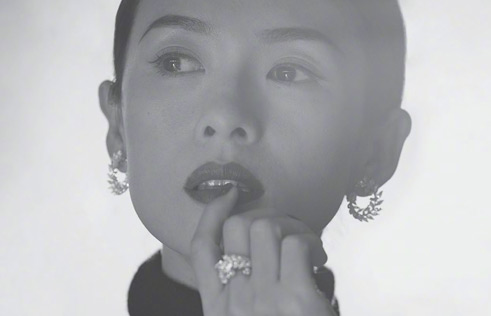
Chinese movie - Caught in the Web, representing the Chinese mainland, will be in the race for the Best Foreign Language Film of the 85th annual Academy Awards. Photos Provided to China Daily |
 |
|
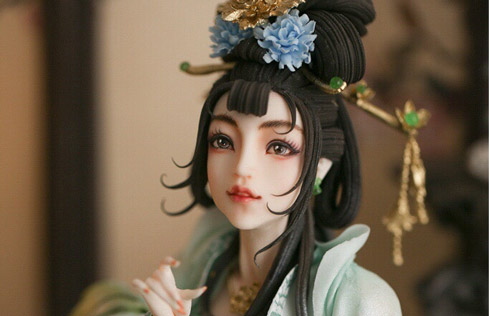
Chinese?movie - Life without Principle, representing Hong Kong, will be in the race for the Best Foreign Language Film of the 85th annual Academy Awards. Photos Provided to China Daily |
 |
|
Chinese movie - Touch of the Light, representing Taiwan, will be in the race for the Best Foreign Language Film of the 85th annual Academy Awards. Photos Provided to China Daily |

Film awards and festivals in China suffer from outside intervention and a severe lack of clear positioning.
The more you yearn for something, the more elusive it becomes. That is very true of the Academy Awards, which may be the ultimate film award that many in China care about. Every Oscar season, roughly from the announcement of submissions for the Best Foreign Language Films to the final award ceremony, the tidal wave of obsession sweeps into China, causing massive foams of envy, denial and interpretations.
China gets three shots at the Oscar hoop. Apart from the mainland selection, Hong Kong and Taiwan have their separate submissions, all of which are Chinese-language entries. As the three regions are increasingly integrated in the film business, a good film often contains inputs from all three places and even beyond. Both Raise the Red Lantern and Farewell My Concubine were sent from Hong Kong, even though the creative talent hailed from the mainland.
On the other hand, Crouching Tiger, Hidden Dragon - the only Chinese-language winner in the category so far - was a Taiwan selection, but had artistic contributions from all over. The funny thing was, Ang Lee's martial arts epic would not have been in the running had it been left for the mainland, where it got a lukewarm reception.
Of course, public opinion does not play a role in choosing which film should represent the Chinese mainland in the Oscar race. The selection process is so opaque that we can only deduce that whoever comprises the panel are inordinately enamored with superstar filmmakers. Take a look at the results of the past five years and you'll understand their strategy.
This year, it's Chen Kaige's Caught in the Web. Last year was Zhang Yimou's Flowers of War, preceded by Feng Xiaogang's Aftershock, Chen Kaige's Forever Enthralled and Dream Weavers: Beijing 2008, which had a no-name director but was somewhat of a political statement as it was the year of the Beijing Olympics.
I'm not saying these are not good movies - some of them are. But they have absolutely nothing to do with the artistic sensibilities of the Academy members who pick the nominees and winners. Even the best of the bunch are so misaligned with the Oscar's taste that I can almost hear the sound of Academy members' jaws dropping to the ground.
China's wannabes
The pursuit of the Academy Awards is made more acute by the absence of China's own recognition with prestige. The mainland has the Golden Rooster Awards, conferred by insiders and experts, and the Hundred Flowers Awards, voted for by the film-going public.
In the first eight years since its inception in 1981, the former hewed to the principle and came up with choices that embodied artistic merits. As the 1980s segued into the 1990s, these two awards inched closer and closer to the Huabiao Award, which is bestowed by the government.
In theory, the Golden Rooster has a similar positioning as the Academy Awards and the Hundred Flowers resembles the People's Choice Awards. If you impose a yardstick other than expert insight or popular taste on them, their value begins to erode. Now, the film festival jointly held by the two awards has turned into a promotional event for a second- or third-tier city that pays a huge fee to host the ceremony, thus bringing in a stream of movie stars and presumably burnishing local gloss and boosting local tourism.
Fortunately, there are prizes that fly under the radar and can still maintain a high degree of integrity. The China Film Directors Association started to grant its honors in 2005 but did not continue until 2010. For 2012, it gave tribute to Let the Bullets Run, Piano in the Factory and Kora - three of the most award-worthy films.
The FIRST Youth Film Festival, held in the inland city of Xining, Qinghai province, manages to uncover young talents who are breaking into the business. Some of the award winners use their cameras to chronicle undercurrents often overlooked by the mainstream yet carrying both social and artistic significance.
More cutting-edge is the Beijing Independent Film Festival, held in the Bohemian enclave of Songzhuang. It was the creation of Li Xianting, who started it in 2006 and still serves as its artistic director. Despite sporadic meddling from certain sources, it has flaunted its stature of independence like a badge of bruised honor.
The Southern Media Group, which owns several influential newspapers in Guangzhou, launched a cluster of awards for film, music, literature and architecture. Called the Chinese-Language Media Awards, the movie part sets its eyes on all films in Greater China and emphasizes its neutrality by publicizing its deliberating process. Its panel of judges consists mainly of the press, thus representing the opinions of critics more than anyone else.
Festival circuit
China has several film festivals, but only few are worthy of the title "festival" if you refer to the involvement of the general public. The Shanghai International Film Festival, launched in 1993, has evolved into a major event with its greatest strength in the freewheeling forums and in its accessibility to the film-loving populace. Over the years, it has nurtured a cineaste culture for which thousands of people, mostly the young, attend screenings of classics they had known through disks and hot tickets off the international circuit. Its ability to highlight masters of tomorrow, however, is restricted from both inside and outside.
The new Beijing International Film Festival could be the most expensive affair of its kind - anywhere. Its lavish opening show and glittering lineup of top names are the main selling points. But it'll take a long time before it develops a real fan base for people who actually watch movies. One advantage that is almost built-in is its appeal to market participants as Beijing is the hub of China's film industry where deals are easier to be facilitated.
Outside the mainland, the Hong Kong Film Awards, which did not start until 1982, is the closest in dynamics and aesthetics to the Academy Awards in that it is the industry's acknowledgement of its own achievements. Despite industry integration, it protects local culture by setting a minimum participation of local talents in key positions for movies awarded.
By comparison, Taiwan's Golden Horse is more inclusive. It was launched in 1962 and has in recent years granted trophies to those with little Taiwan participation. In that sense, it is still the top honor for Chinese-language films wherever they are produced.
The harsh reality is, due to political factors there is not an award that command the clout and prestige of an Oscar or a Palme d'Or. That accounts for the fixation on outside recognition, especially that from the more populist Hollywood, as European awards have little impact on box-office performance - some say even an adverse effect.
For a Chinese equivalent of the Academy Awards to appear, it is paramount that movies be seen purely in light of artistic excellence or broad resonance, unbent by ideological winds. An award can be positioned by merging considerations of art and commerce in various ratios. The standards and procedures have to be transparent and not easily violated.
Through such platforms, good movies - even great ones that will stand the test of time - will come to the fore and gain wide acceptance.
Contact the writer at raymondzhou@chinadaily.com.cn.