Comments()
  Print
Print  Mail
Mail  Large Medium Small
 |
|
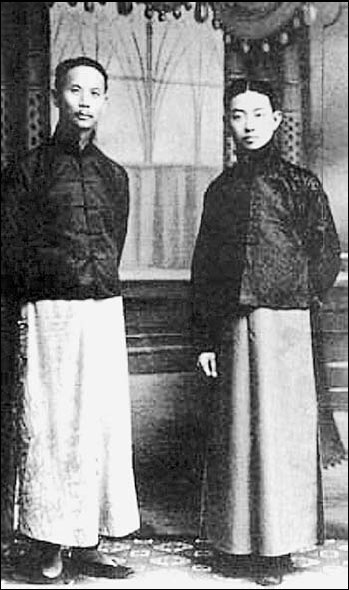
A picture taken in the 1920s features Qi Rushan (left) and Mei Lanfang. |
Peking Opera theorist Liang Yan, with a doctorate in traditional theater studies, has determined who the man behind Mei Lanfang and his tour of the United States was.
"Mei went to the US during the depression in the 1930s," 49-year-old Liang says. "As the first Peking Opera artist there, he lifted the box office and became a popular topic of discussion."
The influence of Qi Rushan, who was born in Hebei province and spent his last years in Taiwan, had previously been ignored because of ideological differences across the Straits.
Liang, the lead researcher on Qi studies in the mainland, spent 10 years retrieving and editing Qi's works. The result, an 11-volume Collection of Qi Rushan's Works, was published recently and is the most complete and reliable source of information on Qi.
Born in 1877 to a prosperous family, Qi had a traditional Chinese and European education. Besides learning foreign languages, he was educated in the enlightenment ideals of equality, something that made him stand out from other intellectuals of the time, Liang says.
Opera performers in the old days were considered low class, particularly when compared with intellectuals. But after watching a show by Mei in 1911, Qi devoted himself to the star's campaign of Peking Opera reform. In the meantime he ran a profitable family business with his brothers.
Qi emphasized the roles of qingyi (young female roles), revolutionized costumes, staging and dancing, to give performances a "touch of humanity," Liang says. "Qi also wrote dozens of scripts tailored for Mei and all these elements contributed to the style of the latter day Mei school."
Qi's work with Mei came to a climax in 1930, when he was the agent and organizer of Mei's six-month tour of the US in general and Broadway in particular.
"He set the New York theater world abuzz with his 'exquisite loveliness in pantomime and costume'," Mark Cosdon writes in his thesis on Mei's influence in the US. "He was showered with awards, honors, and gifts by an adoring public."
Liang says Qi operated like a present-day public relations officer, who understood the demands of Mei's audiences.
"Qi chose plays with more actions than words, so they would be more readily accepted, and trained the troupe in the intricacies of Western etiquette," Liang says.
"And he wrote brochures in English to introduce Mei as a million-dollar-a-year leading Chinese actor, and summarized the plots, drafting English press releases for American media."
Gao Fei, an official with United Front Work Department, calls Qi a pioneer who promoted Chinese culture to global audiences, which offers food for thought today.
Eight decades ago, Qi interviewed more than 4,000 people for a series of books on opera performances and skills that were previously passed down only orally.
Qi left to posterity a collection of 29 monographs on theater, 14 books on folk customs and two essays, recording his experiences and providing material for researchers like Liang to work on.
"It was a task that actors couldn't accomplish and intellectuals were too proud to do," Liang says.
"The collection fills a vacuum in our cultural history and provides direction for scholars across the Straits to work together," Beijing Normal University critic Li Zhenyu says.
One of Qi's books on Peking Opera is even now used as a textbook for dance majors at Beijing Dance Academy.
Qi died in 1962 at a theater in Taiwan while applauding an opera.



Copyright 1995 - 2010 . All rights reserved. The content (including but not limited to text, photo, multimedia information, etc) published in this site belongs to China Daily Information Co (CDIC). Without written authorization from CDIC, such content shall not be republished or used in any form. Note: Browsers with 1024*768 or higher resolution are suggested for this site.
License for publishing multimedia online 0108263 Registration Number: 20100000002731