Time tells
 |
|
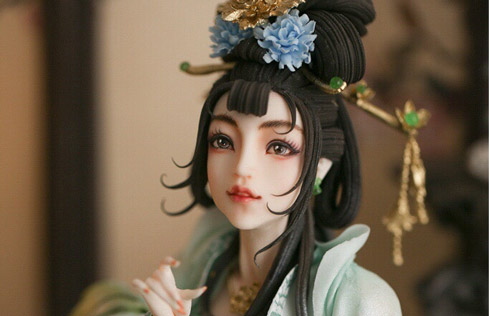
A wood engraving of Xiao Hong.[Photo/China Daily] |

The writer Xiao Hong is receiving due recognition nearly 70 years after her tragic death. Liu Jun reports.
When she passed away in a Hong Kong hospital in 1942, Xiao Hong, 31, seemed to be a failure as a writer. Her latest novel had been criticized for not being patriotic enough at a time when the country was fighting off Japanese invaders.
Neither did she have much luck in her love life. Her fianc abandoned the pregnant Xiao. Her true love, another writer of the 1930s, left her for other women. Her husband wasn't there when a doctor's misdiagnosis led to her death.
All this forms a striking counterpoint to the growing glory that Xiao is gaining.
She was one of seven outstanding Chinese women chosen by the International Astronomical Union to name craters on Venus in 1991.
Even better, earlier this month, the country's leading authors, critics, researchers and her fans gathered in Harbin, capital of Heilongjiang province, for the first national literary award in her honor.
Granted every five years by the Heilongjiang provincial government, People's Daily and Heilongjiang Writers' Association, the Xiao Hong Literary Award is an important effort to boost the country's serious literature, says Chen Xiaoming, literary professor with Peking University and a judge for the award.
Although some 3,000 literary works are published every year nationally, few of them stand the test of time, Chen says in a telephone interview. Without a mature market for promoting serious literature, awards are effective in upholding literature's dignity, he adds.
Unlike the government's Mao Dun Literary Award and others that emphasize social reality, the Xiao Hong Literary Award is angled at women writers and Xiao Hong researchers.
"Most people are moved by her tragic life. But I want to find out why she is great? What are her values?" says Ye Jun, an associate professor with the Heilongjiang University and winner of the Xiao Hong Research Award with From One Foreign Land to Another - Biography of Xiao Hong (2009).
After studying Xiao for some 15 years, Ye believes the usual description of her as a "left-wing revolutionary woman writer" is an injustice.
Actually, she was a genius at depicting the "barren" countryside in which farmers lived under suffocating feudal traditions, Ye says in a telephone interview.
"Her works represent the highest level of Chinese literature in the 1940s, and they resonate with today's readers," Ye says, adding that Xiao's novella Ma Bole (1940) is just as important as Qian Zhongshu's Besieged City (1947), which is also set against the background of the War of Resistance Against Japanese Aggression (1937-1945).
Despite significant research into her life, Ye says there is still a lot of speculation about Xiao, which is typified by disagreements about the name and background of her fianc.
The influential writer and thinker Lu Xun (1881-1936) was instrumental in establishing Xiao's fame. But even he didn't appreciate her true value, Ye says.
"The writer belongs to all, not one particular social class. Whether past or present, a writer must focus on people's ignorance," Xiao said in Hong Kong, where she finally found a haven to write after years of exile.
For two years in Hong Kong, she was able to concentrate on writing and produced a number of mature works, including the semi-autobiographical Tales of Hulan River (1941). Unfortunately, most people at the time believed she was ignoring the patriotic imperative and instead focusing on the trivialities of her childhood memories.
While Xiao didn't fit into the black-or-white ideological framework of her time, her increasing visibility proves the situation has changed.
"There used to be some absolute literary criteria, but we have become more diversified and accommodating to different genres of writing," critic Chen Xiaoming says.
Both rounds of voting for the award were done publicly. Six writers and three researchers won awards in novel writing, women's literature and research on Xiao Hong.
Ye Guangqin, a writer based in Xi'an, Shaanxi province, won the Xiao Hong Women's Literary Award for her novella Xiaoyaojin (2007).
Xiao passed away in dire poverty at just 31. At the same age, Ye's mother got married; Ye was working in a factory after being sent to the countryside to be re-educated; and Ye's daughter had just earned her doctorate.
"We are living in good times," she says in a telephone interview. "Society, literature and the women's writing have all progressed."
In Xiao's time, there were just a few notable women writers, such as Bing Xin (1900-1999), Lu Xiaoman (1903-1965) and Lin Huiyin (1904-1955). Most of them enjoyed much better lives than Xiao, whose poverty helped her create such vivid descriptions of hunger and death.
Today, there are so many women writers that "you can't count them with both hands", Ye says. For those who are accustomed to fast-food literature, it is hard to understand the chilling sadness permeating Xiao's works.
"Good literature always needs true feelings, which is exactly what makes Xiao's works so engaging and enchanting," Ye says.
Chi Zijian, president of the Heilongjiang Provincial Writers' Association, said at the award ceremony that the spirit of Xiao's works is interwoven with the "Land of Dark Earth", Northeast China. She compares Xiao's contribution to Chinese literature with that of William Faulkner in the United States, Russia's Leo Tolstoy and France's Victor Hugo.