World cultural heritages on stamps
The Temple of Heaven
The Temple of Heaven, literally the Altar of Heaven, is a complex Taoist buildings situated in the southeastern part of central Beijing, in Chongwen District. The complex was visited by the Emperors from the Ming and Qing dynasties for annual ceremonies to offer prayer to Heaven for good harvest. It is regarded as a Taoist temple, although Chinese Heaven worship, especially by the reigning monarch of the day, pre-dates Taoism.
The temple complex started construction in the year 1406 to 1420 during the reign of the Yongle Emperor, who was also responsible for the construction of the Forbidden City in Beijing. The complex was extended and renamed Temple of Heaven during the reign of the Jiajing Emperor in the 16th century. The Jiajing Emperor (1507-1567) also built three other prominent temples in Beijing, the Temple of Sun in the east, the Temple of Earth in the north, and the Temple of Moon in the west. The Temple of Heaven was renovated in the 18th century under the Qianlong Emperor’s reign.
|
 This suit of 4 stamps is issued at 1997. |
The Temple of Heaven was inscribed as a UNESCO World Heritage Site in 1998 and was described as “a masterpiece of architecture and landscape design which simply and graphically illustrates a cosmogony of great importance for the evolution of one of the world’s great civilizations...” as the “symbolic layout and design of the Temple of Heaven had a profound influence on architecture and planning in the Far East over many centuries.”
In Chinese culture, Earth was represented by a square and Heaven by a circle; several features of the temple complex symbolize the connection of Heaven and Earth, circle and square. The whole temple complex is surrounded by two cordons of walls; the outer wall has a taller, semi-circular northern end, representing Heaven, and a shorter, rectangular southern end, representing the Earth. Both the Hall of Prayer for Good Harvests and the Circular Mound Altar are round, each standing on a square yard, again representing Heaven and Earth.
The Hall of Prayer for Good Harvests has four inner, twelve middle and twelve outer pillars, representing the four seasons, twelve months and twelve traditional Chinese hours respectively. Combined together, the twelve middle and twelve outer pillars represent the traditional solar term.
The Ming Dynasty Tombs
The Ming Dynasty Tombs are located some 50 kilometers due North of Beijing at an especially selected site. The site was chosen by the third Ming Dynasty emperor Yongle (1402-1424), who moved the Capital City of China from Nanjing to the present location of Beijing. He is credited with envisioning the layout of the ancient city of Beijing as well as a number of landmarks and monuments located therein. After the construction of the Imperial Palace (the Forbidden City) in 1420, the Yongle Emperor selected his burial site and built his own mausoleum.
|
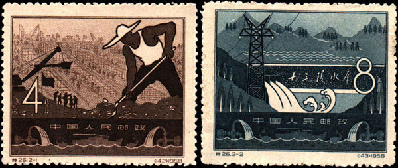 |
From the Yongle Emperor onwards, 13 Ming Dynasty Emperors were buried in this area. The tombs of the first two Ming Emperors are located near Nanjing (the capital city during their reigns). Emperor Jingtai was also not buried here as the Emperor Tianshun had denied Jingtai an imperial burial but was instead buried west of Beijing. The last Emperor Chongzhen who hung himself in April, 1644 was the last to be buried here, named Si Ling by the Qing emperor but on a much smaller scale than his predecessors.
The Summer Palace
The Summer Palace or Yihe Yuan is a palace in Beijing, China. The Summer Palace is mainly dominated by Longevity Hill (60 meters high) and the Kunming Lake. It covers an expanse of 2.9 square kilometers, three quarters of which is water. The central Kunming Lake covering 2.2 square kilometers was entirely man made and the excavated soil was used to build Longevity Hill. In the Summer Palace, one finds a variety of palaces, gardens, and other classical-style architectural structures.
|
 |
The Summer Palace started out as the Garden of Clear Ripples in 1750. Artisans reproduced the garden architecture styles of various palaces in China. Kunming Lake was created by extending an existing body of water to imitate the West Lake in Hangzhou. The palace complex suffered two major attacks—during the Anglo-French allied invasion of 1860 (with the Old Summer Palace also ransacked at the same time), and during the Boxer Rebellion, in an attack by the eight allied powers in 1900. The garden survived and was rebuilt in 1886 and 1902. In 1888, it was given the current name, Yihe Yuan. It served as a summer resort for Empress Dowager Cixi, who diverted 30 million taels of silver, said to be originally designated for the Chinese navy (Beiyang Fleet), into the reconstruction and enlargement of the Summer Palace.
In December 1998, UNESCO included the Summer Palace on its World Heritage List. It declared the Summer Palace “a masterpiece of Chinese landscape garden design. The natural landscape of hills and open water is combined with artificial features such as pavilions, halls, palaces, temples and bridges to form a harmonious ensemble of outstanding aesthetic value.” It is a popular tourist destination but also serves as a recreational park.