Most famous scientists have been men. But women have been actively discovering and researching, solving problems and creating new ways to do things.
VOICE ONE:
I'm Faith Lapidus.
VOICE TWO:
And I'm Bob Doughty with EXPLORATIONS in VOA Special English. Today we tell about female scientists around the world and some of the problems they face.
(MUSIC)
VOICE ONE:
Women have been making scientific discoveries since ancient times. More recently, women scientists have developed drugs to treat diseases like cancer, diabetes and malaria. Women have made important discoveries about the human body and improved their country's effectiveness in fighting wars.
12 women have won the Nobel Prize in science, one of the highest honors in the world. Some female scientists never married. Some worked with their husbands. Others raised large families. But it has been difficult for women to be successful scientists.
VOICE TWO:
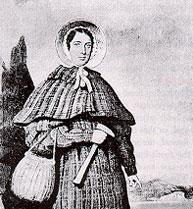
In the early 1800s in England, Mary Anning became one of the first women recognized for her discoveries about the ancient history of the Earth. Mary and her father collected fossils in their village on the southern coast of Great Britain. Fossils are plants or parts of animals that have been saved in rocks for millions of years.
When she was only 12 years old, Mary became the first person to find the almost complete skeletons of several animals that no longer existed on Earth. She never became famous for her discoveries because she often sold her fossils to get money to support her family.
VOICE ONE:
In 1891, a young Polish woman named Marie Sklodowska traveled to Paris, France to study physics. She did so because she could not get a college education in Poland. She began working in the laboratory of a man named Pierre Curie. Marie and Pierre Curie married and made many discoveries together. They received the Nobel Prize in physics in 1903 along with another scientist. Marie Curie became the first person to be awarded a second Nobel Prize in 1911, this time in chemistry. Marie Curie was one of the few women at the time who became famous as a scientist.
VOICE TWO:
In 1906, a little girl named Maria Goeppert was born in Germany. She learned to love science from her father. She married an American scientist. Joseph Mayer and Maria Goeppert moved to the United States in nineteen thirty. Mister Mayer became a professor at Johns Hopkins University in Baltimore, Maryland.
But Maria Goeppert-Mayer worked without pay as a volunteer. Later she became a professor of physics at the University of Chicago in Illinois. In 1963, Maria Goeppert-Mayer won the Nobel Prize in physics along with two other scientists.
(MUSIC)
VOICE ONE:
During World War Two, many American women worked in factories. Their inventions improved fighter planes, containers for fuel and cameras. But after the war, women were expected to stay at home and have babies while their husbands went back to work in factories and laboratories. Women who continued to be scientists were often told it was not natural for women to work outside the home.
VOICE TWO:
Even today, many experts say women scientists often are not treated fairly. Women receive fewer patents for their inventions. A patent forbids others from copying an invention and makes the invention valuable in the world of business. Until the middle of the 19th century, anything a woman invented belonged to her husband under the law. But even in two thousand two, fewer than 11% of patents were awarded to women in the United States.
The National Inventors Hall of Fame in Akron, Ohio includes only 6 women on its list of 235 inventors. One of them is Stephanie Kwolek. She worked for the chemical company DuPont when she invented a cloth named Kevlar. It is five times stronger than steel. It is used to make clothing that stops bullets fired from a gun.
It is also used in space. Miz Kwolek works to improve science education for all children.
(MUSIC)
VOICE ONE:
Several organizations in the United States are helping women in science. The L'Oreal company and the United Nations agency UNESCO honor women in science around the world. Since 1998, 52 women scientists from 26 countries have been recognized for their work.
Professor Tebello Nyokong of Lesotho is one of this year's award winners. Her research concerns the development of drugs to treat cancer. As a young girl, Professor Nyokong says she went to school on some days and took care of sheep on other days. She did jobs that were usually done by boys.
She said this had a good effect, because she was permitted to explore as she grew older. She says the biggest problem was feeling very alone as a woman in science. Professor Nyokong says she wants to support young women in science so they do not have to experience this.
VOICE TWO:
Many women scientists have had to find ways to be good mothers and scientists at the same time. Christiane Nusslein-Volhard of Germany shared the Nobel Price for physiology or medicine in 1995. She directs the Max Planck Institute of Developmental Biology in Tubingen, Germany.
Doctor Nusslein-Volhard says women in Germany often stop working as scientists when have children. So she started an organization that gives money to young women scientists who need help paying for someone to care for their children and homes.
Doctor Nusslein-Volhard has said she hopes life will become easier for women scientists in Germany while Angela Merkel is the chancellor. The leader of Germany has a doctorate degree in physics.
(MUSIC)
VOICE ONE:
Many programs in the United States support girls who want to become scientists. Girls Go Tech is a Web site started by the Girl Scouts of America at girlsgotech.org. The Web site includes ideas about jobs in science and information for parents who want to help their daughters remain interested in science.
Girls can listen to programs about women in science at a Web site called Women in Science, Technology, Engineering and Mathematics ON THE AIR! It is at womeninscience.org. You can hear more than 50 women who work in many different jobs connected to science. For example, Donna Lee Shirley led the team that built the vehicle to explore the planet Mars. Jeanette Berringer is a zookeeper in Rhode Island. She studied in Madagascar to learn how to take care of lemurs. Leanne Daffner uses technology to protect famous works of art.
Shirley Ann Jackson grew up in Washington, D.C. when black children and white children attended different schools. She became the first African-American woman to earn a degree in physics from the Massachusetts Institute of Technology.
VOICE TWO:
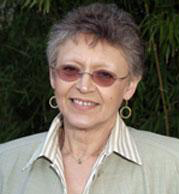
Last year, a woman won the Nobel Prize in physiology or medicine. Fran?oise Barre-Sinoussi was honored with another scientist for research leading to the discovery of H.I.V., the virus that causes AIDS. She works at the Institute Pasteur in Paris, France. She supports many young scientists, including those from poor countries. Doctor Barre-Sinoussi said recently that "there is always hope in life because there is always hope in science."
VOICE ONE:
Last month, Rita Levi-Montalcini became the first Nobel Prize Laureate to reach the age of one hundred. But when she was a girl, she had to persuade her father to let her study science. Then she had to do her research secretly in her home because she was Jewish. Jews were not permitted to be scientists during the nineteen thirties in Italy.
After World War Two, she worked for many years in the United States. In 1986, Rita Levi-Montalcini shared the Nobel Prize in physiology or medicine for discovering processes that control the growth of cells and organs.
When Doctor Levi-Montalcini was a young woman, she dreamed of working in Africa with Doctor Albert Schweitzer. She was not able to do that then, but now she says she has returned to that dream. She and her sister started an organization that provides money to young African women who want to study science. Some of these science students work in Doctor Levi-Montalcini's laboratory in Italy. She says her message to them is: "Do not fear difficult moments. The best comes from them."
(MUSIC)
VOICE TWO:
This program was written by Karen Leggett and produced by Dana Demange. I'm Bob Doughty.
VOICE ONE:
And I'm Faith Lapidus. You can find transcripts, MP3s and podcasts of our reports at voaspecialenglish.com. Join us again next week for EXPLORATIONS in VOA Special English.