When warriors return home from the battlefield, they often struggle with emotional and psychological illness. Many have suffered brain injuries, and most face difficulties readjusting to civilian life. To help those servicemen help themselves, the US Defense Department has opened a 24-hour telephone help line.
The new outreach call center offers help around the clock, 7 days a week.
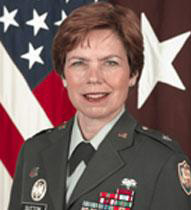
"We've gotten calls from all over the country and around the world," Army Gen. Loree Sutton is the director of the Defense Centers of Excellence for Psychological Health and Traumatic Brain Injury. It established the outreach center earlier this year.
"We've gotten calls from soldiers, sailors, airmen, Marines, Coast Guardsmen. We provide support to all who maybe suffering, who maybe struggling, who maybe thinking, that you know, 'I'm the only one.' And that's our privilege to put out that message: 'You are not alone.'"
Servicemen, veterans and their families are not the only ones seeking help, she says.
"We've gotten calls from doctors, nurses, researchers, teachers, chaplains and concerned citizens, moms and dads. So really we're here for anyone who has a question, who wants to be part of our efforts, to support our loved ones, to support our men and women in uniform and their families."
Getting service members help they need
The outreach center links callers to the information, resources and treatments they are looking for.
"You know, anywhere between 10 to 20 percent of our troops coming back from Iraq and Afghanistan will screen positive for a possible concussion or traumatic brain injury. So we've been having the resources in place when troops return so that we can get those clinical assessments and really help understand what's going on. Whether it be issues related to a concussion, or perhaps an individual may have an experience in severe trauma, depression or anxiety. Of course we want to intervene early so we can get the individual the help and the hope that they need before they risk turning to more destructive ways of perhaps self-medicating with alcohol or other substances."
Easing rough transitions to the home front
Since the outreach center started receiving calls in January, Sutton says, well-trained counselors have helped hundreds of service members returning from Iraq and Afghanistan. Transition-related issues are among their main concerns.
"I can tell the story of a young sergeant who described this process of what it's like to come home from war. He said, 'Man, you know, It's really tough moving from being a target to shopping at Target,' which is one of our main department stores here in the U.S. I think what this young sergeant was pointing to is the transition. You know the skills that allow a warrior to excel on a battlefield, to take care of the mission, to take care of his buddies or her buddies, to come home, are very different skills than those which are required here on the home front."
During this transition period, the simplest daily routine at home can be a challenge. Sutton says most new veterans complained about difficulty sleeping.
"When you think about it, of course it makes sense."When you've been spending months on war zone, hearing the sounds of warm the mortars, the gunfire, coming back home to the quietness of your bedroom can be very difficult. And so, we've been able to give folks tools to help them understand that this is a transition, that there are things they can do to help restore their sleep, their nutrition, their health, to reconnect with friends, to deepen their faith, to strengthen their love and to show their potential for claiming the growth that can come out of even the most difficult adversity. Of course, as we all know, war is ugly, ugly, ugly business, so we're here to help."
Center reaches out to service members around the globe
The new outreach center, she says, is a meaningful addition to the services the Defense Department already offered to meet the needs of the military community.
"Over the last several months, a little over a year since we've been here in existence here at the Defense Centers for Excellence, we've linked up for example with nations in the world, leading researchers to invest in studies that will help inform our knowledge. We've also linked up with leading clinicians from across the services as well as around the nation and around the world, so we can share what we learn about clinical treatment. We've also stepped up our ability to educate, and to train, and to prepare individuals from across services around the communities, so we can constructively be part of the solution."
She says technology is allowing the outreach center to expand its reach.
"In addition to the phone number - 866-966-1020 - we've also added an e-mail address that's available with coaching help 24-hours-a-day. And that's: resources@dcoeoutreach.org. Soon we'll add chat and instant messaging that will allow people to connect with us all around the world."
Gen. Stutton says moving from the battlefield to civilian life is a challenging process that may take a long time. But with all its resources in place, she hopes the outreach center will provide the knowledge and hope that military service members need to move ahead with their lives.