影片對白 All I know is that she's not the right woman for mein the larger sense,so I keep her a secret.
思想火花 生活中,大多數男人的想法都和邁克差不多:盡管女孩子很聰明,很可愛,很真誠,但是不夠漂亮,他們總覺得遺憾而心有不甘……
考考你 小試牛刀
文化面面觀
西餐美食之乳酪
 乳酪是西餐中必不可少的菜肴。對它,有人愛之如命、不可一日或缺,有人則一聞到味道便逃之夭夭、避之唯恐不及。目前,全世界約有數千種以上的天然乳酪,產地涵蓋將近整個歐洲,以及美國、加州、澳洲、紐西蘭與日本等地;其中,每個國家都有其代表性的乳酪,如意大利的Gorgonzola、Mascarpone、Ricotta,荷蘭的Gouda、Edam,英國的Stilton、Cheddar,瑞士的Emmenthal、Gruyere,德國的Bonifaz、Bavariablu,丹麥的Danadlu、Havarti ……等等。
As Pierre Androuet asserts in his fundamental text Guide du Fromage (Guide to Cheese), a cheese should simply be what it is-its appearance, aroma, texture, and flavor should be characteristic of the variety to which it belongs. But how does one determinate a cheese's "type"? There are innumerable cheeses, and no single, standardized method for grouping them; rather, authorities employ different classification systems.
General characteristics, such as the type of milk (or whey) used or the country of origin, provide a starting point for discussing broad topics; for example, the relative unpopularity of sheep's milk cheese in the United States compared to European countries, or the social implications of cheese consumption in England as opposed to France. More specific classifications-the moisture content of the cheese (hard, semi-hard, soft, or fresh), whether it was made from pasteurized or unpasteurized milk, or the length of aging-may serve scientific inquiries concerned with bacterial development rates in different cheeses.
When cheese is classified by "type," it is grouped by similar characteristics like taste, smell, and appearance. The rind type and the method of production are often used as determining factors. Steven Jenkins describes eight different cheese "families" (including processed cheese) (Cheese Primer, pp. 11-13). These very common categories may help when choosing a cheese at the cheese counter, but a particular cheese may fit into more than one category, or not seem to fit in any.
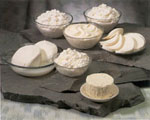 Fresh cheese 新鮮乳酪. After the formation of curds, the cheese (and also, sometimes, the whey) is usually transferred to plastic tubs and covered. The cheeses are eaten fresh, not ripened, and do not have a rind. Cottage cheese, cream cheese, and feta-a pickled cheese-are some common examples of fresh cheeses. Sometimes fresh Mozzarella is also included in this category because it does not form a rind, but this is problematic because Mozzarella curds are heated and stretched.
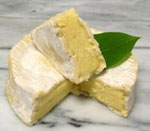
Bloomy rind cheese 半成熟乳酪. Also called simply "soft ripened cheese," this category includes cheeses like French Camembert and Brie, which are covered with velvety white molds that ripen the cheese from the outside in.
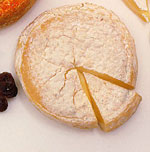 Washed-rind cheese 洗浸乳酪. These orange, sticky, stinky cheeses are rubbed with a water, brine, or alcohol solution to invite the growth of ripening bacteria and molds on their rinds. Examples include the French Livarot (nicknamed "The Colonel" because it is ringed with raffia stripes) and Alsatian Munster.
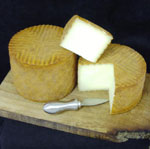 Natural rind cheese 自然外殼乳酪. These cheeses are self-sufficient, naturally forming their rinds from air contact. Surface-molded goat cheeses and British Stilton are good examples. British farmhouse cheeses are sometimes included in the natural rind category because their permeable cheesecloth wrapping allows them to develop a thick protective rind. Likewise, Parmigiano-Reggiano and other cheeses are helped to form a rind that still develops largely from air contact.
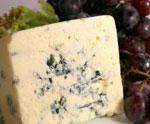 Blue-veined cheese 藍紋乳酪. To allow the growth of their distinctive bluish or greenish interior molds, these cheeses are never pressed. They are typically injected with a mold strain, and then pierced to expose the insides to air. They may be wrapped in foil like Italian Gorgonzola or form natural rinds like British Stilton.
Uncooked, pressed cheese. This is a category defined by processing type. These cheeses are pressed to remove whey, but are not cooked.
Cooked, pressed cheese. Cheeses such as Swiss Emmental (sometimes Emmentaler) and Gruyère are cooked and pressed in the processes described above.
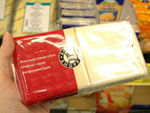 Processed cheese 加工乳酪. There is another type of cheese that, because of its overwhelming presence in supermarket refrigerator cases, should not be overlooked. Pasteurized processed cheese is created by heating and mixing a blend of natural cheeses and emulsifiers. These cheeses-American cheese certainly being the best-known in the United States-can retain their flavor and texture qualities in a much broader range of temperature and moisture conditions than can natural cheeses, and for a longer period of time. They are also easy to use in a variety of dishes, and are typically less expensive than natural cheeses. Because the entire product, not just the milk, is pasteurized, and because processed cheeses are often vacuum-packaged, they are uniformly and consistently safe. The nutrient content of processed cheese remains very close to that of natural cheese, although the sodium content may be higher. All of these characteristics make them popular choices not only in the United States but in other countries as well.
Processed cheese food and cheese spread both contain natural cheese and emulsifying agents, but add other ingredients like whey, skim milk, milk powders, or water that raise the moisture content of the product. This causes them to melt or spread more easily. There are also imitation cheese products that contain little or no milk protein. Soy cheese is one example of an imitation cheese product.
影片對白 All I know is that she's not the right woman for mein the larger sense,so I keep her a secret.
思想火花 生活中,大多數男人的想法都和邁克差不多:盡管女孩子很聰明,很可愛,很真誠,但是不夠漂亮,他們總覺得遺憾而心有不甘……
考考你 小試牛刀


