影片對白 You
said it yourself: it's impossible. Listen, man, I'm telling you, one of us has
got to take a hike.
人物
溫特沃斯·米勒:艱苦的成名路
考考你
一展身手
文化面面觀
Prisoners' Rights in the
U. S. 美國監(jiān)獄中犯人的權(quán)利
看《越獄》這部電視劇,很多人一定會對美國監(jiān)獄中犯人的權(quán)利感到驚奇,比如在放風的時候可以隨便打電話、可以去教堂做禮拜、享受免費醫(yī)療等等。那么,囚犯們在美國監(jiān)獄中究竟享有什么樣的權(quán)利呢?下文為我們展示了一些美國監(jiān)獄中的情況。
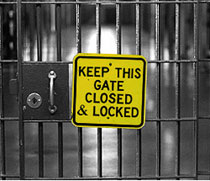 Prisoners' rights are limited. For the most part,
jail and prison inmates may demand only a "minimal civilized measure of shelter"
(Union County Jail Inmates v. DiBuono, 713 F.2d 984 [3d Cir. 1983]). Generally,
courts follow three basic principles when deciding whether to recognize a
particular right. First, an inmate necessarily gives up many rights and
privileges enjoyed by the rest of society; second, an inmate does not relinquish
all constitutional rights upon placement in prison; and third, the
constitutional rights retained by the prison inmate must be balanced against the
security concerns of the prison.
Prisoners' rights are limited. For the most part,
jail and prison inmates may demand only a "minimal civilized measure of shelter"
(Union County Jail Inmates v. DiBuono, 713 F.2d 984 [3d Cir. 1983]). Generally,
courts follow three basic principles when deciding whether to recognize a
particular right. First, an inmate necessarily gives up many rights and
privileges enjoyed by the rest of society; second, an inmate does not relinquish
all constitutional rights upon placement in prison; and third, the
constitutional rights retained by the prison inmate must be balanced against the
security concerns of the prison.
The established rights of prison inmates include freedom of speech and
religion; freedom from arbitrary punishment (i.e., restraints, solitary
confinement) on the sole basis of beliefs, religion, or racial and ethnic
origin; freedom from constant physical restraints; a small amount of space for
physical movement; essentials for personal hygiene and opportunity to wash;
clean bedding; adequate clothing; adequate heating, cooling, ventilation, and
light; and adequate nutrition.
Prisoners' rights can be infringed for security purposes. Prisoners have the
right to freedom of speech, but prison officials may search their mail, deny a
wide variety of reading materials, and edit the content of prison newspapers.
Prisoners have the right to adequate space, but they may be confined in
isolation for long periods, even years. Prisoners have the right to freedom from
restraints, but their ankles and wrists may be shackled when they are moved.
They may also be temporarily strapped down or otherwise restrained if officials
believe that they present a danger.
Prison inmates often attempt to establish new rights in court. Issues such as
prison overcrowding, medical treatment, media access, even exposure to
secondhand cigarette smoke, are among the issues courts face.
 Another sensitive issue in prison is the use of
prison guards of the opposite sex. Women prisoners may receive more privacy in
this regard than men prisoners. For example, the Ninth Circuit Court of Appeals
held in 1985 that the practice of assigning female guards to conduct strip
searches on nude men and watch them while showering, urinating, and defecating
did not violate any constitutional rights (Grummett v. Rushen, 779 F.2d 491
[1985]). However, in 1993, the same court held that it was cruel and unusual
punishment to allow male guards to conduct searches on female prisoners while
the female prisoners were clothed (Jordan v. Gardner, 986 F.2d 1521 [9th Cir.
1993]).
Another sensitive issue in prison is the use of
prison guards of the opposite sex. Women prisoners may receive more privacy in
this regard than men prisoners. For example, the Ninth Circuit Court of Appeals
held in 1985 that the practice of assigning female guards to conduct strip
searches on nude men and watch them while showering, urinating, and defecating
did not violate any constitutional rights (Grummett v. Rushen, 779 F.2d 491
[1985]). However, in 1993, the same court held that it was cruel and unusual
punishment to allow male guards to conduct searches on female prisoners while
the female prisoners were clothed (Jordan v. Gardner, 986 F.2d 1521 [9th Cir.
1993]).
Prisoners retain some rights aside from those concerning living conditions.
Most prisons "classify" prisoners and place them in various units according to
the categories. For example, violent criminals and persons suspected of gang
affiliations are often housed in high-security areas of prison, separate from
the rest of the general prison population. When an inmate is reclassified, he or
she is entitled to notice of the reclassification and a citation of reasons for
the move.
Congress and most states authorize the allowance of "good time" for prison
inmates. Good time is credit for time served on good behavior, and it is used to
reduce sentence length. For example, an inmate may receive one day of good time
credit for every three days that he behaves well. Other states withhold
recognition of good behavior until the defendant has served a certain portion of
the minimum sentence imposed by the court. In New Hampshire, for example, an
inmate may be released for good behavior after serving two-thirds of the minimum
sentence (N.H. Rev. Stat. Ann. § 651-A:12 [1983]). When an inmate has good time
credits taken away, she or he is entitled to notice, a hearing before the prison
board, and an opportunity to present evidence in her or his favor.
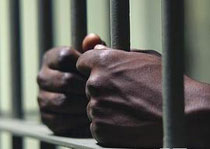 Inmates may also gain early release from prison
through parole, which is granted by the parole board. Prisoners have no right to
parole, and the matter of early release is left to the graces of the parole
board. Once released on parole, a parolee may be returned to prison for breaking
one of the many conditions that are normally imposed. A parolee has no right to
an attorney at a parole revocation hearing, nor does an inmate have the right to
an attorney at a parole hearing.
Inmates may also gain early release from prison
through parole, which is granted by the parole board. Prisoners have no right to
parole, and the matter of early release is left to the graces of the parole
board. Once released on parole, a parolee may be returned to prison for breaking
one of the many conditions that are normally imposed. A parolee has no right to
an attorney at a parole revocation hearing, nor does an inmate have the right to
an attorney at a parole hearing.
Solitary confinement is used in many prisons for violent inmates and those
inmates perceived as having gang-related affiliations. Some prisons are designed
specifically for it. The original prisons, as envisioned by the Quakers, called
for solitary confinement, but the practice was halted because of the detrimental
effects it had on prisoners. However, the practice never completely ended. In
the 1980s solitary confinement became a regular feature of prisons, and it has
become the sole form of incarceration in so-called Security Housing Units or
Supermax prisons.
In a Supermax prison, the cells are eight-by-ten feet and windowless. The
cells are grouped in "pods." The cell doors are perforated with holes large
enough for guards to see inside the cell, but small enough to obstruct the
prisoner's vision and light. All a prisoner can see through the door is another
white wall. Each cell is furnished with a built-in bunk with a toilet-sink unit.
Nothing is allowed on the walls. Prisoners may be allowed television, radio, and
books, but these are taken away as punishment for any rule infractions.
 Prisoners in solitary confinement are kept in their
cells, under surveillance, for twenty-two-and-a-half hours a day. Unlike the
rest of the prison population, inmates in solitary confinement may not take
advantage of educational or recreational programs. The ninety minutes outside
the cell may be divided between visiting a small library, washing, and
exercising in a pen connected to the pod. Prisoners are strip-searched by the
guards before and after visiting any place and are placed in waist restraints
and handcuffs when being escorted.
Prisoners in solitary confinement are kept in their
cells, under surveillance, for twenty-two-and-a-half hours a day. Unlike the
rest of the prison population, inmates in solitary confinement may not take
advantage of educational or recreational programs. The ninety minutes outside
the cell may be divided between visiting a small library, washing, and
exercising in a pen connected to the pod. Prisoners are strip-searched by the
guards before and after visiting any place and are placed in waist restraints
and handcuffs when being escorted.
The assignment of a prisoner to solitary confinement is made by prison
officials. In assigning supposed gang members to solitary confinement, it is the
policy in some prisons to require that the perceived gang member "debrief"
officials on his or her gang activity and renounce his or her gang affiliations
before being released back into the general population.
One of the most important rights possessed by prison inmates is access to the
courts through habeas corpus petitions. After an inmate has exhausted all the
motions and appeals available to contest the conviction and prison sentence, a
final round of limited judicial review is provided through the writ of habeas
corpus. Through the ancient writ of habeas corpus, a court may order the release
of a prisoner wrongly held.
Habeas corpus petitions are granted only for certain constitutional
violations in the prosecution of a criminal defendant. The Anti-Terrorism and
Effective Death Penalty Act of 1996, 28 U.S.C.A. § 2261 et seq., placed certain
limits on this form of relief.


