


China can lead world health efforts
Country has increasingly equitable care that can provide a model for the developing world, public health expert Lincoln Chen says
China has the potential to be a leader in world advances through dialogue about strengthening healthcare equity and coverage, says Lincoln Chen, president of the China Medical Board.
With an increasingly universal healthcare insurance system domestically and growing international economic integration, sharing China's medical aid and national experiences would be a natural step for its leadership among developing countries, Chen tells China Daily.
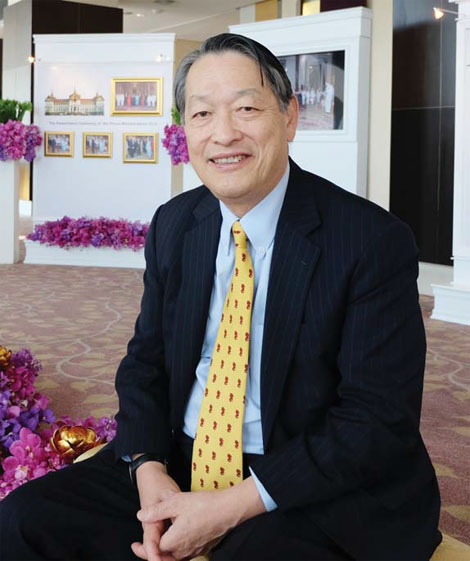
"China started in the 1950s by sending medical teams to developing countries and China's health teams now cover almost 50 counties. China is also intellectually engaged in global health issues," he says.
Chen spoke at the Prince Mahidol Award Ceremony conference in Thailand in January, and says the 50 Chinese participants at the ceremony is testimony to China's growing international engagement in such discussions. Ten years ago, there were no Chinese participants. The Prince Mahidol Award Foundation was established in commemoration of the prince, known as "the father of modern medicine and public health of Thailand", the foundation website says.
China dispatched 55 medical teams with 3,600 workers to nearly 120 medical centers in recipient countries between 2010 and 2012, according to the Chinese government. They trained tens of thousands of local medical staff, which has relieved to some extent the shortage of medical services in recipient countries.
Over the same period, China spent 200 million yuan ($30.7 million; 27.9 million euros) to provide antimalaria medicines, H1N1 influenza vaccines and cholera vaccines free to other developing countries. It also held training in the prevention of infectious diseases.
"China is a global economic power and wants to contribute more, which shows it is taking up its responsibilities as a global power," Chen says.
Moreover, medical aid is relevant for China's leadership in regional integration projects such as the Belt and Road Initiative, through which China hopes to facilitate trade and investment exchanges between Europe and Asia through infrastructure investment.
"You cannot construct a high-speed road without seeing the health implications, whether it's patients' migration, epidemic disease control or penetration into backward regions," he says, referring to past cases of integration's health effects as examples.
One such example of the health impact of trade is the high risk of developing resistance against malaria drugs as Cambodians migrated into Thailand and Myanmar over recent decades. "There will be health implications of trade even if you don't consider health risks at the beginning."
Chen, who trained as a doctor at Harvard Medical School, spent his early career working in hospitals and on healthcare projects around the world before becoming president of the New York-based China Medical Board 10 years ago.
Established in 1914 with funding from the Rockefeller Foundation, China Medical Board works with many Chinese medical schools to share experience, training and scholarship funding. It is the key organization that finances Peking Union Medical College.
Chen says China's current budget aid to developing countries, like African countries, is biased toward building hospitals and providing medical teams, but the training of doctors and sharing of experiences are equally valuable.
For example, when visiting dental and optician vocational training centers in rural Sichuan province, he realized such a model of training could be useful to other developing countries, and should be "more widely propagated".
Compared with developed countries, where dentists and opticians receive college degrees, the vocational training model in Sichuan recognizes that not all dentists and opticians have to be as highly educated as university graduates, as long as the vocational training gives them essential skills to perform their jobs.
Chen says China "will be looked to as a world leader in the meeting of the Sustainable Development Goals". The 17 goals were established by the United Nations Sustainable Development Summit on Sept 25, 2015, by world leaders, who adopted the 2030 Agenda for Sustainable Development. Out of the 17 goals outlined, the first six directly address health disparities, primarily in developing countries, which are poverty reduction, hunger and food security, health, education, gender equality, and water and sanitation.
Perhaps this is of no surprise considering that China has made significant contributions to the UN Millennium Development Goals adopted in 2000, the forerunner of the Sustainable Development Goals, which mainly focused on growth and poverty reduction.
"I think the most important aspect of achieving efficiency and equity in healthcare coverage is to allow people to drive forward the agenda of their own countries. China respects the sovereignty of other countries, so the next step would be investing in the capacity of talented leaders in other countries," Chen says.
On top of providing aid and developing talent in other economies, China would also create many benefits if it can facilitate public health discussions among developing countries and use its influence to make developing countries' key concerns heard.
One such example of concern could be the health implications of the US-led Trans-Pacific Partnership agreement on developing economies, as TPP has a conservative stance on intellectual property protection that could lead to protective measures that reduce the accessibility of drugs to developing countries, he says.
Meanwhile, Chen says he is hopeful about China's healthcare reform, believing it can lead to increasingly more equitable universal coverage. "The current healthcare reform began in the '90s, covering such areas as insurance protection, primary healthcare, public health, pharmaceuticals, and reforms of major hospitals. The reforms are making some progress because the government gives priority to healthcare."
In more recent years, the Chinese government's proposed healthcare reform agenda has focused on increasing insurance coverage, improving primary care, and encouraging private sector provision of healthcare to complement public provision, all of which are focus points of China's 13th Five-Year Plan (2016-2020).
Chen says he sees one key challenge for China's reforms being the building of the primary care system. There is a shortage of qualified general practitioners and the pay incentives in this sector are insufficient, especially to motivate general practitioners to move to grassroots rural clinics.
"The big hospitals are flooded with patients, most of whom could have their conditions taken care of at lower levels. Primary care and big hospitals are two sides of the same coin that need to be smoothed out over the coming years."
Talking to doctors at hospitals has made Chen realize that they are often under heavy stress from the patient load, which can be as high as 50 patients in half a day.
"There are too many patients, with limited time for examinations and diagnosis, and doctor-patient communication can be poor. This then leads from the patients' perspective to lacking trust in doctors and hospitals. This is especially the case when they feel they are getting overcharged and have long wait times."
Chen sees China's increasing insurance coverage as encouraging, and especially the government's efforts to focus on extending coverage to rural citizens, ethnic groups and other low-income communities.
The Chinese government's method for channeling funding into primary healthcare by making insurance reimbursement for certain treatments available only at the primary level is also encouraging, Chen says. The policy means patients who bypass primary level clinics and receive treatment at big hospitals will need to pay more or higher prices.
Another key change that could dramatically lead to China's healthcare improvement is the development of a multidisciplinary approach to healthcare education, he says.
"Today China's medical schools focus strictly on the technicalities of diseases, but education needs to recognize that other factors like food, education and environment also affect public health."
This is particularly true as China is experiencing fewer risks in infectious diseases and more problems with illnesses that predominate in developed economies such as obesity, diabetes and cancer.?
cecily.liu@chinadaily.com.cn















