


'Explosions highlight insurance void'
Reforms to spread risk to international insurers would reduce burden on society, experts say
The Tianjin explosion has highlighted the danger of China's low insurance penetration rate, meaning that recovery and compensation will place a larger burden on public sector funds, experts say.
They also say the lack of diversification of China's insurance market will mean domestic insurers, and consequently the domestic economy, will bear a large share of the costs, unlike mature economies that spread their insurance risks widely through global reinsurance firms.
|
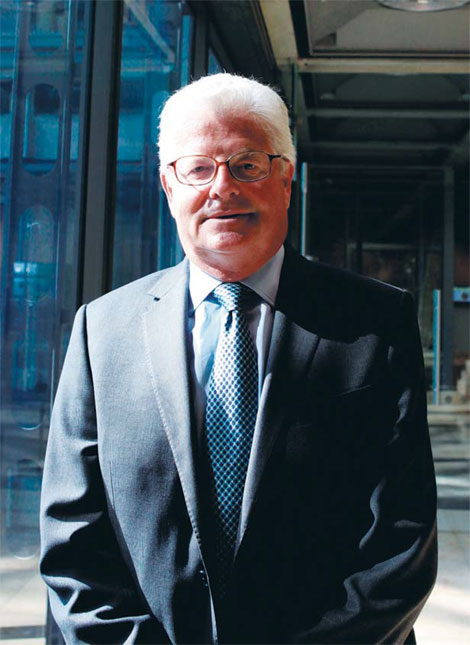
John Nelson, chairman of Lloyd's of London. ?Cecily Liu / China Daily |
According to estimates by Credit Suisse, insurance losses could total nearly 1 billion pounds ($1.57 billion; 1.41 billion euros) after two explosions in the Chinese city killed more than 100 people, with 64 still missing and hundreds injured.
John Nelson, chairman of Lloyd's of London, says the Tianjin disaster is a reminder of the importance of insurance to an economy, and of the need for diversification of risk, which can be achieved by further liberalization of the market.
A 2012 Lloyd's study on underinsurance found an $80 billion gap in the insurance needed to cover China's exposure to catastrophes. The average uninsured cost of catastrophe in China was estimated at $18.91 billion.
The study also showed that a 1-percent increase in insurance penetration translates into a 13-percent reduction in uninsured losses, a 22-percent reduction in the taxpayers' contribution following a disaster, and increased investment equivalent to 2 percent of GDP.
Nelson acknowledges that Chinese regulators are liberalizing the insurance market both by building up a strong domestic insurance market and encouraging foreign participation, as well as encouraging Chinese insurance and reinsurance firms to go global.
However, he says further liberalization could help encourage further diversification of risk outside of China.
Currently, however, domestic insurance firms would contribute a greater proportion of capital for the insurance when they share their risks with foreign reinsurance firms compared with domestic reinsurance firms, he says.
Under current rules, he says, "Economically, it is more expensive for them to reinsure outside of China. In the long term, this would not help China diversify its insurance risks outside of the country."
According to the China Insurance Regulatory Commission, the market share of foreign insurers in China's insurance market in 2014 was 2.37 percent, which is small but already a big increase from 1.6 percent in 2013.
Nelson says the amount of specialist risk insured in China is still very low compared with that of mature economies, while insurance penetration catches up.
And as China's economy becomes increasingly sophisticated and international, the amount of risk that its businesses and industries are exposed to is also growing, and integrating its insurance sector with that of the global market is increasingly important, he says.
Lloyd's opened an underwriting office in Shanghai in 2007, and last year it opened a branch in Beijing.
As of June, there are 22 syndicates and 19 managing agents working with Lloyd's China. Lloyd's China is growing, as is the long-term strategic importance of the region for the company.
Lloyd's underwrote $332.9 million in insurance business from China, of which $11.2 million was direct insurance business and $321.7 million was reinsurance.
"Lloyd's premiums written in China are expected to increase significantly in 2015 and continue to grow over the next three years," says Nelson.
A further challenge is that Lloyd's is regulated in China as a corporation, because China has not developed a separate set of regulations to regulate it as a market. In London, Lloyd's operates as an insurance market. If regulated as a market, it would remove one layer of corporate complexity, he says.
Nelson expects Lloyd's to have minimal exposure to the Tianjin explosion, but he says it is too early to estimate the amount. He expects the exposure Lloyd's syndicates have will be small and will not affect the Lloyd's market as a whole, although he cannot estimate "how small it is".
He says explosions like Tianjin blasts demonstrate the importance of the insurance and reinsurance industries to channel funds to the proper place in order to lead economic recovery in time of need.
He is optimistic about China's market for foreign insurers because he has witnessed a change of mentality in China, where corporate entities are increasingly buying private sector insurance rather than relying on the state to provide money for recovery after large catastrophes.
"Historically, the government has been the insurer of last resort, but more private sector insurance would mean less burden on the public sector to fund much of these recovery costs," he says.
Chris Kershaw, managing director of global markets for Peak Re, a Hong Kong-based reinsurer, agrees.
"The encouragement of active participation by international reinsurance and insurance companies in the China market helps to spread risk and sustain recovery, sharing the financial burden of events such as this," he says.
Kevin Xu, a PricewaterhouseCoopers China financial service partner, says the percentage of properties insured in China is still much less than that of developed Western markets, due to a lack of risk awareness and reluctance to pay for insurance protection.
Xu says in China about 70 percent of property and casualty insurance premiums are from automotive coverage, largely driven by mandatory legal requirements, which indicates that significant amounts of valuable properties are not fully insured. In developed markets, the share of auto coverage would not be so dominant.
"In the UK, for example, it is rare to find a valuable property that is not insured," he says.
"The Chinese government has over the years greatly been promoting awareness of insurance protection, for people's lives and their valuable properties, and in the future there is definitely a lot of potential for the China insurance market."
The thousands of imported cars damaged in the blasts are highly likely to be insured, but the damaged residential properties near the explosion site are probably not, Xu says.
Larry Schiffer, a partner at the law firm Squire Patton Boggs, says the Tianjin disaster will probably have more international diversification of insurance claims than other catastrophes in China because a larger percentage of the cargo destroyed is likely to be owned by multinationals, which is likely to be insured outside of China.
Much of the insurance claims relating to the Chinese exporters, the infrastructure, and other aspects relating to the port will likely fall on Chinese insurance firms, and it is likely few of these claims are reinsured outside of China, he says.
Multinational insurance companies including Zurich, Aviva and Allianz have said they have received claims from clients that had been affected by the disaster. But they say that while they are still analyzing the situation, they do not expect major financial claims from the explosion.
"It's way too early to make any statements on our net impact. Reinsurance is in place to provide us with additional protection. We and the whole industry have been requested to report claim situation and progress to the regulator," Zurich says in a statement.
Since many Western cars imported into China through the Tianjin port were destroyed, automakers are now assessing the damage and making insurance claims accordingly.
Renault says about 5,000 Renault vehicles are warehoused at Tianjin Port and, of these, nearly 1,500 were damaged or destroyed in the explosion. Most of the damaged cars were Koleos.
"Dongfeng-Renault promises that any fire-damaged Renault vehicles will be prevented from entering distribution channels. The nearly 1,500 vehicles damaged or destroyed due to fire will be sent to the insurance company for disposal," a Renault statement says.
Volkswagen says 2,700 of its imported cars were affected by the blast, although there was no information on the value.
"Our component plant, which is 20 kilometers from the location where the explosion happened, was not affected. ... We are rerouting our imports via Shanghai and Guangzhou and will have almost no impact concerning deliveries to customers," a Volkswagen statement says.
cecily.liu@mail.chinadailyuk.com















