Book explores Obama's pivot to Asia as a lesson
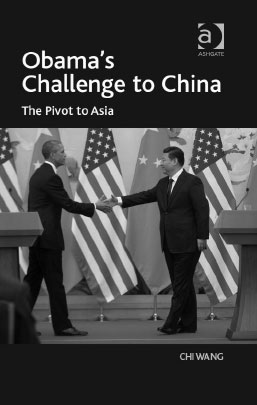
Professor Chi Wang, the US-China Policy Foundation president, recently published a book titled Obama's Challenge to China, the Pivot to Asia, in which he explores the developments in the Sino-US bilateral relationship during the presidency of Barack Obama.
Obama took office in 2009, just as China's rise to global power accelerated. Wang explores the Obama administration's "pivot to Asia" policy, arguing that Obama's foreign policy decisions concerning China have set the stage for a new era in US-China relations.
Wang posits that the Obama administration, like every presidential administration since Richard Nixon's, has attempted a delicate balance between confrontation and cooperation with China in an attempt to establish a mutually beneficial relationship.
Wang analyzes both the successes of the Obama administration's engagement with China and details the challenges that could serve as learning opportunities for the next administration.
Wang conjectures that economic fluctuations in the past decade have ushered in a new era for engagement. As the US became increasingly vulnerable during the financial crisis of 2008, China's economy maintained a high growth rate, which provided increased opportunities for bilateral interaction and a new interdependence.
Wang examines how the Obama administration navigates the precarious but mutually reliant Sino-US relationship, speculating that both deterrence and reassurance are vital components. Wang asserts that the strategy has evolved from initially positive interactions to an increasingly confrontational stance that has put China on the defensive.
Using personal interviews with Chinese analysts and scholars as well as Chinese media repots and official statements from Chinese politicians, Wang also deconstructs China's response to the US' China policy.
In Part I, Wang outlines the US policy in the Asia-Pacific region, asserting that the historical trends and political landscape are critical tools for interpreting sources of tension and contemporary foreign policy issues.
Next, Wang provides an overview of the key actors in the Obama administration who now or in the past were and are responsible for US policy on China, such as Joe Biden, Hillary Clinton, Robert Gates, John Kerry and Susan Rice.
Wang insists that each of these advisers has a personal background that determines a unique approach to the politics of the Asia-Pacific, and that the administration's overall policy toward China has changed noticeably with each addition or loss of certain key individuals.
Part II chronologically reviews US interactions with China since Obama took office in 2009. Some of the major events include Obama's first visit to China in November 2009, the genesis of the "Pivot to Asia" campaign and Edward Snowden's exposure of the NSA domestic surveillance programs.
Wang also covers Obama's subsequent trips to Asia, the Bo Xilai legal case, Sino-Japanese tensions and disputes in the South China Sea.
In Part II, Wang analyzes key elements in the Sino-US relationship, including economic relations, military relations, third-party relationships, multilateral partnerships, climate-change issues and the international human rights regime.
Wang evaluates the Obama administration's progress in advancing the bilateral relationship, especially compared with that of previous administrations. Wang explores specific topics such as the military balance in the South China Sea, America's new role in ASEAN in order to show the multifaceted issues vital to US-China policy.
The book culminates with Wang's insights into the future of the US-China relationship and advice on how to ensure that it remains positive. Ultimately, Wang argues that the relationship has evolved into a new status quo in which China demands to be treated as America's equal.
China, Wang argues, views its ascension in the global hegemonic hierarchy not as a new phenomenon but as a "national rejuvenation" - a reclaiming of China's rightful place among the global elite. Whether this bilateral partnership in which global powers seek to achieve a balance of simultaneous contention and collaboration in the Asia-Pacific region can be sustained remains to be seen. Wang remains optimistic; he concludes by offering useful policy suggestions to the US for engaging with China.
Obama's Challenge to China, the Pivot to Asia is a comprehensive and accessible look at the state of the Sino-US relationship and offers a unique perspective on its evolution and future.
The author, Chi Wang, worked at the US Library of Congress' Chinese section for 47 years and has been an adjunct professor at Georgetown University since 1969.
He served as an adviser on China affairs for several US presidential administrations. Wang has published many books and articles on US-China relations, and holds a PhD in history from Georgetown University.
He is also the founder and president of the US China Policy Foundation, a Washington-based non-profit.
|
Dr Chi Wang's latest book, Obama's Challenge to China, the Pivot to Asia. |