


More Chinese seek care in capital's private hospitals
Medical reform has been high on the agenda of the Beijing municipal government to improve services over the past year. China Daily staff reporter Wang Xiaodong has talked to people in all areas of the field to explore the progress achieved and the challenges ahead.
When Beijing United Family Hospital was established in 1997, almost all its patients were foreigners living in the capital.
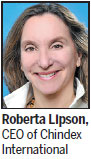
Since then, the number of patients has grown rapidly, and the hospital now sees an average of almost 900 patients each day, said Roberta Lipson, a US citizen who is CEO of Chindex International, which co-founded the hospital.
"The number of Chinese patients has been increasing even more rapidly than foreigners, and now more than half of our patients are Chinese," Lipson said.
United Family Healthcare also set up hospitals in other cities in China, such as Tianjin and Shanghai. It now has four hospitals and 14 clinics in the country, with two more hospitals under construction and scheduled to open soon.
Although most large hospitals in Beijing are government-funded public hospitals, those with foreign investment, such as Beijing United Family, have seen a boom in recent years.
Most foreign-invested hospitals and clinics in Beijing - estimated to number at least in the dozens - focus on expats living in Beijing, such as diplomats and executives of foreign-invested companies. However, many have also started to attract Chinese as they become more affluent.
The number of multimillionaires in Beijing reached 192,000 last year, dwarfing all other cities on the Chinese mainland, according to Hurun Report, a magazine best known for its China Rich List, a ranking of the country's wealthiest individuals.
High-end medical care is in great demand in China as those with wealth place more importance on service quality and privacy, and are less tolerant of crowding such as that in public hospitals, according to a report by the Beijing Commission of Health and Family Planning.
The government has been supporting the development of private hospitals in various ways in recent years, such as relaxing market access and land and capital policies, to meet the medical needs of different people, the commission said.
According to a circular released by China's health and commerce ministries in August, foreign investors are encouraged to set up solely foreign-invested hospitals in seven municipalities and provinces, including Beijing and Shanghai.
Previously, foreign investors had to find a Chinese partner to set up a hospital in China. Beijing United Family Hospital and Clinics, for example, is a joint venture between Chindex International, a US supplier of medical equipment, and the Chinese Academy of Medical Sciences.
Allowing more foreign-invested hospitals gives people more choices in medical care, and meets the needs of high-end customers, said Xing Houyuan, a researcher at the Chinese Academy of International Trade and Economic Cooperation.
Koeli Ghoshal, who is from India and whose husband suffered serious injuries and was treated in an intensive care unit at Beijing United Family Hospital in June and July, said the medical staff was very professional in the care of her husband.
Although foreign-invested hospitals have witnessed great success in recent years, they still face some obstacles, such as higher taxes, said Lipson.
She said that as policies loosen for foreign investment in medical care in China, the government should focus on quality and safety supervision of the sector.
"As the market opens up, more investors will come in expecting fast returns on their investment and, in healthcare, you cannot have a very fast return on your investment," she said. "Some investors may not have enough patience, and the government should monitor them for safety and quality."















