Financial reform 'key move'
Experts expect breakthroughs to meet China's economic upgrading
That Premier Li Keqiang compared China's financial reform to "a key move of a chess piece to revitalize the whole game of the Chinese economy" at the Summer Davos Forum in Dalian this August exemplifies the reform's significance to the Chinese economy.
Financial system reform has maintained a positive momentum since the 18th National Congress of the Communist Party of China last year, which reiterated marketization as the preferred direction for reform.
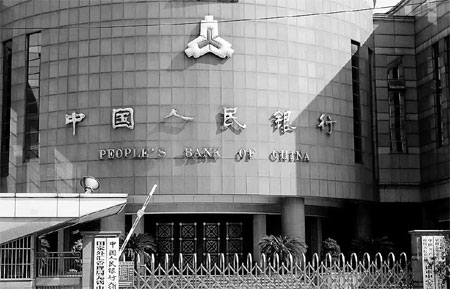
The People's Bank of China, the country's central bank, said it lifted its control of the floor on loan interest rates on July 19 after broadening the fluctuation ranges of loan and deposit interest rates last year.
The State Council, China's cabinet, decided on Aug 28 to expand the pilot programs of credit asset securitization, which will help foster a multilayer capital market and vitalize the monetary stock. And China rebooted the trading of treasury bond futures on Sept 6.
In addition, the China (Shanghai) Pilot Free Trade Zone set up on Sept 29 will provide a good platform to try out the much-needed reforms of interest rates and convertibility of yuan capital accounts.
Finally, China's concentrated quotation and disclosure mechanism of the loan prime rate was launched on Oct 25.
Following these actions, experts say, resistance to reform of the financial system reform is now less than to reforms of land, the household registration system and State-owned enterprises, as the financial system's marketization is comparatively higher than the latter fields and the return more palpable.
The Third Plenum of the Communist Party of China's 18th Central Committee from Nov 9 to 12 is expected to introduce breakthroughs in the market-oriented financial reform, given China's current system's potential to meet the needs of structural shift and industrial upgrading.
A plan submitted on Oct 26 by the Development Research Center of the State Council, a top government think tank, to the CPC Central Committee, prioritizes financial reform in eight fields.
The ambitious plan, believed to be a blueprint for the plenum's final communique, also stresses five key reforms.
The first addresses the structures of property rights and management of financial agencies by lowering the entry threshold to boost financial market competition.
The second promotes the marketization of interest rates and exchange rate formation.
The third establishes an efficient and flexible market-oriented financial system to support a growth model shift and urbanization.
The fourth should solve and manage potential financial risks by administrations and institutions.
And the fifth coordinates fiscal and tax reform, and factors price reform to maximize the synergistic effects.
The previous financial system reform focused mainly on micro-financial agencies.
Experts believe the new reform will pay more attention to establishing relevant institutions, creating a better financial market environment, improving financial resources' allocation efficiency and underscoring the financial sector's support for the real economy.
"I think the Third Plenum will draw up a top-level design and an overall plan to carry on the market reform momentum of the financial sector and integrate previous patchworks in various fields," said Zhao Qingming, a senior researcher at the China Construction Bank.
Removing the systematic barriers to allocating financial resources in the market are the targets of the next round of financial reform in order to release the vitality of the financial system, disperse financial risks and give powerful support to the real economy.
Hu Xiaolian, deputy governor of the People's Bank of China, recently indicated the three missions of liberalizing the interest rate: to set up a self-disciplinary mechanism for the pricing of the market-oriented interest rate; start the loan prime rate quotation; and promote the issuance and trade of inter-bank deposit receipts. Now that the first two have been accomplished, the next step is to end the control over the deposit interest rate.
With the central government pledging to push private capital to enter the financial industry, and some private enterprises actively applying to start private banks, that capital will probably have more access to the banking industry after the plenum.
Thus, the cash-thirsty private enterprises can get more financial support through direct financing. And room for covert deals and shadow banks will grow smaller and smaller.
Wang Jinbin, an economic researcher at Renmin University in Beijing, pointed out, "Private capital's entry into the financial sector is an irresistible trend for China, which is conducive to injecting vitality into the financial agencies and improving the financial industry's support to the real economy."
On the external side, the People's Bank of China's intervening in the yuan exchange rate fluctuation will obviously weaken, and its tolerance to the fluctuation range will grow stronger.
The reform plan sets the target that the yuan should become the main international settlement and investment valuation currency and international reserve currency in other parts of the world.
The trend indicates that the PBOC will continue to guide and encourage the market to play a more active role in pricing the exchange rate to foster yuan capital account convertibility and the internationalization of the yuan.
Last but not least, in order to adapt to the potential risks that come with the marketization of China's financial sector and the merging of finance and the Internet, the government must further strengthen its supervision and administration.
The State Council agreed in August to establish an inter-ministerial joint conference mechanism on financial supervision, which will be led by the People's Bank of China and involve the banking, securities, insurance and foreign exchange authorities.
This is a crucial step for the modernization of China's financial watchdogs in that it highlights the coordination of financial supervision across the board, which has long been absent in China.
The plenum will necessarily urge the upgrading of the financial supervision system. The supervisory and regulatory authorities' focus will divert from pre-entry evaluation and approval to the supervision of the financial agencies, private banks and Internet finance.
To translate the liberalization of the financial sector to real benefits for the economy, China urgently needs to establish a deposit insurance system, create an information disclosure system for financial agencies and raise investors' awareness of risk prevention.
|
As an example of increasing marketization and reform, the People's Bank of China, the country's central bank, lifted its control of loan interest rates on July 19 after broadening the fluctuation ranges of loan and deposit interest rates last year. Provided to China Daily |