


Sun setting on the solar business
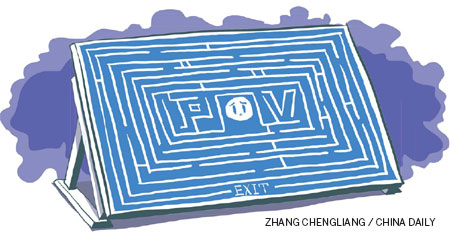
A rethink on government policies is needed as industry undergoes shakeout
The recent bankruptcy of solar panel maker Wuxi Suntech, a subsidiary of the New York-listed Suntech Power, casts doubts over the solar photovoltaic industry.
However, it is clear that China's solar panel industry is going through a shakeout as a result of shrinking demand overseas, falling production and punitive duties levied by Europe and the United States.
European and US trade barriers are no doubt an important factor in domestic solar oversupply. Local-government and bank support to the industry has also contributed to overcapacity. During the global financial crisis, worldwide demand for solar panels fell, and Suntech was particularly vulnerable because of its high debt. Against global demand for 30-35 gigawatts of solar power this year, supply is 50-60 GW, most of which is in China, according to some industry estimates.
Other Chinese solar cell makers are likely go the way of Suntech as the industry enters a difficult period of consolidation and adjustment.
Wang Bohua, secretary-general of the China Photovoltaic Industry Alliance, says the number of solar panel makers fell from 262 in 2011 to 112 last year due to overcapacity.
Over the same time, solar panel prices fell 23 percent, he says.
This bleak picture takes on an even darker tone when you look at Jiangsu province, which has had the most complete industry chain in the country and which accounts for half of the nation's photovoltaic industrial capacity. There, more than half of the PV companies have died.
Cheap credit from state-owned banks that resulted in the rapid expansion of the solar panel industry is partly responsible for the state in which it now finds itself and which looks to get worse. It is forecast that one third of domestic PV companies, big and small, will lose their fight for survival in the next few years.
Last year Jiangxi province put about 2 billion yuan ($322 million; 247 million euros) into the coffers of LDK Solar Co, a solar company in the region, to keep it alive. It turns out that the government has been trying to find a white knight to buy the company, which provides thousands of local jobs, according to earlier reports.
Shanghai Chaori Solar Energy and Technology Co is in similar straits. Last year it had piled up debt of 1 billion yuan and has received help to make an interest payment to Chinese bond investors this year.
While local authorities continue to bail out solar panel makers, some are withdrawing incentives, and the industry's plight highlights the degree to which government has become involved, for better or worse, in the market in China and how some companies have become too big to fail.
For a company like LDK Solar that has pushed on with aggressive expansion plans irrespective of cost, survival is inextricably linked with its local-government debt, which in turn can be blamed for its overheated investment.
In lending to these companies, the banks took a strong cue from local governments. That means that if any of the companies fall on hard times, the banks can count on the government and their lavish lending to make sure loans are repaid.
Even as US and European manufacturers were forced into restructuring or bankruptcy, some local governments continued to press cash into the hands of the Chinese solar PV companies. But Suntech's collapse has sent a clear message: governments will finally stop funding unprofitable domestic solar cell makers and instead encourage mergers among healthy companies.
China's solar market has been growing for about a decade and is relatively immature compared with the European one. It has become clear that the healthiest thing that could happen to the local industry is for local governments to refrain from supporting struggling companies, and instead allow the market to determine who stands and who falls.
In the short term, banks, financial institutions and local governments will be more cautious about putting money into the photovoltaic industry, and in the long term restructuring is beginning.
China's solar panel manufacturing industry relies heavily on overseas markets, and faced with sluggish demand abroad, China should be shifting its focus to its domestic market.
The country aims to have 35 GW of solar energy by 2015, from both utility-scale solar farms and distributed generation facilities such as solar panels installed on the rooftops of villas and factory buildings. By 2020 it plans to have generation at 100 GW, according to utility giant State Grid.
To stimulate domestic solar consumption, the government should continue building photovoltaic power stations. That is the fastest way to solve the problem of excessive production capacity with the highest added value in the PV industry chain.
Another approach is to promote the installation of urban roof photovoltaic panels. Individuals, enterprises and institutions should be encouraged to install rooftop solar panels, creating huge domestic demand.
To boost roof PV use in cities, it is also important to open up multiple financing channels, encouraging all types of financial institutions to increase investment in solar photovoltaics, and enterprises to explore innovative business models.
At the same time, rural areas, far from power grids with access to electricity, should be targeted as potential places to use solar power panels. Compared with urban solar panels that can be applied only on rooftops and walls, rural areas have more potential to boost solar energy because of the wide-open space.
Local governments should increase the subsidy for rural household PV power generation stations to facilitate urbanization.
However, a major bottleneck in promoting solar energy is the difficulty in connecting to the State Grid Corp of China, the country's largest power grid network operator, because of potential competition. More solar power plants could mean less use of power transmitted by the corporation.
The company said in October that it would facilitate the process of connecting solar power stations to the main power grid. Solar generators with less than 6 MW of installed capacity can be connected to the grid free of charge. Once connected, producers can sell their extra solar power.
The development of the green economy has become an international trend, so we cannot just accept economic benefits at the cost of social responsibility, and China has been promoting clean, renewable energy to try to balance growth with environmental concerns.
Solar power is environmentally friendly, and the government needs to support it with policies on integrating solar power with the main power grid and on long-term investment returns.
Li Aiwu is a senior electrical engineer and manager of Electrical Design Department of LongYuan (Beijing) Solar Engineering Technology Co; Tao Lei is a senior electrical engineer at North China Power Engineering Co. The views do not necessarily reflect those of China Daily.















