


Applying kung fu spirit in education
|
Matthew Jaskol says knowing yourself can be just as important as knowing your stuff for Chinese students studying in the US. Provided to China Daily |
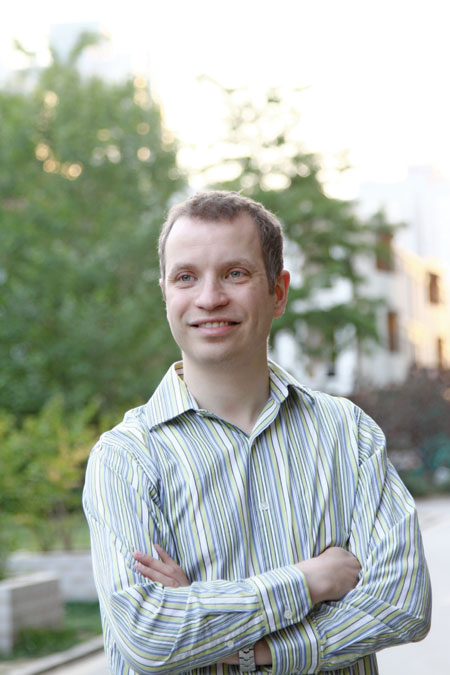
Matthew Jaskol has been studying kung fu for more than 20 years. For the 36-year-old American, martial arts are not so much about fighting skills, but more of a mental training process that demands perseverance, hard work and self-reflection.
It is the same spirit that he applies to running Alpine Education, his educational consulting and training company in Beijing. It provides classes and programs for Chinese students to develop the skills necessary for study and work in foreign educational institutions.
In recent years, China has become the greatest source of foreign students for many countries. Last year, the 158,000 Chinese studying in US colleges accounted for more than a fifth of the overseas student population.
Worldwide, about 340,000 Chinese were studying in overseas institutions in May last year, accounting for 14 percent of the overseas student population, according to a report by the Social Sciences Academic Press in Beijing.
Thousands of agencies are in this field, providing consulting services for parents and students. But Jaskol has noticed a huge information gap between Chinese students and overseas universities.
Students want to know more about different education systems and how they match their own long-term objectives for overseas study, he says, while overseas universities are looking for talented Chinese students, and want to know why they are different and how they will suit the programs and courses on offer.
SAT, GMAT and GRE test scores don't give a complete picture, Jaskol says, "because Chinese students are too good at exams". Universities want to know how an applicant approaches academic life and whether that matches their own approach.
Jaskol is eager to improve the connection between students and universities - and to help Chinese students adapt to studying and living overseas.
That help comes sooner rather than later. Most of Jaskol's clients for training courses are junior students ranging from 11 to 15 years old.
"We emphasize character-building more during education," Jaskol says of US institutions, "which is still barely seen in the Chinese education system."
He says that Chinese students show great ability in solving problems independently, while in the US students are encouraged to discuss their issues with teachers and tutors to find a better solution.
Self-reflection is the most important element in education, Jaskol says, and one that is approached differently in China, compared with the US.
"Know yourself now, know what you want to be in the future, and know what you need to bridge the gap between the now and future."
Alpine has four employees in Beijing and four in the US. Jaskol has just finished a "base camp" program that trains middle-school students to think creatively and logically. The program, designed by a PhD student from Stanford, lasts for a semester.
Lin Zhiyu, an 11-year-old student, took an Alpine training course. His mother, Wang Yi, says the family is preparing to send him overseas to study, but has yet to decide when. She wants him to be familiar with Western-style education first.
"I think it does help my son to think, to express and to argue, which is more suitable for him than Chinese education," Wang says.
Wang says that she does not want to judge the US and Chinese education systems, but believes her son is happier studying in a Western style. "It is not a case of which is good or which is bad. Some students can learn a lot under the Chinese educational system, and some will learn more in the US."
Jaskol strives for a balance of making a living and chasing a dream. He has a major in East Asian studies, his lifelong interest, and an MBA from Yale. For him, running an educational consultancy is both business and pleasure.
Alpine's more individual approach may not be as profitable as other educational agencies, he says.
"Their business model is mature and highly efficient, just like an assembly line. I want to make money, but not that way."
Contact the writers at suzhou@chinadaily.com.cn and linjingcd@chinadaily.com.cn.















