HK's pseudo 'public intellectuals'
Updated: 2013-07-16 07:00
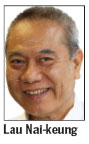
By Lau Nai-keung(HK Edition)
|
|||||||


In the last 10 years or so, the term "public intellectual" has appeared out of nowhere in both the Chinese mainland and Hong Kong, and has come to define, unfortunately, what is passed off as knowledge, wisdom, and moral fortitude. The term is now arguably out of fashion, but we are still haunted by its shadow.
A search of "gonggong zhishifenzi" - public intellectual in Chinese on the Internet returns some amusing results. According to the majority of websites, including Wikipedia, the term was invented, sort of, by the Southern Weekly in 2005, when it did a special issue on "The 50 Public Intellectuals Who Influenced China".
Since 2005, a think tank called "Politically Right, Economically Left Workshop" has elected public intellectuals annually. According to the group, one is a public intellectual if he/she is a scholar, activist and idealist simultaneously.
Although we are unsure of the mechanism behind the concept's spread, it was no coincidence that public intellectual also became vogue in Hong Kong around the same time. Interestingly, as in so many other instances of double international standards, we saw, again, how an old idea was appropriated and applied selectively, and how developments and debates around the concept are conspicuously absent on the mainland and in Hong Kong.
The concept of public intellectual is an old one. For example, in American sociologist C. Wright Mills' "Letter to the New Left" published in 1960, he thought that he found the historic agent of change in "the cultural apparatus, the intellectuals" - specifically the young intelligentsia who appeared to be at the head of a wave of social and political upheaval in the West, the Soviet bloc, and the Third World.
Mills thought that the working class could no longer lead changes in society, and criticized New Left writers who "cling so mightily to 'the working class' of the advanced capitalist societies as the historic agency, or even as the most important agency". To Mills, it was not the welfare state's co-opted workers who were "fed up with all the old crap" and ready to move, but rather the young intellectuals and students, as the latter possessed both the strategic social location and the vigor necessary to make radical changes.
If a blind commitment to the working class, to use Mills' terminology, involves "labor metaphysics", his letter gave birth to a new kind of metaphysics: "intellectual metaphysics". For Mills, so-called intellectuals were a tentative answer to his research question, "who is capable of leading societal changes", and not a scripture to be worshipped.
Whether intellectuals can live up to Mills' expectation is increasingly questionable. Russell Jacoby's The Last Intellectuals, published in 1987, argues that economic conditions (the financial failing and subsequent disappearance of the small press, the inability of the public intellectual to sustain himself/herself outside of the academy) and structural conditions (the disappearance of urban bohemia due to gentrification and flight to the suburbs) have resulted in public intellectuals being contained almost exclusively to the academy. The result of this institutionalization is a retreat from the public sphere: with intellectuals firmly entrenched in the silo of their specific discipline, intellectual discourse that might have reflected upon the public realm became more and more detached from concerns outside academe.
Research has also found that the rich and powerful are disproportionately represented in the public sphere. While this is common sense, no one in Hong Kong questions why public intellectuals are often also famous figures with a strong media presence.
Contrary to mainland standards, many of the so-called public intellectuals in Hong Kong are not even scholars. The fact that they are promoted by media as people we should listen to should alarm us. These are the questions that should have been asked: what are the economic forces behind the media and how these forces have determined the media's agenda? Where do these public intellectuals come from, how are they made?
If we look closer, we will find that a lot of them in fact represent vested interests. After all, if they are so against the system, why are they so much welcomed and promoted by the mainstream?
The author is a member of the Commission on Strategic Development.
(HK Edition 07/16/2013 page1)