|
Ugly images of Asian rivals become best sellers in Japan
By NORIMITSU ONISHI (nytimes.com)
Updated: 2005-11-21 08:58
TOKYO - A young Japanese woman in the comic book "Hating the Korean Wave"
exclaims, "It's not an exaggeration to say that Japan built the South Korea of
today!" In another passage the book states that "there is nothing at all in
Korean culture to be proud of."
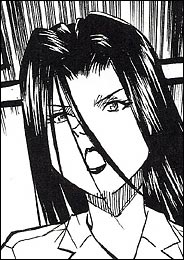
In "Hating the Korean Wave," a young Japanese
woman says, "It's not an exaggeration to say that Japan built the South
Korea of today!"
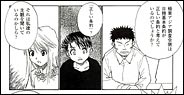 | In another comic book,
"Introduction to China," which portrays the Chinese as a depraved people
obsessed with cannibalism, a woman of Japanese origin says: "Take the China of
today, its principles, thought, literature, art, science, institutions. There's
nothing attractive."
In "Hating the Korean Wave," a young Japanese woman says, "It's not an
exaggeration to say that Japan built the South Korea of today!"
The two comic books, portraying Chinese and Koreans as base peoples and
advocating confrontation with them, have become runaway best sellers in Japan in
the last four months.
In their graphic and unflattering drawings of Japan's fellow Asians and in
the unapologetic, often offensive contents of their speech bubbles, the books
reveal some of the sentiments underlying Japan's worsening relations with the
rest of Asia.
They also point to Japan's longstanding unease with the rest of Asia and its
own sense of identity, which is akin to Britain's apartness from the Continent.
Much of Japan's history in the last century and a half has been guided by the
goal of becoming more like the West and less like Asia. Today, China and South
Korea's rise to challenge Japan's position as Asia's economic, diplomatic and
cultural leader is inspiring renewed xenophobia against them here.
Kanji Nishio, a scholar of German literature, is honorary chairman of the
Japanese Society for History Textbook Reform, the nationalist organization that
has pushed to have references to the country's wartime atrocities eliminated
from junior high school textbooks.
Mr. Nishio is blunt about how Japan should deal with its neighbors, saying
nothing has changed since 1885, when one of modern Japan's most influential
intellectuals, Yukichi Fukuzawa, said Japan should emulate the advanced nations
of the West and leave Asia by dissociating itself from its backward neighbors,
especially China and Korea.
"I wonder why they haven't grown up at all," Mr. Nishio said. "They don't
change. I wonder why China and Korea haven't learned anything."
Mr. Nishio, who wrote a chapter in the comic book about South Korea, said
Japan should try to cut itself off from China and South Korea, as Fukuzawa
advocated. "Currently we cannot ignore South Korea and China," Mr. Nishio said.
"Economically, it's difficult. But in our hearts, psychologically, we should
remain composed and keep that attitude."
The reality that South Korea had emerged as a rival hit many Japanese with
full force in 2002, when the countries were co-hosts of soccer's World Cup and
South Korea advanced further than Japan. At the same time, the so-called Korean
Wave - television dramas, movies and music from South Korea - swept Japan and
the rest of Asia, often displacing Japanese pop cultural exports.
The wave, though popular among Japanese women, gave rise to a
countermovement, especially on the Internet. Sharin Yamano, the young cartoonist
behind "Hating the Korean Wave," began his strip on his own Web site then.
"The 'Hate Korea' feelings have spread explosively since the World Cup," said
Akihide Tange, an editor at Shinyusha, the publisher of the comic book. Still,
the number of sales, 360,000 so far, surprised the book's editors, suggesting
that the Hate Korea movement was far larger than they had believed.
"We weren't expecting there'd be so many," said Susumu Yamanaka, another
editor at Shinyusha. "But when the lid was actually taken off, we found a
tremendous number of people feeling this way."
So far the two books, each running about 300 pages and costing around $10,
have drawn little criticism from public officials, intellectuals or the
mainstream news media. For example, Japan's most conservative national daily,
Sankei Shimbun, said the Korea book described issues between the countries
"extremely rationally, without losing its balance."
As nationalists and revisionists have come to dominate the public debate in
Japan, figures advocating an honest view of history are being silenced, said
Yutaka Yoshida, a historian at Hitotsubashi University here. Mr. Yoshida said
the growing movement to deny history, like the Rape of Nanjing, was a sort of
"religion" for an increasingly insecure nation.
"Lacking confidence, they need a story of healing," Mr. Yoshida said. "Even
if we say that story is different from facts, it doesn't mean anything to
them."
The Korea book's cartoonist, who is working on a sequel, has turned down
interview requests. The book centers on a Japanese teenager, Kaname, who attains
a "correct" understanding of Korea. It begins with a chapter on how South
Korea's soccer team supposedly cheated to advance in the 2002 Word Cup; later
chapters show how Kaname realizes that South Korea owes its current success to
Japanese colonialism.
"It is Japan who made it possible for Koreans to join the ranks of major
nations, not themselves," Mr. Nishio said of colonial Korea.
But the comic book, perhaps inadvertently, also betrays Japan's conflicted
identity, its longstanding feelings of superiority toward Asia and of
inferiority toward the West. The Japanese characters in the book are drawn with
big eyes, blond hair and Caucasian features; the Koreans are drawn with black
hair, narrow eyes and very Asian features.
That peculiar aesthetic, so entrenched in pop culture that most Japanese are
unaware of it, has its roots in the Meiji Restoration of the late 19th century,
when Japanese leaders decided that the best way to stop Western imperialists
from reaching here was to emulate them.
In 1885, Fukuzawa - who is revered to this day as the intellectual father of
modern Japan and adorns the 10,000 yen bill (the rough equivalent of a $100
bill) - wrote "Leaving Asia," the essay that many scholars believe provided the
intellectual underpinning of Japan's subsequent invasion and colonization of
Asian nations.
Fukuzawa bemoaned the fact that Japan's neighbors were hopelessly backward.
Writing that "those with bad companions cannot avoid bad reputations,"
Fukuzawa said Japan should depart from Asia and "cast our lot with the civilized
countries of the West." He wrote of Japan's Asian neighbors, "We should deal
with them exactly as the Westerners do."
As those sentiments took root, the Japanese began acquiring Caucasian
features in popular drawing. The biggest change occurred during the
Russo-Japanese War of 1904 to 1905, when drawings of the war showed Japanese
standing taller than Russians, with straight noses and other features that made
them look more European than their European enemies.
"The Japanese had to look more handsome than the enemy," said Mr. Nagayama.
Many of the same influences are at work in the other new comic book, "An
Introduction to China," which depicts the Chinese as obsessed with cannibalism
and prostitution, and has sold 180,000 copies.
The book describes China as the "world's prostitution superpower" and says,
without offering evidence, that prostitution accounts for 10 percent of the
country's gross domestic product. It describes China as a source of disease and
depicts Prime Minister Junichiro Koizumi saying, "I hear that most of the
epidemics that broke out in Japan on a large scale are from China."
The book waves away Japan's worst wartime atrocities in China. It dismisses
the Rape of Nanjing, in which historians say 100,000 to 300,000 Chinese were
killed by Japanese soldiers in 1937-38, as a fabrication of the Chinese
government devised to spread anti-Japanese sentiment.
The book also says the Japanese Imperial Army's Unit 731 - which researched
biological warfare and conducted vivisections, amputations and other experiments
on thousands of Chinese and other prisoners - was actually formed to defend
Japanese soldiers against the Chinese.
"The only attractive thing that China has to offer is
Chinese food," said Ko Bunyu, a Taiwan-born writer who provided the script for
the comic book. Mr. Ko, 66, has written more than 50 books on China, some on
cannibalism and others arguing that Japanese were the real victims of their
wartime atrocities in China. The book's main author and cartoonist, a Japanese
named George Akiyama, declined to be interviewed.
Like some in Taiwan who are virulently anti-mainland, Mr. Ko is fiercely
pro-Japanese and has lived here for four decades. A longtime favorite of the
Japanese right, Mr. Ko said anti-Japan demonstrations in Chinese mainland early
this year had earned him a wider audience. Sales of his books surged this year,
to one million.
"I have to thank the mainland, really," Mr. Ko said. "But I'm disappointed
that the sales of my books could have been more than one or two million if they
had continued the demonstrations."
Courtesy of the New York Times
|