|
Home>News Center>World | |
|
|
|
|
|
|
|
|
|
|
|||||||||||||||||||||||||||||||||||||||||||||||||||||||||||||||||||||
|
|
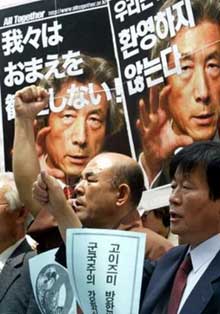
Ex-PM urges Koizumi not to visit Yasukuni Prime Minister Junichiro Koizumi faced fresh
pressure Sunday over the issue of his visits to the war-related Yasukuni Shrine
in Tokyo as former Prime Minister Kiichi Miyazawa said he should not visit the
shrine because such a move would hurt Japan-China relations.
Miyazawa also indicated that Koizumi's visits to the Shinto shrine, where convicted Japanese war criminals are honored along with the Japanese war dead, is one of the reasons that mutual visits with Chinese leaders have come to a halt. The issue has prevented Koizumi and Chinese leaders from making reciprocal visits since Koizumi visited Beijing in October 2001. Chinese leaders have met Koizumi only on the sidelines of multilateral conferences. Asian countries, particularly China and South Korea, have bitter memories of Japan's military aggression before and during World War II and have strongly protested Koizumi's visits to the shrine, which they regard as symbolic of Japan's militaristic past. Chinese, S.Koreans oppose Koizumi's visits to Yasukuni More than 80 percent of Chinese and South Korean respondents to a recent
survey oppose Japanese Prime Minister Junichiro Koizumi's visits to Yasukuni
Shrine and Japan's bid to become a permanent member of the U.N. Security
Council. The worsening sentiment apparently reflects Japan's soured relations with the two nations due to Koizumi's annual visits to the war-related Shinto shrine, territorial rows and disputes over Japanese history textbooks. At the same time, respondents in all three countries picked China as the top candidate to become the core of the Asian economy in the future. The survey was conducted in May with 1,000 respondents in both China and Japan and 1,051 in South Korea. Eighty-six percent of the Chinese respondents and 82 percent of the South Koreans said Koizumi should not visit Yasukuni. In Japan, 41 percent of the respondents said the prime minister should desist, but 31 percent said he should pay homage at the Tokyo shrine. Asked about Japan's aspiration to become a permanent member of the U.N. Security Council, 87 percent in China and 85 percent in South Korea said they are against it. Only 7 percent in China and 8 percent in South Korea said they are for it. In Japan, 67 percent of the respondents said they support the bid, and 20 percent said they oppose it. On the Japanese respondents' sentiment toward the two neighboring countries, 48 percent said they feel a great deal or a certain degree of closeness to China, down by 6 percentage points from the 2002 survey, while 58 percent said they feel closeness to South Korea, up 5 percentage points. The increase in favorable feelings toward South Korea apparently stems from a boom of South Korean culture in Japan, especially TV dramas. Asked about future relations between Japan and China, 22 percent of the Japanese expect improvement, compared with 21 percent who said they do not. In China, 39 percent of the respondents said they do not think ties between the two nations will improve, against 30 percent who think they will. On future ties between Japan and South Korea, 43 percent of the Japanese said relations will get better, but 48 percent in South Korea think the relationship will not improve. The survey indicates that Chinese and South Korean people consider history issues as hindering better ties with Japan, with 57 percent of the South Korean respondents saying matters concerning Japan's perception of history need to be resolved for a better bilateral relationship. In China, 42 percent of the respondents said Japanese compensation and an apology for past acts would be essential to improve bilateral ties. Other Asian countries, including China and South Korea, suffered from Japanese aggression before and during World War II.
|
|
|
|
|
||||||||||||||||||||||||||||||||||||||||||||||||||||||||||||||||||
|
|
|
|
|||||||||||||||||||||||||||||||||||||||||||||||||||||||||||||||||||||