<tt id="6hsgl"><pre id="6hsgl"><pre id="6hsgl"></pre></pre></tt>
          <nav id="6hsgl"><th id="6hsgl"></th></nav>
          国产免费网站看v片元遮挡,一亚洲一区二区中文字幕,波多野结衣一区二区免费视频,天天色综网,久久综合给合久久狠狠狠,男人的天堂av一二三区,午夜福利看片在线观看,亚洲中文字幕在线无码一区二区
            Home>News Center>China


          Local textile sales will offset export curbs
          (bloomberg)
          Updated: 2005-05-23 09:09

          China's textile makers, who spent $14.3 billion last year on building factories, say local demand will buffer any slowdown in orders from U.S. and European market because of a looming trade war.

          "Domestic demand accounts for about 70 percent of industry growth,"' said Wang Donghua, a spokesman for Shandong-based Weiqiao Textile Co., the country's largest cotton textile maker. "Our economy is becoming more consumer-driven instead of investment-driven. That's our main driver of growth."

          Textile makers: Local sales will offset export curbs
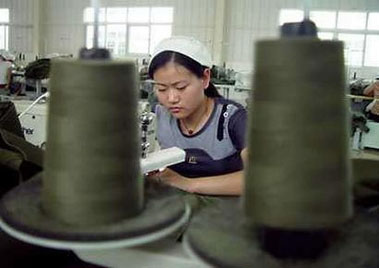
          A Chinese worker sews a dress in a garment manufacturing company at Huaibei, east China's Anhui province in this picture taken on May 19, 2005. China will raise export tariffs on exports of 74 classes of clothing and textile products from June 1, the Ministry of Finance said on Friday, a gesture that might help to appease Western trading partners. [newsphoto]


          Weiqiao Textile bought 65 percent more cotton last year, added 35,000 workers and spent 3.6 billion yuan ($435 million) increasing output.

          U.S. and European Union governments want to stem the rising tide of apparel exports from Weiqiao and 100,000 other Chinese textile companies since a four-decade-old system of quotas on textile trade ended on December 31. Weiqiao, which makes fabric for jeans and bed linen, says a domestic economy growing at 9.5 percent a year offers plenty of local sales opportunities.

          China's textile and apparel sales rose 23 percent to $319 billion in 2004 from a year earlier, the China Textile News reported, citing figures from the China National Textile & Apparel Council. Exports, which account for 30 percent of the total, rose 21 percent to $97 billion.

          "Ever since the beginning of this year, the growth of domestic sales clearly surpassed export growth," Sun Huaibin, a director at the council, said in an interview with Bloomberg.

          China's per capita disposable income in urban areas, home to a third of the population, rose 11 percent to 2,938 yuan from a year earlier in the first quarter, and those in rural areas increased 16 percent to 967 yuan, official figures show.

          China's textile manufacturers "are interested in developing their own brands for their own market with potentially higher margins than churning out millions of low-margin T-shirts for Western retailers," said Roger Tredre, editor-in-chief of Worth Global Style Network in London.

          Textile companies in China make 17 percent of the clothes worn in the world, as measured by dollar value. The share is growing as U.S. Wal-Mart and other giant retailers seek to get more of their goods from lower-cost Chinese suppliers.

          Wal-Mart was expecting to save 12-15 percent on apparel costs this year with the removal of the quota system, Joseph Teklits, an analyst with Wachovia Securities Inc. in Baltimore, said in a March 18 report.

          The U.S. wholesale price of Chinese-made men's blue jeans fell 30 percent in the first two months after the quotas were removed. Underwear prices dropped more than 40 percent.

          The U.S. has sided with petitions from U.S. textile companies to cap imports on $914 million of clothing and yarn from China, less than a week after announcing quotas on three other textile products.

          China's textile makers started an average of 10 projects a day last year and imported $4.5 billion of new machinery. "They've been gearing up for the end of quotas," said Nicholas Lardy, a Washington-based China specialist at the Institute for International Economics. "This is a product where they have a tremendous comparative advantage."

          The U.S. has instituted so-called safeguard measures for men's shirts, man-made trousers, man-made knit shirts and yarn, the Commerce Department said on May 18. It allows the U.S. to set a 7.5 percent cap on import growth of those products this month. It must first request consultations with China.

          "The irony is that China demands real high-quality cotton, and that's what's produced in California and Arizona," said Wiley Murphy, who's been growing cotton at Marana, about 25 miles from Tucson, Arizona, for 30 years. "Chinese like to buy our cotton."

          The 31,400 cotton farmers in the U.S. are counting on stronger overseas sales to buoy prices as domestic demand shrinks for the 8th-straight year.

          "It's a two-edge sword," he said. "It's a healthy situation for the cotton growers. It's not a healthy situation for American textile industry."

          Chinese demand is spurring global consumption, expected to grow 8 percent this year, the biggest annual gain since 1987.

          "It used to be that our market was dependent on what happened in the U.S." said farmer Murphy. "Now it's a global market, and China is the big dog in the thing."


            Today's Top News     Top China News
           

          Vice Premier Wu Yi cancels meeting with Koizumi


          Local textile sales will offset export curbs


          China ready to counter US space plans


          Poultry gets bird flu vaccine in Qinghai


          Researchers reach top of the world for survey


          Protesters heckle Laura Bush in Jerusalem


            Can China build its own Silicon Valley?
             
            Local textile sales will offset export curbs
             
            Biotechnology could sustain economy, gov't told
             
            Sudan commits to co-operation with China
             
            Fund aids budding business people
             
            Ocean study to look at sea resources
             
           
            Go to Another Section  
           
           
            Story Tools  
             
            Related Stories  
             
          US expands curbs on clothing from China
             
          Textile barriers 'unfair to China': Bo
             
          US quotas 'hurt textile industry'
             
          US re-imposes quotas on Chinese clothing
             
          EU seeks to end textile tension
             
          EU told not to exaggerate textile issue
            News Talk  
            It is time to prepare for Beijing - 2008  
          Advertisement
                   
          主站蜘蛛池模板: 亚洲综合久久精品国产高清| 中文字幕在线日韩| 伊在人亚洲香蕉精品区| 精品无码国产污污污免费| 潮喷无码正在播放| 国产精品一区在线蜜臀| 婷婷六月综合缴情在线| 91亚洲免费视频| 精品无码久久久久成人漫画 | 欧美激情内射喷水高潮| 亚洲欧美国产精品久久| 大地资源免费视频观看| 欧美大胆老熟妇乱子伦视频| 国产成人精品亚洲午夜麻豆| 中文字幕国产精品日韩| 最新国产麻豆AⅤ精品无码| 狠狠色噜噜狠狠狠狠av不卡| 94人妻少妇偷人精品| 神马影院伦理我不卡| 亚洲中文字幕人妻系列| 疯狂做受XXXX高潮国产| 伊人久久大香线蕉aⅴ色| 精品国产一区二区三区久久女人| 乱人伦xxxx国语对白| 亚洲另类激情专区小说图片| 亚洲日本中文字幕天天更新| 欧美性群另类交| 女人与公狍交酡女免费| 最近中文字幕完整国语| 精品人妻av区波多野结衣| 国产无遮挡猛进猛出免费软件| 熟妇人妻任你躁在线视频| 俺也去俺也去电影网| 国产一区二区黄色激情片| 性动态图无遮挡试看30秒| 成人自拍短视频午夜福利| 99久久国产综合精品成人影院| 韩国午夜福利片在线观看| 天堂va亚洲va欧美va国产| xxxxbbbb欧美残疾人| 欧美中文字幕在线看|