|
Home>News Center>World | |
|
|
|
|
|
|
|
|
|
|
||||||||||||||||||||||||||||||||||||||||||||||||||||||||||||||||||||||||||||||||||||||||||||||||||||||||||||
|
|
Asia faces living nightmare from climate change SINGAPORE - The weather predictions for Asia in
2050 read like a script from a doomsday movie.
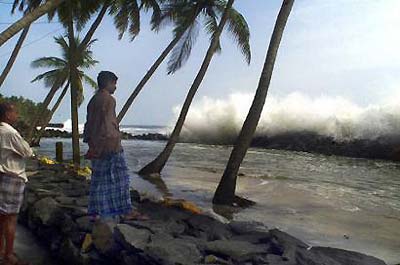
In the decades to come Asia, home to more than half the world's 6.3 billion people, will lurch from one climate extreme to another, with impoverished farmers battling droughts, floods, disease, food shortages and rising sea levels. "It's not a pretty picture," said Steve Sawyer, climate policy adviser with Greenpeace in Amsterdam. Global warming and changes to weather patterns are already occurring and there is enough excess carbon dioxide and other greenhouse gases in the atmosphere to drive climate change for decades to come. Already, changes are being felt in Asia but worse is likely to come, Sawyer and top climate bodies say, and could lead to mass migration and widespread humanitarian crises. According to predictions, glaciers will melt faster, some Pacific and Indian Ocean islands will have to evacuate or build sea defences, storms will become more intense and insect and water-borne diseases will move into new areas as the world warms. All this comes on top of rising populations and spiralling demand for food, water and other resources. Experts say environmental degradation such as deforestation and pollution will likely magnify the impacts of climate change. In what could be a foretaste of the future, Japan was hit by a record 10 typhoons and tropical storms this year, while two-thirds of Bangladesh, parts of Nepal and large areas of northeastern India were flooded, affecting 50 million people, destroying livelihoods and making tens of thousands ill. The year before, a winter cold snap and a summer heat wave killed more than 2,000 people in India. INDIA AT RISK Sawyer said India, with a population of just over one billion people, is one of the areas most threatened by climate change. "The threat to the agricultural base for the Indian subcontinent from drought and increased heat waves, the consequences to the burgeoning Indian economy and the very large number of people to feed are potentially very very substantial." Rising sea levels will also bring misery to millions in Asia, he said, causing sea water to inundate fertile rice-growing areas and fresh-water aquifers, making some areas uninhabitable. Sawyer said India and Bangladesh will have to draw up permanent relocation plans for millions of people. "I'm afraid that's almost inevitable." By 2050, China will have built sea defences along part of its low-lying, storm-prone southeastern coast, while the north of the country faced increasing desertification, he said. According to the U.N.'s World Food Programme, the Gobi Desert in China expanded by 52,400 square kilometres (20,230 sq miles) between 1994 and 1999, creeping closer to the capital Beijing. Anwar Ali, a leading climatologist in Bangladesh, says about 15 percent of the country would be under water if sea levels rose by a metre in the next century.
Perhaps the biggest threat to Asia in the future will be the shortage of clean water. The WFP says Asia accounts for 60 percent of the world's population but has only 36 percent of the globe's freshwater. According to the Intergovernmental Panel on Climate Change (IPCC), rapid melting of glaciers poses a major threat to the Indian Subcontinent, Southeast Asia and parts of China. Seven major rivers, including the Ganges, Indus, Brahmaputra and the Mekong, begin in the Himalayas and the glacial meltwater during summer months is crucial to the livelihoods of hundreds of millions of people downstream. RICH VERSUS POOR But many of these glaciers are melting quickly and will be unable to act as reservoirs that moderate river flows. This means less water in the dry season and the chance for more extreme floods during the wet season. Sawyer thinks rich countries, by far the biggest polluters, should look after the millions at risk from climate change or suffer the consequences that could include mass migration or trying to feed millions made homeless by droughts and floods in a world struggling to grow enough food. Fears of mass migration have already prompted the Pentagon and the Canadian Security Intelligence Service, among others, to study the risk from climate-induced mass migration. The Pentagon in its 2003 report looked at what might happen if the climate changed abruptly. The result was near anarchy. "As global and local carrying capacities are reduced, tensions could mount around the world," it said. This could lead some wealthier nations becoming virtual fortresses to preserve their resources. "Less fortunate nations, especially those with ancient enmities with their neighbours, may initiate struggles for access to food, clean water, or energy," the report said. Few places are more exposed to climate change than the low-lying Maldives islands, to the west of Sri Lanka, where the highest natural point is under 2.5 metres. "We still face the threat of sea level rise," Maldivian President Maumoon Abdul Gayoom said in a recent interview. "There is encroachment of the sea on many islands, there is erosion of our beaches," he said. In response, the Maldives is building an island that is a metre higher than the capital Male. Malcolm Duthie, WFP's country director in Laos, said even small changes in weather patterns, such as a delay in the monsoon of just a few weeks, is a threat to subsistence farmers. In Laos, he said rains seemed to have become shorter and sharper, meaning faster run-off and more erosion. Such changes are also threatening millions of farmers in Indonesia, where rapid industrialisation, slash-and-burn land clearing and illegal logging have caused extreme weather and pollution across the archipelago, experts say. "The wet season is shorter than usual which has led to higher rainfall during that brief period and sometimes caused landslides and floods," said Indonesian weather expert Agus Paulus. Government officials have said in the past years water levels at a number of reservoirs in densely populated Java island are close to a critically low level. As countries try to adapt, it will be the poor who suffer most from climate change, said IPCC chairman R.K. Pachauri in the report "Up in smoke?" released last month. "The impacts of climate change will fall disproportionately upon developing countries and the poor persons within all countries," he said, meaning the lot of millions of peasants could become far worse than it is now. |
|
|
|
|
|||||||||||||||||||||||||||||||||||||||||||||||||||||||||||||||||||||||||||||||||||||||||||||||||||||||||
|
|
|
|
||||||||||||||||||||||||||||||||||||||||||||||||||||||||||||||||||||||||||||||||||||||||||||||||||||||||||||