|
Home>News Center>Life | |
|
|
|
|
|
|
|
|
|
|
|||||||||||||||||||||||||||||||||||||||||||||||||||||||||||||||||
|
|
Chinese nightlife nouveau
Upon a fellow entrepreneur from Shenzhen comes to the capital. That evening his Beijing associate took him out to dinner, followed by drinks at the famous Sanlitun Bar Street and an hour or so of Karaoke at the Cash Box Party World.
To older Chinese people, the nightlife phenomenon is as new as the Reform and Opening generation that pursue it. These young well-paid white collars regard a night on the town as their hard-earned reward for a long, high-pressure working day. But it is only in the past hundred years that enjoyment of nightlife has become accepted in China. In ancient times going out after dark was actively discouraged in order to instill temperate habits in the populace and keep them from harm.
Nightlife Origins Centuries ago, night-time activities had either politically subversive or corrupt connotations, insofar as they were associated with forming cliques, plotting insurrections or currying favor, to the accompaniment of wine, women, flattery and bribes.
In order to discourage after-dark debauchery, successive Chinese dynasties adhered to the ritual of Morning audience, whereby the emperor and his ministers assembled at dawn to discuss national affairs. This was an effective deterrent to nocturnal carousing and, therefore, corruption. It also made temperance the yardstick by which the emperor and his courtiers might be judged. The wisdom of adhering to this system became obvious with the ignominious termination of the glorious Tang Dynasty (618 - 907). Upon its establishment the Tang Dynasty, emperor Taizong set himself and achieved the goal of making China more prosperous than ever before. Succeeding rulers, however, were vain, vapid and preoccupied with aestheticism and carnal indulgence. The last Tang emperor, Xuanzong, became infatuated with his concubine Yang Yuhuan, and upon her becoming his favorite he never once attended morning audience. This gave Yang Guozhong, Yang Yuhuan's cousin and an already powerful figure, carte blanche as regards political intrigue and opportunities to line his pockets; officials of every rank rode roughshod over the people. Matters came to a head with the An Shi Riots, when Tang officials An Lushan and Shi Siming launched an insurrection that toppled Emperor Tang Xuanzong and the entire Tang Dynasty.
Those of the prestigious 1 to 4 pin ranks would then file in to the palace hall for that imperial audience. Officials in charge of each department reported to the emperor on national affairs and request his instructions, and the emperor would raise his own questions. Such gravity was attached to the morning audience that the emperor himself was hard put to excuse himself from it. One night in 1498, when Ming Emperor Hongzhi was on the throne, the palace caught fire and the emperor had no sleep at all. The next morning, delirious from nervous exhaustion he had to plead and reason at length with his ministers before they agreed to cancel morning audience that day.
Doubtful Nocturnal Characters The great Qing theorist Huang Zongxi (1610-1695) had a nephew in government who one day invited him for dinner. At nightfall, Huang Zongxi was ready to go home but his nephew entreated him to carry on drinking, assuring him his personal servant would see him safely home. "People who go out at night have two intents," was his uncle Huang Zongxi's response, "One is to steal and the other to elope. As I wish to do neither, I shall go home." In ancient China, "night" in the sense of being the antonym of "light," was pejorative. Within literature, night was often connected with crime, as in the saying "Setting a fire at high wind; murdering people under a moonless sky." After nightfall, no-one was allowed through the barred city, and town or village gate without special permission. Moreover, the government kept a close watch on those who appeared more active at nightfall. Night protrols question those who still on the street on their movements. During the Ming Dynasty the government ruled that citizens running any kind of hostelry must keep a register listing the names of all guests, their homes, the places they had traveled from, the purpose of their visit, and whether or not they had a bow and arrow in their belongings. In the event of an untoward occurrence, checks could then be made. Failure to keep a register carried a harsh penalty. The majority of Chinese people have throughout history, held to the belief that night-time is solely for sleeping. For peasants, working at sunrise and resting at sunset was the lifestyle, while the minority elite would read, write, draw and sing each evening, as portrayed in the classical Chinese novel A Dream of Red Mansions. To the social orthodoxy, however, such activities were dissipative and signified a lack of purpose.
In the Beijing Palace Museum collection is the famous scroll painting: Han Xizai (an important official of the South Tang Dynasty who lived from 937-975) Gives a Night Banquet, 28.7cm in length and 335.5cm wide. This silk scroll painting portrays five scenes from a banquet at Han Xizai`s residence: Guests listening to the pipa (a plucked string instrument with a fretted fingerboard): dancing at the banquet; Han Xizai listening to the bamboo flute and Xiao pipes; and Han Xizai persuading guests to stay longer. The scroll portrays more than 40 people, and is a mirror of high life 1,000 years ago, but it does not indicate the limited popularity of such nocturnal indulgence. The painter's image of a life of luxurious indolence was actually a fa?ade orchestrated by Han Xizai. Formerly a powerful minister, Han Xizai was a capable politician and talented musician, poet and painter. The Southern Tang Emperor Li Yu wanted to appoint him as his prime minister, but on observing the emperor's fatuous ineffectiveness, and appalled at the way his officials scrambled for power and profit, Han Xizai demurred. Ostensibly living for pleasure was his way of avoiding the emperor's appointment. Suspicious, Emperor Li Yu sent a painter to Han Xizai's mansion with instructions to record all he saw that evening. When the painter reproduced and showed to the emperor the prepared scenario of this luxurious banquet he was convinced of Han Xizai`s debauched lifestyle. Overturning a Traditional Concept Since China came into contact with Western culture and its influence, the ongoing evolution from an agricultural to an industrial society has altered the traditional Chinese concept of night. Western science and technology has also gradually changed Chinese attitudes. The introduction of gas light by the British gas company in Shanghai on October 8, 1865 made it possible for people to step out of their homes in the evening and go to public places of entertainment -- teahouses, bars, and theaters. Evening gradually became a time for recreation as well as sleep,and Sahnghai, adventurers` paradise of the 1920s and 1930s quickly adapted to nightlife, to became the "Sleepless City." Since the reform and opening policy, life in China has become varied and colorful. Surveys show that people in Shanghai spend 50 percent of their daily consumption on nightlife, and residents of Guangzhou and Shenzhen even more. In Beijing, an increasing number of new consumers spend their leisure time in the traditional bars and eateries around Shichahai Lake, and shops, restaurants and entertainment venues have considerably extended their business hours to meet the demands of their younger clientele. However, the quality of Chinese nightlife is questionable. A recent Internet survey on Beijing summer nightlife showed that people spend 60 percent of their leisure expenses on drink. The same survey showed that 70 percent of people enjoy Beijing's summer nightlife and that 60 percent party till past midnight each weekend. Also evident was that entertainment venues are generally geared to young singles and mainly comprise pubs, clubs and karaoke bars. Sad to say, patronage of cultural centers and gymnasiums is down. One wonders, is this a change for the better?
|
|
|
|
|
||||||||||||||||||||||||||||||||||||||||||||||||||||||||||||||
|
|
|
|
|||||||||||||||||||||||||||||||||||||||||||||||||||||||||||||||||
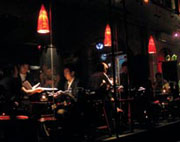 At midnight, when the sleepy host intimated it might be time to go
home, his guest replied in genuine astonishment, "But it's at this hour that
Shenzhen nightlife really gets going!"
At midnight, when the sleepy host intimated it might be time to go
home, his guest replied in genuine astonishment, "But it's at this hour that
Shenzhen nightlife really gets going!" 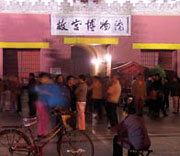 Qing Emperor Yongzheng once remarked in a letter to his minister that
malpractice was rife throughout officialdom, and that rather than concentrating
on state affairs, many officials opted for take the hedonistic route to
promotion.
Qing Emperor Yongzheng once remarked in a letter to his minister that
malpractice was rife throughout officialdom, and that rather than concentrating
on state affairs, many officials opted for take the hedonistic route to
promotion.
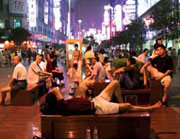 Morning audience was an ordeal that taxed the strength of the most
vigorous statesmen. Hundreds of officials from the capital and its environs
would wait at dawn for bell that signaled the opening of the palace gate, before
entering and lining the palace square, civil officials facing west and military
officers east.
Morning audience was an ordeal that taxed the strength of the most
vigorous statesmen. Hundreds of officials from the capital and its environs
would wait at dawn for bell that signaled the opening of the palace gate, before
entering and lining the palace square, civil officials facing west and military
officers east.