|
Home>News Center>China | |
|
|
|
|
|
|
|
|
|
|
||||||||||||||||||||||||||||||||||||||||||||||||||||||||||||||||||||||||||||||
|
|
Double exposures reveal clearer picture
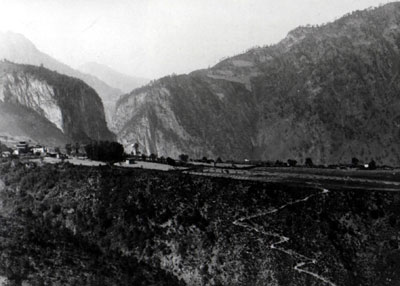
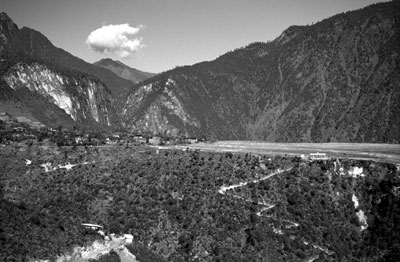
If a picture is worth a thousand words, what's the value of two pictures? What if the two pictures are nearly identical - shots of the same subject, taken from the same angle, but almost a century apart? And what if the subjects are some of the most pristine and bio-diverse landscapes on the planet?
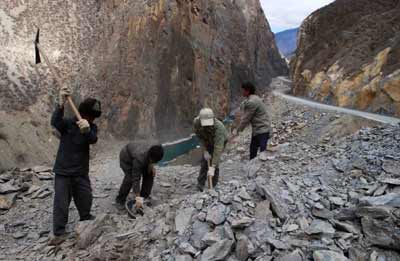
The revelation is too complicated to be measured with tidy numbers or summed up in nifty descriptions. But as Bob Moseley explains, the differences, subtle though they be, can reveal a great deal about what happened over the past 100 years and what we should do to preserve the natural environment in the vast swath of land that is northwestern Yunnan. For the past four years Moseley has been trekking through this wonderland of flora and fauna in search of the exact spots where pictures were taken in the early 20th century. In the first half of last century, teams of Western photographers climbed the same mountains and hiked the same trails, leaving a photographic legacy of dense forests, tranquil hamlets and ethnically diverse but invariably warm people. Moseley and his colleagues have made painstaking efforts and compiled a collection of over 900 historical images taken between 1901 and 1949 by 18 photographers, such as George Forrest, Joseph Rock and Frank Kingdon-Ward, who were botanists, zoologists, geologists, anthropologists, explorers, diplomats, foreign aid workers and Catholic missionaries. These images were scattered all around the world, in books and magazine articles as well as the archives of the Royal Geographical Society in Britain and National Geographic Society in the United States. Out of these 900-odd photos, Moseley, director of conservation science for The Nature Conservancy's China Programme, and his team have relocated 265 of the historical vantage points and taken pictures that attempt to match the originals in framing and composition. Hence the seemingly indistinguishable photo sets. Comparison by choice The photo sets, studied side by side, have yielded interesting discoveries. Some were expected, while others came as a shock. The villages have grown larger. The age-old "Tea and Horse Road" (cha ma gu dao) has always been the main transport artery and some of the trails have been replaced with better paved roads, but almost always at the same location. But - surprise, surprise - photo after photo indicates forest cover today is better than 50-100 years ago - in forests managed traditionally by local communities. Moseley explains that much of the barren terrain that we are so familiar with is caused by a lack of sufficient rainwater. The mountain range prevents clouds from floating over from the Myanmar side and sucks the moisture as the clouds rise, leaving patches of land naturally dry on the Yunnan side. "It's called the rain shadow," he says, "which is a common phenomenon in mountainous areas. "There is so much myth in the assumption that people take it for granted. But actually it may not be true, or at least not as universal as people make them to be." The increase in forest cover, as the photos reveal, does not tell the whole story, warns Moseley, because they cannot show other indicators of forest health, some of which indeed show declining health. And one thing much less discernible to a layman's eye is the effect of warming over the past century. Moseley points out that treelines are higher, indicating a rise in temperature and a deterioration in the alpine ecosystem. "Higher than 4,200 metres, it's too cold for trees to grow," he says, adding that a sub-project of weather modeling will be taken to scrutinize the age of trees and the climate's impact on their height, which may tell us how serious the problem is. Another sign is the retreating glacier, with more rock exposed today than decades ago. Glaciers don't shrink or expand with the seasons, he explains. Herders have also been telling him there has been a drop of productivity of yak milk. This could be caused by a change in ecological quality of the grazing land, he says, but other factors such as animal breeding could also be playing a role. "The past can tell us about the future," Moseley says, and that is why historical profiles of the ecosystem are so important. "We should not set goals in a vacuum, but do it realistically." However, he concludes that the photo comparison "tends to create more questions than answers." Conservation by design When Moseley talks about his discoveries in Yunnan, his eyes sparkle. However, he also exhibits a Zen-like placidity that is rare in most environmental activists from the West.
"We are here to discuss new ways of conservation, bring in new ideas, and balance conservation with development. We use a systematic approach called 'conservation by design' which sets priorities ahead of time so that we don't make too many mistakes relating to changing opportunities," he expounds. Moseley has observed that religious beliefs have done a great job in protecting some of the mountains in northwestern Yunnan. Some of these places, such as Meili Mountain, have long been held sacred by local people. Ethnic practices can also make quite a difference. Ethnicities like Naxi tend to hold Mother Nature in reverence. Before they cut down a tree, their custom dictates that they plant a new one. Others may be less scrupulous and take a "slash and burn" approach towards forest clearing. Traditional ecological management of these ethnic people is overall successful, contends Moseley, but we are at a critical stage, right on the cusp so to speak, when the economy in the hinterland is poised to take off as a result of the country's "Go West" programme. Fuel wood collection has always had a big impact on forests, and ever since commercial logging was suspended in the aftermath of the Yangtze River flooding in the 1998, wholesale clearing of the forest for local needs of fuel and construction has been identified as a major threat to forestation. But as the repeat photos show, this kind of "selective" harvesting has not caused the vast deforestation in northwestern Yunnan as most people believe. However, intensive logging, even when selective, can degrade forest health, and the photos are picking up some indicators, says Moseley. Half a million households - about 80 per cent of the area's total - depend on wood for cooking and heating, with an average household consumption of 6 cubic metres of wood per year. Moseley deplores that this wood is being used inefficiently. For example, as he finds out, only a small part of a big tree is made into shingles for house building, with much of the tree going to waste. The Nature Conservancy and the Yunnan local government have teamed up to launch an alternative energy project that aims to reduce fuel wood use by 75 per cent over the next 10 years. The Conservancy has set up pilot programmes with various local governments and communities. Solar power is being harnessed for cooking, "maybe not to the boiling point, but hot enough for animal feed." Methane is another source of energy, which uses human and animal waste. Stoves can be improved for fuel efficiency. And houses can be refurbished for better insulation. In 26 villages around the Meili Mountain (Mount Kawagebo) area, joint programmes had by the end of 2002 outfitted 368 households with methane gas pits. The Greater Rivers project went out on a larger scale: it built 1,365 methane pits and over a dozen complete systems that connect toilets with the pit and the warm house, thus solving many of the problems that make biogas technology unfeasible in high altitude. New vista Things are changing very quickly in Yunnan, with new roads emerging and tourists disembarking by the busload. Governments are pouring in money. Big capital is also being wooed. Far-flung villagers are encouraged to move to clusters of high-density communities. Are all the changes good for the environment? "It is difficult to make a living off the land in many places in northwestern Yunnan, and these people deserve a better livelihood," reasons Moseley. "The question is, how can we open up the place to increase the livelihoods of poverty-stricken local people yet sustain its ecological system?" Moseley believes it's an achievable goal. He cites the example of the Grand Canyon of the United States, which is visited by millions of tourists every year, yet its ecological quality is carefully maintained. "We are not against development," he emphasizes. "We want to have good environmental reviews of projects and alternative ways of building roads and other infrastructure. We want hotels and restaurants that do not dump raw sewage into the river." He says that in Deqen County, officials have realized that if they ruin the environment in the construction boom the tourists may not come. But overall, he credits the central government with vision and foresight "while local governments tend to be too focused on short-term economic output." "There's always a contradiction between conservation and development," says
Moseley. "The key is to balance them." |
|
|
|
|
|||||||||||||||||||||||||||||||||||||||||||||||||||||||||||||||||||||||||||
|
|
|
|
||||||||||||||||||||||||||||||||||||||||||||||||||||||||||||||||||||||||||||||