|
|
|
||||||
 |
|
|

|
|||||
 |
||
|
|
|
|
|
|
|
||
|
|
|
|
|
| Advertisement | |||||||||||||||||||||||||||||||||||||||||||||||||||||||||||||||||||||
|
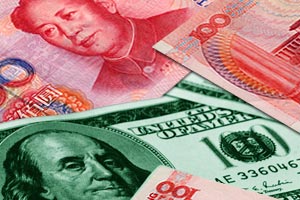
Comment: No time to raise renminbi's value ( 2003-07-01 12:31) (China Daily)
In an era when everybody is scrambling for a bigger market share in the global economy, to criticize a country for its foreign exchange policy and try to pressure it into raising the value of its currency, seems, to some, to be an excuse for failing to identify what is wrong in their own backyard.
As the Chinese renminbi fluctuates very narrowly around the US dollar at 8.28:1 and has gone down with the falling dollar, there is a growing chorus that the peg is unfairly helping the country gain shares in global markets and the value of the renminbi should be raised or immediately floated to let market forces decide its value. But is the peg really unfair? No. Should the value of the renminbi be artificially raised? No. Should it be floated? Yes, but not at the moment and the timetable should be decided by China alone. Critics of China's financial and trade policy often cite the country's export growth and trade surplus as evidence in support of this contention. The approach is not a sound one because these figures can not reflect what the critics believe is happening. China's powerful processing trade sector has an important role, if not a central one, in explaining why what China really earned in foreign trade is not as high as the exports and surplus figures suggest. China earns a thin profit from processing trade, with a big part of the profits generated being taken by overseas companies that put brand marks on the final products. But all these products are being tallied as originating in China. For countries that complain about trade deficits with China, it is very likely that their own companies, which earn handsome profits in China, are responsible for a share in the trade deficit. The system of statistics of some of China's trading partners, due to technical reasons, includes their imports from Hong Kong as coming from the mainland, but excludes Hong Kong when counting their exports to China. This also distorts the real picture. The US manufacturing sector often complains about the country's trade imbalance with China. In fact, China and the United States in the mid-1990s co-sponsored a team to research the trade deficit issue. The conclusion was that the deficit was greatly exaggerated due to technical reasons. But many people from the US side seem to have forgotten this conclusion or appeared to have never heard of it. Critics should also bear in mind that while China's exports increase, China's imports also jumped dramatically, and the trade surplus shrank. During the first five months of the year, both exports and imports were around US$150 billion, with a surplus of US$2.4 billion, or less than 1 per cent of the total foreign trade volume. Calculations are subject to debate not just in trade statistics. It is an even more complicated issue to calculate a reasonable exchange rate because in economics, there is no universally agreed upon method for doing this. Some US manufacturers argue the renminbi's exchange rate to the dollar is undervalued by some 40 per cent, but never explain how they arrived at this figure. Their most frequently used evidence is China's great volume of exchange reserves. But a close study on how these reserves were accumulated will indicate that it is not a sound basis for advocating a renminbi appreciation. In fact, the reserves were accumulated under a distorted supply-demand system, a legacy of a rigid foreign exchange control system. Hard currency earned by exporters still has to be sold to banks, while the demand for foreign currency is very much suppressed in a tradition that highlights the fear of wasting precious financial resources. The need to safeguard foreign exchange reserves was reinforced during, and in the wake of, the 1997-99 Asian financial crisis, when the reserves acted like a dyke keeping the floods of financial danger away from China. If all the domestic needs of foreign currencies were met, the reserves would be much lower today. Many economists agree that the most effective standard for the "correct" exchange rate of a currency is whether the country feels comfortable with it, which means whether it promotes sound economic growth, a reasonable international balance of payments and a favourable employment level. China feels comfortable with its current exchange rate and it should be so maintained in the near future. And China has the right to decide its exchange rate policy and no international agreement forbids that. Nevertheless, China, in pursuit of a more mature market economy, has said its goal is to have a more flexible exchange administration system and eventually to float the renminbi to let market forces decide its value. But it should be a gradual process. Things could be done in the process that include allowing exporters to retain an increasing part of foreign currency earnings, relaxing the control on foreign exchange demand and letting the renminbi float in a bigger range than its current level. But neither Chinese banks nor enterprises have yet developed the necessary capability to deal with a more flexible exchange rate system. So the timing, at the moment, is certainly not right for making major changes. And it is even more unreasonable to artificially raise the renminbi's exchange rate before market forces have more influence over its value. A healthy Chinese economy is a boon for the world because it generates great demand. A premature change of the exchange rate at the moment is very likely to bring financial shocks and harm the economy. Is a troubled Chinese economy a desirable thing? Just ask Boeing, Honda or
Nokia.
|
|
 |
|||||||||||||||||||||||||||||||||||||||||||||||||||||||||||||||||||
| .contact us |.about us | |||||||||||||||||||||||||||||||||||||||||||||||||||||||||||||||||||||
|
|
|
|
|
|
|
|
| Copyright By chinadaily.com.cn. All rights reserved |