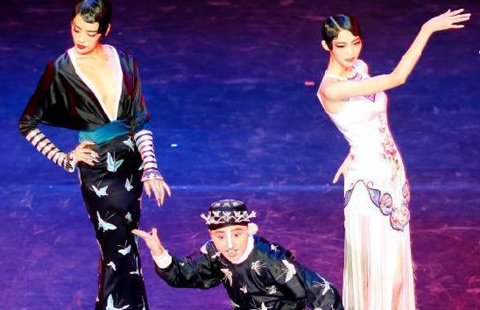
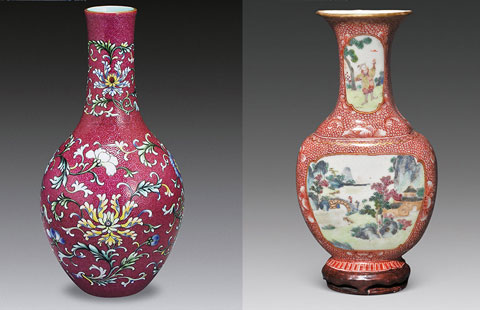
Liu Dian-gang, Mao He-rong Culture is the spirit and soul of a nation, which plays a tremendously important role in politics, economic activities and the social and ecological fields, among others. The Chinese Communist Party and the Chinese government have always attached due weight to cultural construction and cultural exchanges with other nations. Chinese President Xi Jinping, in many different circumstances, has stressed the significance of traditional Chinese culture.
He once said: "The prosperity of a country and a nation is invariably propped up by the thriving of culture, and the great rejuvenation of the Chinese nation should be based on the development and prosperity of Chinese culture".
Chinese Culture as Soft Power
As the Chinese economy continuously develops at a comparatively high speed and Chinese overall national strength steadily grows, the soft power of Chinese culture is attracting stronger interest and wider attention at home and abroad. Chinese culture’s Going Global has been heatedly discussed for many years and upgraded to a national strategy.
In 2011, "The Decision of the Central Committee of the Communist Party of China on Some Major Issues Concerning Deepening the Reform of Cultural System and Promoting the Great Development and Prosperity of Socialist Culture" approved by the Sixth Plenary Session of the 17th CPC Central Committee put forward the goal of building socialist cultural power. In 2013, "The Decision of the Central Committee of the Communist Party of China on Some Major Issues Concerning Comprehensively Deepening the Reform" approved by the Third Plenary Session of the 18th Central Committee of the Communist Party of China underlined the importance and urgency of expanding international cultural exchange, improving the capability of international communication and discourse system construction to better coordinate the export of Chinese culture globally.
Popularity of Traditional Chinese Medical Culture
Overseas In Vice Premier Liu Yandong’s words, traditional Chinese medicine (TCM) is our country’s unique health resource, an economic resource of huge potential, a scientific and technological resource of originality, an excellent cultural resource and an ecological resource of great importance. As medical models and health mindsets are currently undergoing further change all over the world, the universal civilizing value of TCM is being recognized by increasingly larger populations. As the concentrated embodiment of Chinese philosophical thoughts, modes of thinking and Chinese values, traditional Chinese medical culture represents the quintessence of traditional Chinese culture, whose popularity among people has been growing rapidly in recent decades.
According to the relevant statistics, TCM so far has spread to more than 170 countries, and the Chinese government has signed approximately 180 inter-governmental collaborative agreements with other countries. TCM has been partly or wholly legalized in numerous countries, such as in Singapore, Thailand, Australia and the United States. Research shows that among almost all Chinese medical teams dispatched to foreign countries and areas in history, there are acupuncturists and experts in other fields of TCM.
Currently, The Yellow Emperor’s Internal Canon of Medicine, which is believed to have been written in the late Eastern Han Dynasty in the name of the Yellow Emperor (Huang Di) and The Compendium of Materia Medica, which was written by Li Shih-chen (Li Shizhen) in the Ming Dynasty, have been successfully listed on UNESCO’s Memory of the World Register. Acupuncture and Moxibustion of TCM, together with 82 other TCM projects, has been listed as a World Non-material Cultural Heritage. In this sense, TCM carries the cultural genes that help to maintain Chinese and peoples of other nations on the earth.
In recent years, traditional Chinese medical culture has been increasingly put under the spotlight. President Xi Jinping has on many occasions highly praised TCM, recommended TCM and witnessed the signing of inter-governmental agreements concerning TCM. Chinese government documents like "Several Opinions of the State Council on Accelerating the Development of the Cause of Traditional Chinese Medicine", "The 12th Five-Year Plan for the Development of the Cause of Traditional Chinese Medicine" and "The Medium and Long-term Plan for Foreign Exchange and Cooperation of Traditional Chinese Medicine (2011-2020)" repeatedly laid emphasis on the importance of foreign exchange and cooperation in the field of traditional Chinese medical culture. International communication of traditional Chinese medical culture is gaining an eye-catching place in China’s overall pattern of diplomacy.
|
|
|
|
|
|
|
|

Copyright 1995 - . All rights reserved. The content (including but not limited to text, photo, multimedia information, etc) published in this site belongs to China Daily Information Co (CDIC). Without written authorization from CDIC, such content shall not be republished or used in any form. Note: Browsers with 1024*768 or higher resolution are suggested for this site.
License for publishing multimedia online 0108263 Registration Number: 130349 








 Raymond Zhou:
 Pauline D Loh:
 Hot Pot
 Eco China
 China Dream
 China Face