Software maker shows its dexterity
|
A Surface tablet computer advertisement on a street in Nanjing, Jiangsu province. In October, Microsoft Corp launched the company's first self-branded tablet to challenge Apple Inc's iPad. Wang Qiming / For China Daily |

Microsoft to invest at least $500 million to boost R&D in China
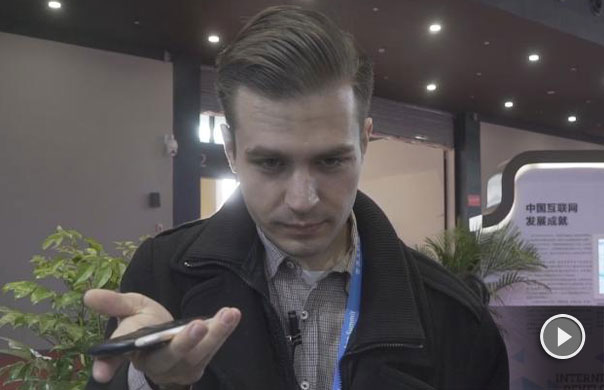
With a constant gracious smile on his slim face, Ralph Haupter, the first non-Chinese chief executive officer to run international software provider Microsoft Corp's China business, likes to show the public he has everything under control.
"China is a very dynamic market for Microsoft and its strong desire to improve is fueling the nation's drive forward," said Haupter, vice-president of Microsoft and chairman and CEO of Microsoft Greater China.
"Working in China is like riding a wave," the 43-year-old said.
Confidence is the key to success. It is especially true as Microsoft is on the brink of rebuilding itself into a company driven by mobile Internet, the next battlefield for global IT giants including Google Inc, Apple Inc, IBM and Samsung Electronics Co.
"The PC market is slowing down. Tablets are attracting more and more excitement. The mobile sector in 2013 will be extremely dynamic," the CEO predicted.
On Oct 26, Microsoft launched Surface, the company's first self-branded tablet, to challenge Apple Inc's iPad.
On the eve of Surface's global debut, Haupter handed the first unit of the device to a Chinese customer at an electronic goods retail store in Beijing.
"Surface is the product of our dreams, what a device should look like in addressing the capabilities of Windows 8," he said, adding that the company's Surface strategy "worked very well".
Haupter declined to predict the sales volumes for Surface in 2013, saying there are too many unknown variables in the equation.
Analysts argue that Microsoft's new gadget will face strong challenges from Apple and Samsung.
"Surface will have a limited impact on the sales of iPads because, as a software company, Microsoft's lack of hardware-making experience will eventually hinder its Surface strategy," said Li Yanyan, an analyst from industry research company Analysys International.
However, that is a notion Haupter dismisses out of hand. He said Microsoft is drawing up a new and bigger strategy.
The tablet is a stepping-stone for Microsoft toward mobile Internet. The company's trump card is Windows 8, an operating system that the executives expect can compete with Google's Android and Apple's iOS.
In this respect, Surface is the most expensive advertisement Microsoft has invested to promote Windows 8, the company's latest operating system that could run on different types of devices including PCs, tablets and smartphones.
"Microsoft hopes Surface can motivate, inspire and attract other original equipment manufacturers, or OEMs, to develop Windows 8-based devices in all kinds of ways," Haupter said.
As other manufacturers join the fray, iPads will face challenges from a group of Windows 8-based devices.
"I think all the OEMs are excited and totally committed to Windows 8 because it provides them with an opportunity to develop a broad band of devices running the same operating system," Haupter said.
Although Surface may compete with other OEMs' products in the short term, the device will help Windows 8 to establish its own ecosystem and lure more customers in 2013, said Scott Lin, Greater China president of Taiwan-based computer manufacturer Acer Inc.
Microsoft has certified 1,500 devices running Windows 8 for the global market over the coming months, said a company report.
Chinese customers are starting to see Microsoft moving from operating systems toward a broad environment of different experiences, said Haupter.
"I want the customers to know that we have some interesting and cool products for them because China's consumer IT market is driven by pure natural interest," he said.
'Dynamic' and 'diversified'
Haupter's understanding of China did not develop until the seven-year veteran of Microsoft received the news in April 2012 that he was being promoted to corporate vice-president to head the Chinese mainland, Taiwan and Hong Kong markets, replacing Simon Leung.
Analysts believe it is a perfect time for Microsoft to name a new head in China because the company is planning big moves across the nation.
"China represents an unprecedented opportunity for growth across the breadth of our business ... as Microsoft looks forward to our next wave of growth and innovation and considers the new leaders a great complement to the existing team," said Jean-Philippe Courtois, president of Microsoft International.
Microsoft has traditionally chosen its China head from local markets. All of Haupter's six predecessors were ethnic Chinese.
When Haupter, who was born in Stuttgart, Germany, received news of his appointment, his first response was to ask "Why?", he recalled.
Before coming to Beijing, Haupter was the vice-president of Microsoft Germany.
Haupter's work experience in European markets and good relationship with the US headquarters will help Microsoft China enjoy more access to the corporation's global resources. Having a leader with better global vision will also cement China's position as a top market for Microsoft.
"My advantage was that I came from a much smaller market with slower growth prospects. However, we were able to help the companies to generate more profit and increase productivity and be more innovative," he said.
In April 2012, Microsoft's seventh China head made his first trip to the country. "Big" and "very dynamic" were the two deepest impressions the visit left him with.
"When my family and I make decisions to go to a foreign country, we, hopefully, make the best attempt to learn a different culture," he said.
Taking two Mandarin lessons a week, the CEO said he thinks the grammar and sentence structure of Mandarin is much easier compared with German, although he is still working on daily greetings.
Haupter said he is able to appreciate the diversity of the nation because of the number of business trips he makes to local markets.
"It is easy to see China as a country with 1.3-billion-plus people but, if you have seen the provinces, where in one province you have more than 50 ethnic groups and languages, it presents a completely different story," he said.
Having such an understanding about China will certainly help Haupter better plot Microsoft's expansion strategy in the nation, where the US company is eager to reach out.
Microsoft's expansion plans are closely attached to government policies.
Last year, the company said it will add investment and staff in more than 20 Chinese cities to help local governments build "smart cities", a government-led initiative to upgrade municipal services using technology such as cloud computing and digitized data processing systems.
"You have to be really careful when addressing the Chinese market because it is important to fully understand the prevailing conditions locally," said Haupter, adding that picking an area that is in line with the nation's long-term development strategies and local demand is the safest and most reliable way to do business in China.
Microsoft says it plans to add 1,000 new employees to beef up development and service teams in the financial year 2013, a move that will help the company localize its products and services.
It also pledged to invest at least $500 million to boost research and development in a bid to better serve the Chinese customers.
Currently, one of the major tasks for Microsoft is to build a sound ecosystem that includes all the local partners, according to Haupter.
In September, Microsoft launched Windows Server 2012, a cloud-based server operating system targeting small and medium-sized enterprises. The company is also mulling whether to introduce Windows Azure, its cloud-computing platform, to China.
Going mobile
Looking forward in 2013, China's consumer market is increasingly attractive to international IT companies, especially Microsoft.
China expected to sell 240 million smartphones in 2012, nearly one-third of the global shipments, IT research company Canalys estimated.
"Mobile Internet is a very important element of the Chinese market and it will grow robustly in the coming years," Haupter predicted.
Microsoft saw the decline of the PC industry years ago but it chose to focus on developing cloud computing technology, missing out on the window of opportunity to enter the mobile sector early on.
Windows 8 was the company's latest and probably the last chance for it to stake a claim as the entire world goes mobile.
Microsoft should give Chinese customers options for different devices and individualize their experiences in order to obtain a bigger market share, said Haupter, adding that localizing Windows devices requires local developers to design applications that reflect the needs of local customers.
The Windows store in China had the second-largest number of apps on its launch day behind the United States, according to Microsoft.
World-leading IT manufacturers such as Nokia Corp, Samsung, ZTE Corp and Huawei Technologies Co Ltd have released their own version of Windows Phones to broaden their product lines.
Teaming up with hardware makers will enable Windows 8 to have a variety of devices within different price ranges and an entire software system to support the device family.
Although Li from Analysys International said some smartphone makers joined hands with Windows only to avoid being solely dependent on Google's Android, Haupter believed Windows was on the right track to challenge the existing systems in the future.
"Windows 8 has set the technology base. We are going to see more partners engaged with the new system," he said.
gaoyuan@chinadaily.com.cn

(China Daily 01/24/2013 page15)