Comments
  Print
Print  Mail
Mail  Large Medium Small
 |
|
Doctor Wang Yuntao goes digital for a close-up look at the patient's tongue. Photos by Katherine Rodriguez / for China Daily |
Traditional Chinese Medicine is shedding its old, sometimes dingy approach and pulling in new fans with a very different profile. Belle Taylor pays a visit to some new-age practitioners of ancient cures.
Alex Tan is holding court at The Hutong, an expatriate-run Chinese cultural center in the heart of Beijing. "See that plant?" He points to a sad looking leaf drearily sticking out of a pot on the windowsill. "It's alive, but it's not thriving. But I bet if I gave it more sun, more water, better soil, it would look a lot healthier."
The predominately European audience nod enthusiastically. No one wants to be a droopy pot plant, they want to be like Tan, an Australian Traditional Chinese Medicine doctor who practically bursts with good health and espouses the benefits of TCM with the fervor of a true believer.
Tan, whose father is Chinese and mother is Caucasian, runs his Straight Bamboo TCM clinic out of The Hutong and a spa in Beijing's hip Sanlitun area, promoting "Chinese medicine with a Western perspective".
He has degrees from Australia in both engineering and TCM, allowing him to explain some of the more esoteric aspects of this 3,000-year-old medical system with an engineers matter-of-fact directness.
Tan might be uniquely placed to straddle the two cultures, but he is just one of a growing army of Chinese medical practitioners who have identified a market among Westerners, where rising incidences of illnesses such as cancer and diabetes are leading people to explore alternatives to mainstream Western medicine.
People are also living longer, prompting an interest in not only recovering from illness, but avoiding it in the first place. Preventative medicine is a major foundation of TCM.
"We believe everything needs to be done in moderation," says Dr Lang Cai, a TCM practitioner at the Beijing United Family hospital that caters to many expats in the capital.
In China, TCM is often offered alongside Western medicine in major hospitals, and Lang says she gets both Chinese and foreigners through her doors, but she would like to see more patients visit before they are sick.
"People should come earlier, not wait until symptoms come," she says. "Some patients might go to the Western practitioner for a check up physically and they will say, 'you have no problems, go home and relax,' but maybe in Chinese medicine we can find something wrong, something is still functioning, but is in the early stages (of becoming a problem)."
Increasingly, foreigners are avoiding hospitals and turning to small clinics and spas for TCM treatment. One such business is Beijing's Oriental Inter-Cultural Medical, a TCM clinic targeted at foreign clients with two venues in Beijing and one in Tianjin.
Sitting in the pristine offices of their Dongwen clinic, marketing representative and sometime translator for the center Jenna Merrill, says they offer a variety of TCM treatments, including acupuncture, massage and cupping, with doctors who speak Mandarin, English and Japanese.
"It's Chinese medicine but in an environment that is up to Western standards," Merrill says.
Merrill, an American, says most Chinese seeking TCM treatment will visit a public hospital, but foreigners often find the massive, busy institutions overwhelming and also face both language and cultural barriers when seeking treatment.
Public hospital doctors, with a line of patients at the door, rarely have the time to explain TCM to foreign patients who find the rushed experience unsettling, especially if they are unfamiliar with the treatments.
"From the Chinese mindset they think these are the best doctors because they have 100 patients a day, but one of our doctors here has at most eight patients a day, so their idea of specialization is different," Merrill says.
"We think it's important to care for the patient and not only provide services but also spend time to learn their medical background and talk with them," she says, adding that education is also a focus of the center, which also holds tai chi classes.
Merrill sympathizes with foreigners who are wary of some TCM treatments, such as cupping and acupuncture, which can seem intimidating to a first-timer.
"They are really worried about the cupping," she laughs, referring to the treatment known as baguan in Chinese, where suction is applied to the body, leaving large, circular bruises. She says most foreigners are more accepting of acupuncture compared to cupping or moxa, treatments that Chinese patients are more familiar with.
"Even I am a bit worried about cupping."
Has she tried it? Merrill nods. "It does take some getting used to," she admits.
But despite their hesitation, she says the majority of foreigners are open-minded enough to embrace all aspects of TCM.
"One thing I like is that when foreigners come here they are very accepting of new things, they are not only accepting of the medicine but also the cultural background."
Treatments such as acupuncture and massage have become increasingly common throughout major centers in Europe, North America and Australia, particularly in cities with large Chinese communities.
But knowledge of the practices and adoption of the holistic approach so important in Chinese medicine is still a long way off. There is also a desire in the West to fit TCM into a Western understanding of medicine.
Last year, major British pharmaceutical company Glaxonsmithkline began a research and development program into TCM with a goal to provide evidence-based TCM medicine through modern drug discovery technology and clinical trial methodology.
Many countries have introduced varies levels of regulation for TCM. Tony Zhang, head of TCM at the school of health sciences at Australia's RMIT University, says regulation has been positive and has helped the industry gain wider acceptance in that country.
"From surveys we conducted in the past people certainly have a very positive view of the regulation, the regulations helps the profession move to the next level," Zhang says.
Since arriving in Australia from China 14 years ago, Zhang says he has seen increasing numbers of non-Chinese becoming interested in the practice, and TCM catering more to Western expectations and traditions.
"You can now have the granules or powders presented in tablet form," he says, adding that many Westerners prefer tablets to tea.
TCM is not only changing the way people across the globe view their healthcare, but it is itself evolving as more people bring their own cultural expectations to this ancient practice.
 |
| Electrodes are now used to help get a better reading of the patient's pulse. |
 |
| Chinese medicine chest with neatly labelled drawers. |
 |
|
Cupping creates suction on the skin to help move blood circulation. Sometimes herbs are burned to help the process. |
 |
| Acupuncture stimulates various meridian points of the body. |

 Night views of Harbin through the lens
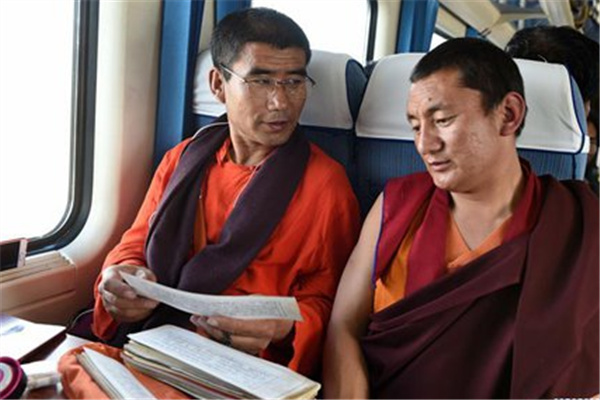 Tibetans take train home after pilgrimage or travelling
 World's largest shaftless Ferris wheel built in China
 Ancient cities to be connected by Xi'an-Chengdu high-speed railway
 Snow turns Harbin into winter wonderland
 Reed Catkin Festival held in Wuhan
 Is it a building or a bookshelf?
 First flight
 Polar icebreaker Snow Dragon arrives in Antarctic
 Xi's vision on shared future for humanity
 UN's top environmental honors go to three in China
 German trains collide near Duesseldorf, several people injured
 China beats Germany 7-4 in men's curling Olympic qualification
 Bayern beat Paris Saint-Germain 3-1 in UEFA Champions League

Copyright 1995 - . All rights reserved. The content (including but not limited to text, photo, multimedia information, etc) published in this site belongs to China Daily Information Co (CDIC). Without written authorization from CDIC, such content shall not be republished or used in any form. Note: Browsers with 1024*768 or higher resolution are suggested for this site.
License for publishing multimedia online 0108263 Registration Number: 20100000002731