Full Text: Human Rights in Xinjiang - Development and Progress
III. Economic Rights
Over the years, Xinjiang has maintained a constant focus on economic development. It thereby strives to improve standards of living, benefit the local economy, and encourage unity. It ensures that all the people share the fruits of development, and effectively protects the various economic rights of citizens. Public well-being has improved.
The right to development has been promoted. Prior to the founding of the PRC, most of the farmland in Xinjiang was owned by serf owners and landlords, and most livestock, water sources and pasturelands were controlled by the nobility and tribal chiefs. Peasants and herdsmen, accounting for 93 percent of the local total population, did not even possess a basic livelihood and the means to work. At the time, Xinjiang's production capability was extremely low, as agriculture, mainly based on kantumanhoes and ox-drawn plows, was wholly outdated. It had no industry, and could not even produce basic industrial items like steel nails and matches. It lacked the basic conditions for development. Since the founding of the PRC, Xinjiang has improved its preconditions for development, and gradually set up a modern agricultural system and a comprehensive manufacturing industry. The autonomous region's society and economy have been transformed. Since the launch of China's reform and opening-up drive in 1978, Xinjiang's GDP has soared from RMB3.9 billion to RMB961.7 billion in 2016. Its per-capita GDP has grown from RMB313 to RMB40,427 in the same period. The per-capita disposable income of urban residents has risen from RMB319 to RMB28,463 and that of rural residents from RMB119 to RMB10,183.
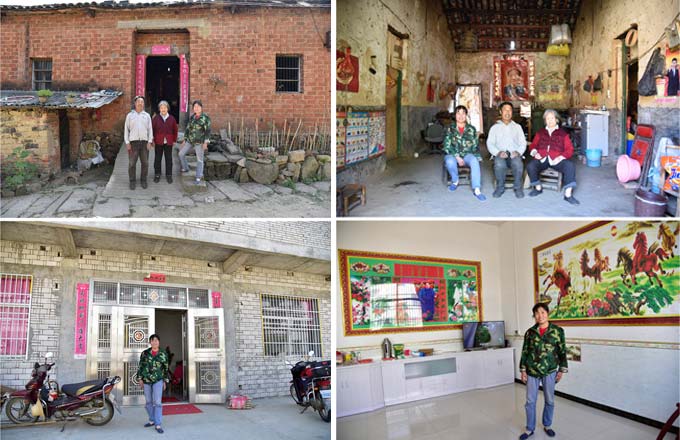
A better quality of life has been guaranteed. Great improvements have been seen in the living conditions of people of all ethnic groups in Xinjiang. Farmers and herdsmen living in high mountainous, and cold or remote areas have gradually been provided access to power, tap water and modern transport facilities. The Engel coefficient of urban households decreased from 57.3 percent in 1980 to 29.1 percent in 2016; that of rural households from 60 percent to 31.7 percent. The autonomous region has directed a considerable effort to infrastructure construction in tap water, power and gas. By the end of 2016, the eight million rural population was guaranteed access to safe drinking water, and 72.5 percent of rural households had access to tap water. A series of programs were in place, involving rural safe housing subsidy, nomadic settlement subsidy, and urban low-income housing. The per-capita living space of urban residents rose from 3.5 sq m in 1978 to more than 31.1 sq m in 2016, while that of rural residents increased from 9.46 sq m in 1994 to more than 25.7 sq m in 2016. Transport has also been improved and the people now have access to convenient and rapid traffic facilities. From 1978 to 2016, the kilometrage of roads open to powered vehicles increased from 23,800 km to 182,100 km, and rail kilometrage grew from 1,435 km to 5,868 km. Expressways and high-speed railways developed from scratch, reaching 4,395 km and 717 km, respectively. About 97 percent of administrative villages now have access to metalled roads, and 96 percent have access to bus services. There are 18 civil airports in Xinjiang.
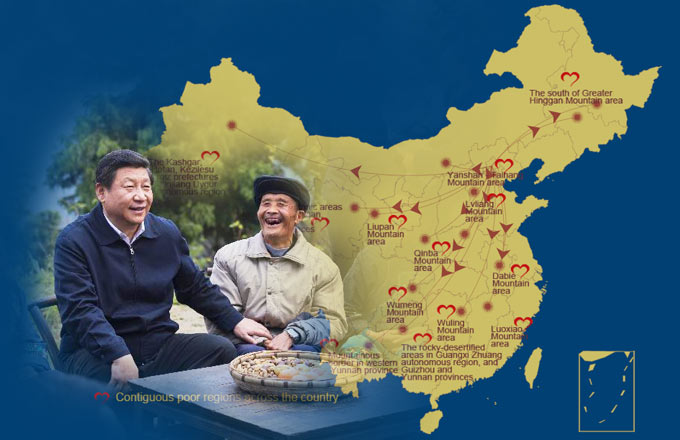
Further improvement has been made in the quality of life and daily living conditions of the impoverished. Xinjiang has implemented targeted and effective measures in poverty alleviation. Appropriate projects have been planned and carried out for the benefit of specific impoverished groups and even individual impoverished households. Aid workers have been assigned to villages according to specific conditions, and funds have been used effectively to achieve concrete results. Southern Xinjiang has been taken as the focus of the poverty-relief program. More funds and more social resources have been directed to the area. Ten special projects involving employment-based poverty reduction have been implemented. Infrastructure and basic public services have been improved. By the end of 2016, the incidence of poverty had dropped to 10 percent or less, thus better safeguarding the poor's rights to life and development.
The right to work has been effectively guaranteed. To achieve this, Xinjiang has given priority to promoting equal employment opportunities, and encouraged different sectors to create more jobs through multiple measures. It has emphasized the development of labor-intensive industries and promoted the growth of micro, small, and medium-sized enterprises, private enterprises and labor export service enterprises. It has stabilized employment by means of employment transfer, start-up enterprises, and industrial employment. At the end of 2016, 12.63 million people in rural and urban areas of Xinjiang were employed and the registered urban unemployment rate was 3.22 percent, with 455,000 new jobs created in urban areas over the course of the year.
The autonomous region has made every effort to develop vocational education, and arranged a variety of employment training programs. It has provided growing support to key population groups, such as college graduates, impoverished families, urban residents who have difficulty in finding jobs, excess peasant and herdsman labor, and rural women. It has established a long-term mechanism to constantly ensure that every family has at least one member in work. It has gradually improved the salary and bonus system. The coordination mechanism for labor relations has been further enhanced. The government has strengthened scrutiny over the enforcement of laws and regulations on employees' rights and employers' duties and the handling of disputes over labor relations, given labor unions and employees' rights protection organizations scope to play their due role, and effectively protected the basic right to work and the essential interests of the people. The Safe Production Year campaign has continued. The government has intensified workplace safety and the prevention and control of accidents, and tried hard to address prominent problems and deep-rooted issues that might create risks. The number of victims killed in workplace accidents fell by 26.5 percent between 2015 and 2016, and the workplace death rate per RMB100 million of GDP fell by 16.8 percent. Xinjiang has also improved the prevention and control of occupational diseases. There are now 111 occupational health examination organizations, and 41 occupational disease diagnosis organizations in the autonomous region, and all employees have received training in occupational health.
- China offers new idea on human rights governance
- China issues report on US human rights
- Work together to promote and protect human rights
- Peace is fundamental premise, foundation for human rights protection: Chinese diplomat
- A Comparative Study on Human Rights Development Approaches in China and U.S.(Special Issue No.48 2016)