Discovering Chinese New Year
 |
|
The author in Hangzhou, Zhejiang province, during the Spring Festival holiday. [Photo provided to chinadaily.com.cn] |
January 28 2017 marks the official lunar New Year for the Chinese people. As the longest and most important celebration in the Chinese calendar, it is observed in Chinese mainland, Hong Kong, Macau, Taiwan and Chinese communities worldwide. Also known as Spring Festival (春節), the festival's date changes each year as it coincides with the Chinese lunar calendar which also defines the twelve-year repeating cycle of the Chinese zodiac. 2017 marks the year of the rooster, the only bird represented in the zodiac. This week-long public holiday boasts over 4,000 years of unique traditions and history dating as far back as the Shang Dynasty (c.16th century-11th century BC).
According to ancient legends, Chinese New Year began with villagers fighting against the mythical creature known as Nian. Having the body of a bull and the head of a lion, this ferocious beast hunted for humans to eat towards the end of the year and the beginning of the new year when food was scarce. Knowing that the Nian was afraid of the color red, loud noises and fire, the villagers would decorate their doors and windows with red scrolls and use firecrackers to scare the monster away. The Nian never returned the following year, and the tradition of lighting fireworks and using red decorations to drive out bad spirits and bad luck continues to this day.
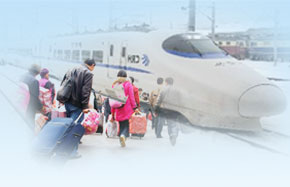
In modern day China, people are no longer fighting against mythical creatures but rather immense crowds of people and traffic jams. The largest migration of humans on earth, over hundreds of millions of people each year travel back to their homes to see and spend time with their loved ones and friends. Whether by car, train, boat or plane, if you're traveling throughout China days before the Chinese New Year begins expect long lines, delays and large crowds.
Being that Chinese New Year is the most important holiday, many Chinese people spend their week-long vacation with their families. On New Year's Eve, families gather together at the reunion dinner, where generations of families eat and enjoy time with each other. Fish, dumplings, spring rolls, sweet rice balls, noodles, glutinous rice cake and fruits such as tangerines, oranges and pomelos are typically eaten and have symbolic importance. Fish sounds like the word 'surplus' in Chinese, dumplings symbolize wealth as they resemble silver ingots, spring rolls and glutinous rice cake symbolize higher income and position, the circular shape of sweet rice balls symbolize family togetherness, noodles represent longevity and happiness and fruits symbolize fullness and wealth.
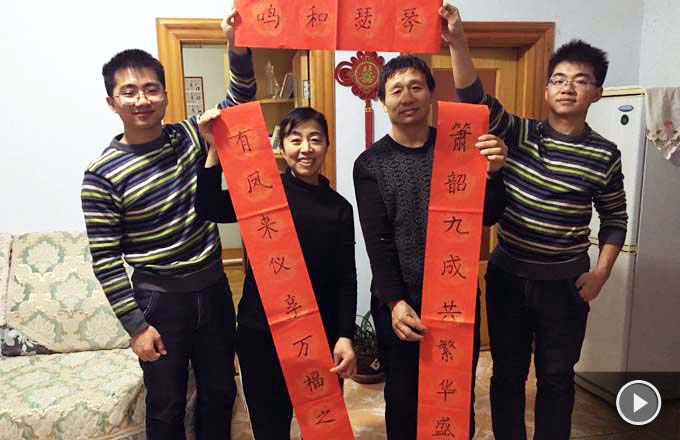
In addition, other traditional celebrations include giving red envelopes that contain money to children, the elderly and to employees by their employers. Streets, stores, buildings and homes are decorated with the celebrated animal of the Chinese zodiac and the color red as it is believed to bring about luck and happiness. Traditional performances such as lion and dragon dances can be seen at temple fairs. Lastly, fireworks and firecrackers loudly accompany the Chinese New Year. They are lit day and night in front of houses, buildings and businesses to sound in the new year and to drive away bad luck and bad spirits.
As a foreign student residing in Jinan, I have had the opportunity to experience Chinese New Year first hand. Chinese New Year is comparable to Christmas in the West. Both holidays are prepared before the actual celebrations to create a joyous atmosphere, people are given the chance to enjoy time off from work and reunite with their families, delicious food is prepared and gifts are exchanged. Traveling becomes more hectic and stores are more crowded than usual. Days leading up to the celebration, taxis are more difficult to acquire, there is more traffic and train and metro stations are much more crowded. Unlike Christmas, there is no religious undertone. Chinese New Year is an official public holiday that lasts for seven days rather than the typical five day work week in the States. In addition, streets are decorated with red lanterns and buildings and homes are adorned with red scrolls, red decorations and roosters.
Like all major holidays, food plays an important role. Jiaozi, or dumplings, are typically eaten during this holiday and I ate my fair share at restaurants and friend's houses this new year. Boiled, fried, filled with meat, vegetables or seafood you will be sure to find jiaozi that suits your taste buds. What also came as a surprise was the sound of fireworks and firecrackers that sound before and during the holiday. Morning, afternoon or night, the loud and joyous noise is a constant reminder of welcoming the new year and driving out bad luck. Lastly, I had the opportunity to attend the Spring Festival Gala which was aired on Shandong TV. Viewers were entertained with a variety of comedic skits, lively singing and colorful dance routines performed by famous Shandong natives to celebrate the new year. It was a joyous event that put everyone, including myself, into the holiday spirit.
Chinese New Year is the time when bustling streets become quiet and desolate. Businesses and restaurants close their doors to the public. Schools and universities are closed as students enjoy their time away from their studies. Chinese New Year is a chance for people to renew ties with their loved one, enjoy a relaxing time away from work and look forward to a new beginning.