 Comments
  Print
Print  Mail
Mail Large Medium Small
Market-oriented regulations differentiating between affordable and commercial homes are likely to dominate realistic policies
Chinese people have become accustomed to their premier mentioning "real estate regulations" in the Government Work Report delivered to the annual session of the National People's Congress, given that "housing regulations", "to curb the rise of housing prices" and other such phrases were buzzwords at previous NPC sessions.
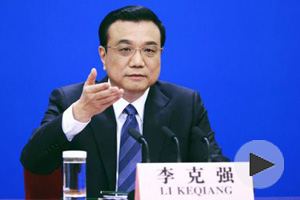
However, in his report delivered to this year's session of the top legislature on Wednesday, Premier Li Keqiang eschewed such familiar phrases and the usual vow to make efforts to check "the fast rising momentum of housing prices". In fact, the previously common harsh words targeted at cooling house prices have hardly been heard since Li took office in March 2013.
But this does not mean Li's government has turned a blind eye to the housing market. Indeed it cannot afford to do so, because the housing market has become a key issue whose development exerts considerable influence on China's economy.
Regulation of China's housing market is undergoing enormous changes and two-way and differentiated regulations are likely to dominate the country's housing market policy in the future, instead of the administrative approach that dominated previously.
According to Chen Huai, director of the research center under the Ministry of Housing and Urban-Rural Development, two-way and differentiated regulations are becoming the dominant feature of the government's housing policy in the future. Two-way regulation refers to a new approach that mainly focuses on increasing the supply of government-subsidized homes and curbing speculative purchases of commercial apartments for investment purposes. This will improve the structure of the country's housing demand and prevent the continuous speculation from further fueling the rise of housing prices.
At a time when housing prices are beyond the purchasing power of ordinary people, increasing the supply of government-subsidized and affordable homes remains a particularly important and urgent task for the government. Home prices in some smaller cities are not as high as in first-tier cities, but prices are still far beyond the purchasing power of most local household incomes. Certainly, only by offering more affordable homes can the government meet the housing demand of low-income residents.
Through differentiated regulations, the government is aiming to offer different prescriptions for the real estate maladies in different regions based on their distinct circumstances. Such a policy can help prevent the adoption of a uniform regulatory policy nationwide that will possibly cause such a result that "one has a fever but all have to take medicine".
According to the National Bureau of Statistics, of the monitored 70 big and medium-sized cities, first-tier cities such as Beijing, Shanghai, Guangzhou and Shenzhen witnessed an average house price increase of more than 20 percent in 2013, and more than 20 other cities, such as Nanjing and Xiamen, saw a 10 percent or higher rise in their average house prices.
However, some cities in the central and western areas faced much slower price rises and some even experienced a drastic fall in prices. Compared with strong pressures for the rise of house prices in the big cities in developed areas, some smaller cities or towns in less-developed areas have been reduced to "ghost cities", a phrase used to describe the high vacancy ratio of their constructed residential buildings.
Differentiated and two-way regulations mean that different regulatory approaches will be adopted for different regions. According to Qi Ji, vice-minister of housing and urban-rural development, this means more efforts to increase the supply of housing units in first-tier cities and measures to clamp down on investment and speculative demand. But for those cities with a big stock of properties, measures will be taken to control the supplies of both land and housing. Such a housing regulatory approach means the gradual deregulation of the housing market and a shift to market-dominated regulations.
But while applauding the deregulation of the housing market, we should also not completely ignore the role of those administrative means used to tame the country's intractable housing market and property prices. As a matter of fact, without administrative regulatory measures, house prices might continue to rise and China's problematic real estate market might collapse with damaging repercussions for the economy.
So what the government needs to do while adopting its differentiated and two-way regulations is use administrative means to deal with the continuing upward trend in house prices.
The author is a Shanghai-based economics commentator.
(China Daily 03/11/2014 page9)

Copyright 1995 - . All rights reserved. The content (including but not limited to text, photo, multimedia information, etc) published in this site belongs to China Daily Information Co (CDIC). Without written authorization from CDIC, such content shall not be republished or used in any form. Note: Browsers with 1024*768 or higher resolution are suggested for this site.
License for publishing multimedia online 0108263 Registration Number: 20100000002731 


