Comments
  Print
Print  Mail
Mail  Large Medium Small
BEIJING -- A senior Chinese diplomat said Friday no matter what tricks Japan plays, it can never change China's sovereignty over the Diaoyu Islands and affiliated islets, nor the historical fact that Japan seized the territories from China.
Le Yucheng, assistant foreign minister, said at a symposium in Beijing that the Japanese had rolled out various kinds of fallacy on the Diaoyu Islands, and the Japanese aimed to rewrite the ignominious history that Japan illegally stole the Chinese territories many years ago.
Le dismissed the move by the Japanese as "in vain and of little value", and said the world should learn the truth of the issue of Diaoyu Islands.
The fallacy of the Japanese can be put into four areas, Le said.
First, on Japan's claim that the Diaoyu Islands are "terra nullius" or have no owners, Le said this is totally unfounded. Abundant historical records and documents showed that the Chinese first discovered, named and exploited the Diaoyu Islands.
Before the 15th century, merchants and fishermen from eastern and southern coastal areas of China had long taken the Diaoyu Islands as aviation marks and carried out production activities on the islands and in their adjacent waters. The Diaoyu Islands were put under the jurisdiction of China's naval defense since the early era of Ming Dynasty (1638 AD-1644 AD), Le said, adding relevant pre-modern historical records of Japan clearly recognized this, too.
The Diaoyu Islands have belonged to China since ancient times, Le said. "This is not empty talk, nor lacking substantial proof, but based on concrete and irrefutable evidence," he said.
On Japan's fallacy that there is no outstanding territorial dispute between Japan and China, Le said Japan stole the islands from China during the First Sino-Japanese War in 1895. After the end of the Second World War, the Diaoyu Islands and affiliated islets had already been returned to China in accordance with the Cairo Declaration and the Potsdam Proclamation.
In 1951, the Treaty of Peace with Japan (commonly known as the Treaty of San Francisco, a treaty partial in nature) was signed between Japan, the United States and other countries, placing the Ryukyu Islands (known as Okinawa today) under the trusteeship of the United States, according to Le.
In 1953, the U.S. Civil Administration of the Ryukyu Islands arbitrarily expanded its jurisdiction to include the Diaoyu Islands and affiliated islets, which are in fact Chinese territories. In 1971, Japan and the United States signed the Okinawa Reversion Agreement, which arbitrarily included the Diaoyu Islands in the territories and territorial waters to be reversed to Japan. The Chinese government has, from the very beginning, firmly opposed and never acknowledged such backroom deals between Japan and the United States concerning Chinese territories.
Le said the Japanese side's denial of outstanding territorial dispute between Japan and China consists of a blatant denial of victory of the world's anti-fascism war and a direct challenge to post-war international order.
Regarding Japan's claim that the two countries did not reach any common understanding on shelving territorial disputes, Le said it showed Japan reneged on its promise.
Le recalled the negotiations on the normalization of China-Japan relations in 1972 and on the signing of the Sino-Japanese Treaty of Peace and Friendship in 1978. The then leaders of the two countries, acting in the larger interests of China-Japan relations, reached an important understanding and common ground on "leaving the issue of the Diaoyu Island to be resolved later."
This opened the door to normalization of China-Japan relations and was followed by tremendous progress in China-Japan relations and stability and tranquility in East Asia in the following 40 years, Le said.
"Now, the Japanese authorities deny and negate the previous common understanding reached between the two countries, which reflects Japan's lack of basic credit as a country and seriously shakes the foundation of China-Japan political trust," Le said.
Le also dismissed Japan's claim that the government's move to "purchase" the Diaoyu Islands is nothing but forced. Japan claims the move can avoid the negative impacts on bilateral relations by the islands purchase plan of Shintaro Ishihara, rightwing governor of Tokyo.
"Those are totally pretexts and excuses," Le said. "The reality and result we now see is that Ishihara's farce is followed the Japanese government's collaboration. Their goal is to consolidate Japan's 'legal status' on the Diaoyu Islands."
Le said the Diaoyu Islands would never be stable if Japan repeatedly stirred up troubles.

 Speed of change: China through train journeys
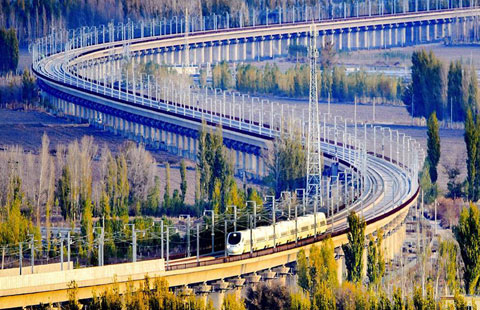 China has world's largest high-speed rail network
 China Daily weekly photos: Feb 20-26
 People view plum blossoms at scenic area in E China
 Buyers in East China go on housing spree
 Runners at Beijing's 'naked run' race
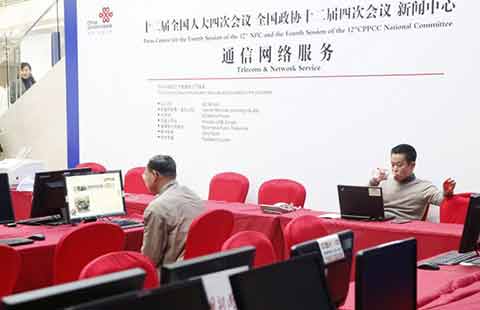 Press center up and ready for two sessions in Beijing
 Harbin Opera House scoops major architecture award
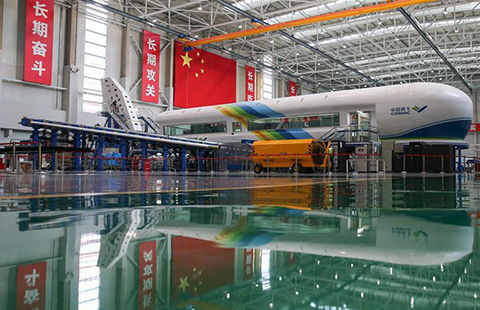 China's first large passenger plane poised for maiden flight
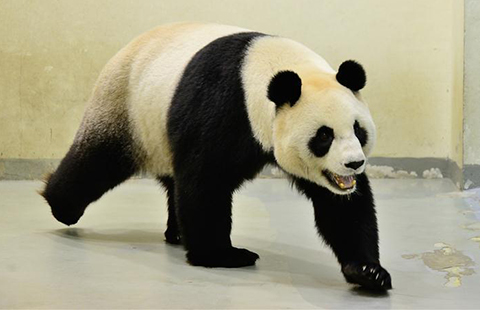 Giant panda receives artificial insemination in Taiwan
 Brazilian justice minister resigns
 Syria's fragile truce continues, amid new political prospects
 Olympic hurdler turns into bodybuilding champion
 Roger Federer downs tequila shot on Oscars red carpet

Copyright 1995 - . All rights reserved. The content (including but not limited to text, photo, multimedia information, etc) published in this site belongs to China Daily Information Co (CDIC). Without written authorization from CDIC, such content shall not be republished or used in any form. Note: Browsers with 1024*768 or higher resolution are suggested for this site.
License for publishing multimedia online 0108263 Registration Number: 20100000002731