People with HIV now live a better life
Updated: 2012-01-03 08:08
By Guy Taylor (China Daily)
|
|||||||||


As a UN Volunteer, working with UNAIDS China, I have the opportunity to get involved in a wide range of areas. From working with community-based organizations, set up by people living with HIV to interacting with the media on topics related to HIV/AIDS to supporting campaigns to fight HIV/AIDS-related discrimination in the workplace, I get to do it all.
 |
|
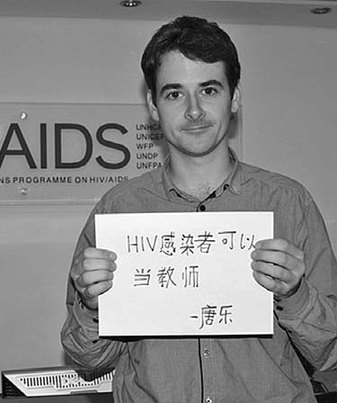
Guy Taylor: Much has changed for the better in China. Provided to China Daily? |
When you visit these organizations, you come to understand the strong relationship of trust they have with the communities they serve and see what an important role they are playing. Many of them work with highly stigmatized groups - groups that are ostracized from society, like sex workers, drug users or men who have sex with men - and it is only because of the strong trust and community roots that these groups are willing to seek services from them.
I find my work with UNAIDS very rewarding and many of the people I work with are really inspirational. Thomas Cai is one such example. After being diagnosed with HIV, Thomas set up an NGO called AIDS Care China in 2001.
From its humble beginnings as a local organization providing support to people living with HIV, AIDS Care China now serves more than 20,000 HIV-positive people through its care centers in hospitals and clinics in Guangdong, Yunnan and Hubei provinces, and the Guangxi Zhuang autonomous region. Thomas was even invited to meet with Premier Wen Jiabao on World AIDS Day in 2009, and has received many awards and commendations.
Despite these achievements, he has not slowed down, and continues to tirelessly advocate greater involvement of community-based organizations like AIDS Care China in the country's response to AIDS. Working with people like Thomas is a privilege.
Awareness-raising, anti-discrimination campaigns are also an interesting part of the work I am involved with. Recently, UNAIDS supported an anti-discrimination campaign where we asked people to send in photographs in which they hold paper signs showing anti-discrimination slogans like "People living with HIV should have equal employment opportunities".
People living with HIV often report being rejected for employment or fired from their job because of their HIV-positive status. In the last two years, three people were refused employment as teachers just because they were HIV-positive. These are all examples of injustice, and they stem from ignorance and a lack of understanding about HIV. That is why it's so important that we work to raise awareness and eradicate discriminatory views.
More than 10,000 photographs have been received so far for the campaign, and more are still coming. (If readers want to get involved, they can visit the UNAIDS weibo page to find out how). Social media have become an important part of what we do as well and we're looking to do more in this area.
UNAIDS launched its weibo account this year and we now have more than 10,000 followers. It's exciting to be able to interact directly with people and use the social media to get more information from more people. I've been really impressed by the enthusiasm and willingness of the people who want to play a role in the campaigns.
It's really encouraging to see how things have changed for the better during the time I've been working for UNAIDS China. Restrictions which prevented people living with HIV from entering the country have been removed, an increasing number of people are getting treatment, the government has put its weight behind methadone maintenance programs - recognized as the most effective way of reducing HIV transmission among people who inject drugs - the Red Ribbon Forum has been set up to discuss issues relating to rights and HIV, and top-level leaders have given clear indications that steps need to be taken to ensure that no laws or policies discriminate against people just because they are HIV-positive.
These are really positive developments and give you the feeling that what you are doing is achieving something.
The author is a UN volunteer working with UNAIDS China.








Hot Topics
Kim Jong-il, Mengniu, train crash probe, Vaclav Havel, New Year, coast guard death, Internet security, Mekong River, Strait of Hormuz, economic work conference
Editor's Picks

|

|

|

|

|

|