Malaysian PM: Environment should be priority
Updated: 2011-10-21 09:37
(chinadaily.com.cn)
|
|||||||||||


|
 |
|
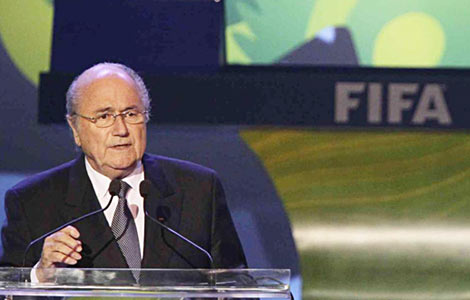
Malaysian Prime Minister Najib Razak delivers a speech at the opening ceremony of the 8th China-ASEAN Expo in Nanjing of South China's Guangxi Zhuang autonomous region October 21, 2011.?[Photo/chinadaily.com.cn] |
‘Environment protection cooperation’
Yab Dato' Sri Mohd Najib Tun Abdul Razak
Prime Minister of Malaysia
The opening ceremony of 8th China-ASEAN Expo October 21, 2011, Nanning, China
Your Excellency Wen Jiabao; Premier of the People’s Republic of China,
Your Excellencies, Leaders of ASEAN Countries,
Your Excellency Governor of Guangxi Zhuang Autonomous Region,
Distinguished Guests,
Ladies and Gentlemen,
I am delighted to be here with all of you today at the 8th China-ASEAN Expo – an event that continues to go from strength to strength, bringing together business communities from China, ASEAN and all over the world and the increasing regional cooperation and global ties.
This year I am especially proud because Malaysia has been named Country of Honour. I would like to thank the organizers both personally and on behalf of the more than 100 Malaysian companies taking part in this event for what is indeed a privilege.
This year’s event is particularly significant because it marks the 20th anniversary of the establishment of formal links between ASEAN and China. Over this period the ASEAN-China relationship has grown significantly, buoyed by a common commitment to our mutual development. Through close co-operation we have worked to improve public health, including the establishment of the Risk Communication Resource Centre here in Malaysia to manage infectious diseases outbreaks. We have worked to build the fabric of our societies by controlling and combating drug use. And we have worked to integrate our economies and boost our sources of growth by implementing the China-ASEAN Free Trade Agreement – an agreement that means companies from Kuala Lumpur to Beijing and from Bangkok to Shanghai can reap greater rewards from trade, expand their opportunities to invest and step up their regional and global presence.
But as our economies continue to integrate and expand, we must not allow them to do so in a way that will consign future generations to wealth without the wonders of the natural world. We can build an ice rink or put a roof on a football stadium, but we cannot yet do the same with glaciers or the ozone layer.
What we can do is change our ways and, by promoting cleaner technology and reducing fossil fuel emissions, start to reverse the damage that has already be done. But this will take not just thought for tomorrow but action today, which is why it is so important that this Expo addresses critically important issues like environmental protection and sustainable development.
The background to this development comes of course from the 11th ASEAN-China Summit in 2007, where those nations present agreed that “environment” should be added to the list of priority areas for cooperation. In subsequent years the China-ASEAN Strategy on Environmental Protection Cooperation 2009-2015 went on to pave the way for the establishment of the China-ASEAN Environmental Protection Centre in China.
Ladies and gentlemen,
The breadth and bearing of the Centre is not hard to see and, in leading plans for environmental projects, environmental strategies and promoting environmental industries in China and throughout ASEAN, I have high hopes that it will become a hugely significant institution. One of the projects it has already announced is the China-ASEAN Green Envoys Plan, which aims to increase the use of no-harm-to-the-environment technology, environmental labeling and clean production.
But the weight of the work to be done is formidable and the responsibility could never be borne by just one institution. That is why Governments the world over need to do more to raise public awareness of environmental issues, promote environmental education and develop environmentally sound technologies.
Only in this way we can help to reverse a tide that is coming rapidly further inland and ensure that our children inherit a clean, safe and healthy planet – a planet that harvests enough crops to feed our global population and provides water that is safe to drink.
But our economic and environmental development are of course closely entwined, and as we gather here today we should be mindful of economic challenges that Europe and the US are facing and the impact these will have on us in Asia – for export growth in that part of the world is likely to be muted for some time to come and we will need to look for alternative sources to support our growth.
If we cannot do more business with the West, we can certainly do more business amongst ourselves. Trade between China and ASEAN has grown considerably over the last 20 years, from US$8 billion in 1991 to US$231.2 billion in 2010. China is now ASEAN’s largest trading partner, accounting for 11 per cent of trade last year, while ASEAN is China’s 4th largest trading partner accounting for 10 per cent of trade.
That is not to say there isn’t room to increase this on both sides – quite the opposite in fact, and I welcome China’s pledge to increase bilateral trade to US$500 billion by 2015.
Reaching this target will not be easy. All effective cooperation means working to improve our understanding of each other’s wants and needs, and we must continue to do this at the same time as improving market access for goods and services.
The convening of the first ASEAN-China Ministerial Meeting on Technical Barriers to Trade in Nanning is an important step in this direction, but I hope that we can build on our momentum, increase our ties and continue to progress for the benefit of all.
On that note, I would once again like to thank the organisers for giving me this opportunity to speak to all of you today and, on behalf of all ASEAN countries, I hope that you all enjoy the 8th China-ASEAN Expo.
Thank you.





Hot Topics
Libya conflict, Gaddafi, Oil spill, Palace Museum scandal, Inflation, Japan's new PM, Trapped miners, Mooncake tax, Weekly photos, Hurricane Irene
Editor's Picks

|
|

|
|

|
|