Society
HIV-positive still face job discrimination
By Shan Juan and Cang Wei (China Daily)
Updated: 2010-12-02 07:48
 |
Large Medium Small |
|
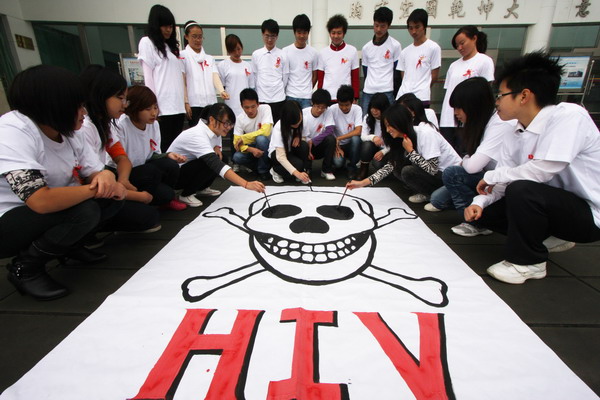 Students of Chongqing Creation Vocational College draw a poster for HIV/AIDS prevention on Wednesday, World AIDS Day. [Photo/for China Daily] |
BEIJING - Amid severe HIV/AIDS-related employment discrimination in China, legal and health experts have called for stronger protection of the rights of infected people.
| ||||


Liu was speaking on Tuesday at a meeting in Beijing held jointly by the International Labour Organization (ILO), the Joint United Nations Programme on HIV/AIDS (UNAIDS) and Marie Stopes International.
On the same day, 81 HIV carriers sent a letter to the Ministry of Health, calling for the amendment to the current health examination standard for civil service recruitment.
"Our society should deal with AIDS, but not the people living with it," the letter said.
"I have to close my hair salon due to discrimination," said one of the participants, Ma Guihong from Hebei province. "I hope that our employment rights could be protected by law in the near future."
According to a report on workplace discrimination toward people with HIV in China, released on Tuesday by the ILO Beijing Office and the Chinese Center for Disease Control and Prevention, progress has been made to reduce employment discrimination in the country.
For example, the 2006 Regulation on the Prevention and Treatment of HIV/AIDS and the 2007 Employment Promotion Law both guarantee working rights for HIV-positive people.
However, securing the right to work for people with HIV in China remains a challenge. The report noted that HIV-positive people are prohibited from working in the civil service and in hotels, cafes, bars, and beauty and hairdressing salons.
According to a survey conducted in 2007 by Liu Yang, a professor at the China University of Political Science and Law, only 47.7 percent of people among 1,000 respondents agreed that people with HIV should have equal working rights.
In a 2009 report released by the UN, more than 40 percent of people with HIV in China had faced discrimination, and nearly one in six had been refused employment because of their HIV status.
Examples of discrimination against people with HIV in workplaces across the country include mandatory testing of workers, denial of job opportunities, forced resignations and restricted access to health insurance.
On Monday, the plaintiff in China's first case of alleged HIV-related employment discrimination, surnamed Wu, lodged an appeal against a district court ruling that found a local education bureau in Anhui province had not unlawfully discriminated against him when deciding not to employ him after learning of his HIV-positive status.
"Nobody can live without work and being denied employment rights is even worse than suffering from HIV," Wu said.
"People with HIV should have the same rights to employment as people who do not have HIV," said Mark Stirling, country coordinator of UNAIDS.
He also emphasized the importance of legal support from the government, the strong supervision and implementation of relevant regulations and the understanding and knowledge of the public.
"More work needs to be done to improve laws and regulations on health discrimination," said Liu of the National Center for AIDS/STD Control and Prevention. "However, we should admit that it might be a long process."
?
 主站蜘蛛池模板:
无码专区 人妻系列 在线|
少妇高潮喷潮久久久影院|
久久综合给合久久狠狠狠
|
国产一本一道久久香蕉|
色婷婷亚洲精品综合影院|
成年女人毛片免费观看中文|
永久黄网站色视频免费观看|
国产极品粉嫩福利姬萌白酱|
精品国产伦理国产无遮挡|
亚洲精品香蕉一区二区|
成年女人碰碰碰视频播放|
无码欧美毛片一区二区三|
一面膜上边一面膜下边视频|
亚洲日本乱码熟妇色精品|
亚洲一区二区中文字幕|
91在线国内在线播放老师|
成全影视大全在线看|
亚洲爆乳成av人在线视菜奈实
|
夹得好湿真拔不出来了动态图|
日本精品aⅴ一区二区三区|
亚洲高清WWW色好看美女|
国产精品亚洲一区二区在|
噜噜噜噜私人影院|
午夜一区欧美二区高清三区|
亚洲色中色|
国产福利精品一区二区
|
国产女人18毛片水真多1|
日韩一区二区三区在线观院|
国产精品久久久久久福利|
国产伦码精品一区二区|
亚洲男人天堂2021|
亚洲国产欧美在线观看片|
久久国产成人高清精品亚洲|
少妇高潮水多太爽了动态图|
少妇无码AV无码专区|
人人妻人人揉人人模人人模|
男女xx00xx的视频免费观看|
国产日韩一区二区在线看|
最新亚洲国产手机在线|
五月天福利视频|
日韩精品专区在线影观看|
主站蜘蛛池模板:
无码专区 人妻系列 在线|
少妇高潮喷潮久久久影院|
久久综合给合久久狠狠狠
|
国产一本一道久久香蕉|
色婷婷亚洲精品综合影院|
成年女人毛片免费观看中文|
永久黄网站色视频免费观看|
国产极品粉嫩福利姬萌白酱|
精品国产伦理国产无遮挡|
亚洲精品香蕉一区二区|
成年女人碰碰碰视频播放|
无码欧美毛片一区二区三|
一面膜上边一面膜下边视频|
亚洲日本乱码熟妇色精品|
亚洲一区二区中文字幕|
91在线国内在线播放老师|
成全影视大全在线看|
亚洲爆乳成av人在线视菜奈实
|
夹得好湿真拔不出来了动态图|
日本精品aⅴ一区二区三区|
亚洲高清WWW色好看美女|
国产精品亚洲一区二区在|
噜噜噜噜私人影院|
午夜一区欧美二区高清三区|
亚洲色中色|
国产福利精品一区二区
|
国产女人18毛片水真多1|
日韩一区二区三区在线观院|
国产精品久久久久久福利|
国产伦码精品一区二区|
亚洲男人天堂2021|
亚洲国产欧美在线观看片|
久久国产成人高清精品亚洲|
少妇高潮水多太爽了动态图|
少妇无码AV无码专区|
人人妻人人揉人人模人人模|
男女xx00xx的视频免费观看|
国产日韩一区二区在线看|
最新亚洲国产手机在线|
五月天福利视频|
日韩精品专区在线影观看|