Economy
Foreign, Chinese firms' tax burdens unified
By Ding Qingfen (China Daily)
Updated: 2010-12-01 08:03
 |
Large Medium Small |
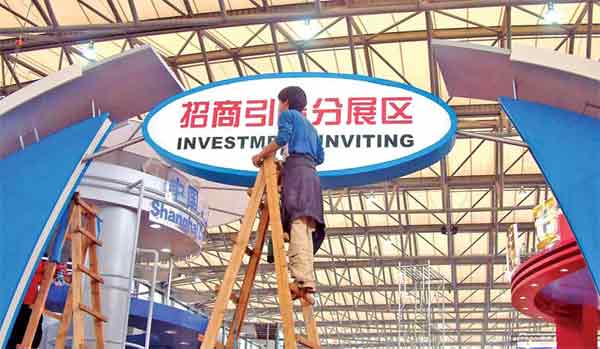
A man works on a foreign-investment exhibition booth at the China International Industry Fair in Shanghai. JING WEI / FOR CHINA DAILY
Starting today, two extra charges will be levied on internationals
?
BEIJING - China is levying two taxes on foreign companies, marking the beginning of a standard national tax treatment for foreign and Chinese enterprises.
China will charge foreign firms with operations here two additional taxes (a construction tax and education surcharge) in a measure taking effect Wednesday, according to a State Council announcement in late November.
The measure makes most of the taxes imposed on domestic and international companies equal. But it also means foreign enterprises' expenditures on local operations will rise by up to 10 percent.
Analysts said the effect on foreign investors is limited, and they must adapt to the new situations in China and regard it as a market rather than just a low-cost production center.
"I don't think this will exert any negative effect on the growth of foreign direct investment (FDI) in China, given China's robust economic growth and increasing domestic consumption, which will steadily help the market maintain its appeal to foreign businesses," said Wang Zhile, director of the research center on multinationals under the Ministry of Commerce.
Ding Yifan, economist of the State Council's Development Research Center, agreed with Wang and said that in addition to tax policies, many other factors - including consumption-market size, labor resources and economic growth - could determine a nation's attraction as an investment destination.
"The measure itself will help to create a fair tax environment for companies at home and abroad," he said.
Early on in its reform and opening to foreign enterprise, China launched super-preferential tax policies for international companies in a bid to propel its economic growth, and the internationals were exempt from some taxes. Over the past few years, the preferential policies have gradually been phased out.
According to the Ministry of Commerce, China's FDI grew from January to October by 16 percent from a year earlier, and October is the 15th consecutive month that the FDI registered positive growth since the start of the financial crisis.
The European Chamber of Commerce in China said that foreign companies are gradually being treated the same as their local counterparts, sending a strong signal that China's investment environment and policies are maturing, and that European companies have been well prepared for the change. "We have no reason to complain about the additional taxes," said a chamber staff who declined to be named.
"But we will be paying close attention to how China will continue opening to foreign businesses in the future," the person said.
The European Chamber of Commerce in China released a confidence survey in June, revealing that 70 percent of its member companies believe China will be among their top three investment destinations in five years.
The new tax measure comes after China's investment environment was widely criticized by foreign businesses in recent months. Their complaints partially led to China calling off super-preferential policies during the past few years.
In 2007, China unified the corporate income tax on domestic and foreign companies at 25 percent. Previously, foreign firms paid a 15 percent corporate income tax rate, 18 percentage points lower than their Chinese counterparts. The move was a turning point in the super-preferential policies that internationals enjoyed for about two decades.
In April, China launched a new FDI guideline in which the government encourages foreign companies to invest in the service and high-tech sectors instead of manufacturing, and to invest in China's central and western regions.
"It's understandable that they need time to adapt to the changes, but China also has reason to adjust investment policies to support the economic-development mode," Wang said.
Premier Wen Jiabao has repeatedly confirmed that China welcomes foreign enterprises and will treat them as it does domestic companies.
Wang Zhile said China moving toward patiently listening to mutinational companies (MNCs) and it should continue to take advice from them and try to create a more open environment for them, because foreign enterprises are a significant growth engine for China's economy.
Since August, China's FDI growth has remained in the single digit, in contrast to double-digit rates as high as 30 percent in the first half of this year, raising concern about whether high-level growth is sustainable.
Hao Hongmei, a researcher at the foreign investment department of the Chinese Academy of International Trade and Economic Cooperation, a division of the Ministry of Commerce, said China has outperformed others in absorbing FDI and there is no doubt that FDI will continue to grow in the coming years.
"But thanks to the global economic downturn and the nation's transforming economic-development mode, China's FDI growth will probably be moderate and might even decelerate somewhat," he said.
The Philippines-based SM, that nation's largest retailer, plans to invest more than $1 billion in China's second-tier cities in the next five years to establish super shopping malls. Bosch, Germany's leading industrial group, also said China will be given priority when it comes to investment overseas.
The Swedish construction equipment provider Volvo Group is planning to invest more than $100 million in emerging markets, with most of it going to China.
"The company's business in Asia has doubled this year, with China acting as the pillar contributor," said Olof Persson, president and chief executive of Volvo Construction Equipment.
China's economy has grown more than 9 percent in the past five quarters ending in September as the government stimulus paid off. The International Monetary Fund predicts China will expand by 9.6 percent in 2011, four times the pace of the United States and six times that of the euro area.
China outperformed Japan as the world's second-largest economy for the second straight quarter in the three months ending in September.
A report released by the United Nations Conference on Trade and Development in September shows that China continues to be the world's most attractive FDI destination.
Li Fangfang and Zhou Siyu contributed to this story.
China Daily
(China Daily 12/01/2010 page13)
 主站蜘蛛池模板:
黑森林福利视频导航|
国产精品中文字幕二区|
久久99国产视频|
少妇人妻偷人精品无码视频|
一区二区三区四区精品视频|
久久精品国产99久久6|
狠狠色狠狠色综合久久蜜芽|
和尚伦流澡到高潮h在线观看|
久久精品国产中文字幕|
好吊色妇女免费视频免费|
久久夜色精品亚洲国产av|
色综合AV综合无码综合网站|
夜夜添狠狠添高潮出水|
亚洲男女一区二区三区|
国产精品亚韩精品无码a在线|
草裙社区精品视频播放|
国产精品久久久久7777|
国产二级一片内射视频插放|
日韩一区二区三区亚洲一|
国产成人免费高清激情视频|
国内精品极品久久免费看|
天天影视色香欲综合久久|
亚洲区欧美区综合区自拍区|
yy111111在线尤物|
亚洲精品一区国产精品|
在线日韩日本国产亚洲|
偷青青国产精品青青在线观看|
波多野结衣久久一区二区|
色综合久久久无码中文字幕波多
|
一本精品99久久精品77|
91丝袜美腿高跟国产老师在线|
亚洲精品日韩在线丰满|
亚洲人成电影在线天堂色|
国产精品亚洲第一区在线|
大伊香蕉精品视频在线|
亚洲熟妇一区二区三个区|
丰满熟女人妻大乳|
亚洲综合在线一区二区三区|
成人无码潮喷在线观看|
国产精品自拍三级在线观看
|
亚洲国产精品自在拍在线播放蜜臀
|
主站蜘蛛池模板:
黑森林福利视频导航|
国产精品中文字幕二区|
久久99国产视频|
少妇人妻偷人精品无码视频|
一区二区三区四区精品视频|
久久精品国产99久久6|
狠狠色狠狠色综合久久蜜芽|
和尚伦流澡到高潮h在线观看|
久久精品国产中文字幕|
好吊色妇女免费视频免费|
久久夜色精品亚洲国产av|
色综合AV综合无码综合网站|
夜夜添狠狠添高潮出水|
亚洲男女一区二区三区|
国产精品亚韩精品无码a在线|
草裙社区精品视频播放|
国产精品久久久久7777|
国产二级一片内射视频插放|
日韩一区二区三区亚洲一|
国产成人免费高清激情视频|
国内精品极品久久免费看|
天天影视色香欲综合久久|
亚洲区欧美区综合区自拍区|
yy111111在线尤物|
亚洲精品一区国产精品|
在线日韩日本国产亚洲|
偷青青国产精品青青在线观看|
波多野结衣久久一区二区|
色综合久久久无码中文字幕波多
|
一本精品99久久精品77|
91丝袜美腿高跟国产老师在线|
亚洲精品日韩在线丰满|
亚洲人成电影在线天堂色|
国产精品亚洲第一区在线|
大伊香蕉精品视频在线|
亚洲熟妇一区二区三个区|
丰满熟女人妻大乳|
亚洲综合在线一区二区三区|
成人无码潮喷在线观看|
国产精品自拍三级在线观看
|
亚洲国产精品自在拍在线播放蜜臀
|