Economy
Steady grain output expected this year
By Lan Lan (China Daily)
Updated: 2010-08-26 08:08
 |
Large Medium Small |
HARBIN - China's grain output is expected to see a marginal decline, but could still amount to 500 million tons as some of the nation's measures to combat the recent weather vagaries have borne fruit, leading agricultural experts said on Wednesday.
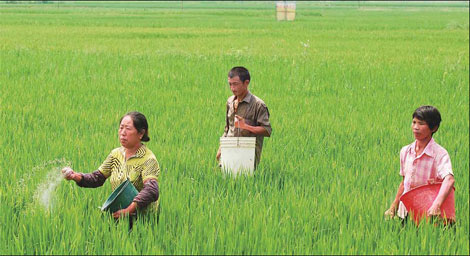 Farmers spread fertilizer at a rice field near Ruichang city, Jiangxi province. The province has strengthened pest control measures to ensure grain output. Hu Guolin / For China Daily? |
Despite the weather fluctuations, grain output is likely to reach last year's levels, Zhai Huqu, president of the Chinese Academy of Agriculture, told China Daily.
"It's hard to predict the overall grain output, but we are confident that it will exceed 500 million tons this year as the autumn crop growth has been satisfactory in most of the regions," Zhai said.


Last year, China produced 531 million tons of grain, the National Bureau of Statistics said. But summer grain output fell by 0.3 percent this year to 123.1 million tons.
The autumn numbers may show a slight fall, but the annual output would still be within expectations, said Xu.
"The decline is only natural, considering the natural disasters in the southern and northeastern regions. However, overall supplies will not be substantially affected," he said.
Grain harvested during autumn, mainly corn and rice, accounts for 70-80 percent of the total grain output.
According to Xu, rice output, particularly the indica variety used for making rice noodles and rice wine, may decline. "But it is early to predict the fate of japonica, the other rice variety, and corn as their harvest is due in September or October," he said.
A major factor that has helped the nation offset much of the weather-related impact has been the increase in the area under grains cultivation.
"The additional acreage for corn and rice will count towards the good autumn grain harvest," said Ding Shengjun, a researcher with the State Grain Administration.
But he said it would still be an arduous task before the output numbers are achieved.
The government has taken the lead and asked the relevant agencies to help farmers with enhanced field management techniques and supplies of foliage fertilizers, he said.
Though the overall summer grain output declined, the wheat harvest increased significantly. The nation is more or less self-sufficient in wheat and protected from global price fluctuations, said Zhai.
China imported 845,000 tons of wheat during the first half of the year, which is a relatively small proportion compared with the nation's annual wheat output of 110 million tons, according to the Ministry of Agriculture.
The imports were undertaken at a time when prices in the international markets were at relatively lower levels, said analysts.
China has, however, increased corn and rice imports in the past few months.
Corn is China's biggest crop, and 90 percent of the output is used as animal feed, while 5 percent is used for industrial purposes such as ethanol and alcohol production.
With only 5 percent being used for edible purposes, imports will not impact food security, he said.
There have been no wild swings in imports and exports and the overall situation is well under control, said Zhai.
Global grain prices will continue to increase in the long term as the world will face more climate change challenges. China needs to enhance its agricultural techniques to ensure future food security, said analysts.
"Grain prices are unlikely to decline, but we hope to keep the price rise under control," Zhai said.
China should tackle disasters such as droughts or floods more actively to help grain production, said Wang Ren, director of the Consultative Group on International Agricultural Research.
He also said that as climate change brings more uncertainties, it's urgent that China moves quickly and develop new crop varieties which are drought resistant.
 主站蜘蛛池模板:
91福利一区福利二区|
韩国无码AV片午夜福利|
狠狠色噜噜狠狠狠狠777米奇|
亚洲成色精品一二三区|
高清中文字幕一区二区|
欧美日韩精品一区二区三区不卡
|
а√天堂8在线官网|
久久久久久久久无码精品亚洲日韩
|
蜜臀视频在线观看一区二区|
亚洲线精品一区二区三区|
宝贝腿开大点我添添公口述视频|
日韩一区在线中文字幕|
激情综合网激情五月我去也|
老鸭窝|
亚洲一区精品视频在线|
无码人妻丰满熟妇区bbbbxxxx|
野花韩国高清bd电影|
亚洲一区在线中文字幕|
免费成人深夜福利一区|
99久久国产综合精品女同|
国产精品久久久久久久久久直播|
十四以下岁毛片带血a级|
亚洲成精品动漫久久精久|
国产玖玖视频|
被绑在坐桩机上抹春药|
亚洲人成网77777香蕉|
日韩伦理片|
久久精品亚洲国产综合色|
午夜福利国产区在线观看|
亚洲精品日韩久久精品|
人妻丝袜中文无码av影音先锋|
亚洲精品美女一区二区|
四虎国产精品永久入口|
亚洲人成网77777香蕉|
亚洲AV成人片在线观看|
国产一区二区三区黄色大片|
一区二区不卡国产精品|
亚洲AV无码专区亚洲AV桃
|
好姑娘6电影在线观看|
尹人香蕉久久99天天拍|
国产成人国产在线观看|
主站蜘蛛池模板:
91福利一区福利二区|
韩国无码AV片午夜福利|
狠狠色噜噜狠狠狠狠777米奇|
亚洲成色精品一二三区|
高清中文字幕一区二区|
欧美日韩精品一区二区三区不卡
|
а√天堂8在线官网|
久久久久久久久无码精品亚洲日韩
|
蜜臀视频在线观看一区二区|
亚洲线精品一区二区三区|
宝贝腿开大点我添添公口述视频|
日韩一区在线中文字幕|
激情综合网激情五月我去也|
老鸭窝|
亚洲一区精品视频在线|
无码人妻丰满熟妇区bbbbxxxx|
野花韩国高清bd电影|
亚洲一区在线中文字幕|
免费成人深夜福利一区|
99久久国产综合精品女同|
国产精品久久久久久久久久直播|
十四以下岁毛片带血a级|
亚洲成精品动漫久久精久|
国产玖玖视频|
被绑在坐桩机上抹春药|
亚洲人成网77777香蕉|
日韩伦理片|
久久精品亚洲国产综合色|
午夜福利国产区在线观看|
亚洲精品日韩久久精品|
人妻丝袜中文无码av影音先锋|
亚洲精品美女一区二区|
四虎国产精品永久入口|
亚洲人成网77777香蕉|
亚洲AV成人片在线观看|
国产一区二区三区黄色大片|
一区二区不卡国产精品|
亚洲AV无码专区亚洲AV桃
|
好姑娘6电影在线观看|
尹人香蕉久久99天天拍|
国产成人国产在线观看|