Economy
Domestic iron ore, steel trends hit markets
By Zhang Qi (China Daily)
Updated: 2010-08-04 06:55
 |
Large Medium Small |
Beijing - Rising domestic iron ore production and slowing steel demand have hit some foreign miners and affected the global market, industry leaders said on Tuesday.
China's iron ore imports dropped for the third straight month to 47.2 million tons in June, while spot prices have dropped to about $122 per ton after peaking at $185 per ton in April.


"Rising domestic ore production is the main factor that drove down imports, largely impacting supply and demand on the global market," CISA vice-chairman Luo Bingsheng said.
The figures form part of the bad news for international mining companies in Australia and Brazil that provide more than half of the ores to China.
Iron ore imports from Australia, Brazil and India accounted for 62.3 percent of the country's total ore consumption last year.
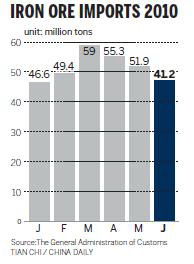
Brazilian company Vale already predicted in June that the share of imported ores in China would drop this year.
About 40 percent of Chinese steel mills have to make cutbacks or put plants on maintenance, blaming increasing costs of imported ores and declining steel prices. Oversupply in the industry will continue to lower production, further driving down ore imports in the third quarter, Luo said.
The CISA will also reduce the number of licensed iron ore importers to regulate the imported ore market.
"We will announce new rules for the industry soon, which include higher standards on the environment, energy consumption and capital requirement," Luo said.
The CISA said earlier it wanted to reduce the number of ore importers, which were blamed for "disturbing" the market and "driving up" prices. Currently, 112 companies are authorized to import iron ores.
China has long wanted to reduce dependence on ore imports and boost domestic supplies.
"The figures indicated that expanding domestic ore production effectively helped to reduce dependence on costly ore imports," said Deng Qilin, chairman of Wuhan Iron & Steel Group, the country's third-largest steelmaker.
China has domestic ore reserves of 62.4 billion tons, but most mines have low iron content, adding to the cost of mining. Rising imported ore prices stimulated Chinese miners to source from the local markets.
Domestic steel mills also started cutting product prices in June, signaling a market adjustment due to weak downstream demand.
Most of the big steel mills like Baosteel and Wuhan Iron & Steel cut August prices by 5 percent to about 300 yuan per ton from July.
Average steel prices in China peaked in April after starting to rise in August last year, but steel prices began to fall after the government released its macroeconomic policies to control property prices.
Steel production in China reached a four-month low in June due to weak demand from real estate companies and the automobile industry. The nation produced 53.77 million tons of crude steel in June, 4 percent lower than the 56.1 million tons in May.
"Higher costs and falling product prices will see many steel mills suffering losses in July and force them to cut production," said Zhang Xiaogang, chairman of Anshan Iron & Steel Group, China's fourth-largest steel company.
 主站蜘蛛池模板:
国产精品久久久久影院嫩草|
广东少妇大战黑人34厘米视频|
亚洲人成小说网站色在线|
久久久噜噜噜久久中文福利|
成人av天堂男人资源站|
亚洲成a人在线播放www|
亚洲第一视频区|
国产一区二区不卡在线|
国产区精品系列在线观看|
精品亚洲国产成人性色av|
精品无码老熟妇magnet|
国产精品亚洲精品日韩已满十八小|
成在线人视频免费视频|
av网站可以直接看的|
日本乱一区二区三区在线|
国产精品久久久福利|
免费国产高清在线精品一区|
天堂mv在线mv免费mv香蕉|
欧美日韩视频综合一区无弹窗|
日本欧美一区二区三区在线播放|
久久亚洲精品国产亚洲老地址|
亚洲综合久久一区二区三区|
亚洲av成人午夜电影在线观看|
精品国产中文字幕在线看|
五月一区二区久久综合天堂|
久久亚洲av综合悠悠色|
污网站在线观看视频|
久久精品国产99久久6|
67194熟妇在线观看线路|
亚洲男人av天堂久久资源|
亚洲精品香蕉一区二区|
亚洲午夜无码久久久久小说|
精品激情视频一区二区三区|
亚洲午夜伦费影视在线观看|
秋霞在线观看秋|
高潮精品熟妇一区二区三区|
亚洲黄色第一页在线观看|
日韩久久久久久中文人妻|
久久婷婷五月综合97色直播|
久久青青草原精品国产app|
国产精品一二二区视在线|
主站蜘蛛池模板:
国产精品久久久久影院嫩草|
广东少妇大战黑人34厘米视频|
亚洲人成小说网站色在线|
久久久噜噜噜久久中文福利|
成人av天堂男人资源站|
亚洲成a人在线播放www|
亚洲第一视频区|
国产一区二区不卡在线|
国产区精品系列在线观看|
精品亚洲国产成人性色av|
精品无码老熟妇magnet|
国产精品亚洲精品日韩已满十八小|
成在线人视频免费视频|
av网站可以直接看的|
日本乱一区二区三区在线|
国产精品久久久福利|
免费国产高清在线精品一区|
天堂mv在线mv免费mv香蕉|
欧美日韩视频综合一区无弹窗|
日本欧美一区二区三区在线播放|
久久亚洲精品国产亚洲老地址|
亚洲综合久久一区二区三区|
亚洲av成人午夜电影在线观看|
精品国产中文字幕在线看|
五月一区二区久久综合天堂|
久久亚洲av综合悠悠色|
污网站在线观看视频|
久久精品国产99久久6|
67194熟妇在线观看线路|
亚洲男人av天堂久久资源|
亚洲精品香蕉一区二区|
亚洲午夜无码久久久久小说|
精品激情视频一区二区三区|
亚洲午夜伦费影视在线观看|
秋霞在线观看秋|
高潮精品熟妇一区二区三区|
亚洲黄色第一页在线观看|
日韩久久久久久中文人妻|
久久婷婷五月综合97色直播|
久久青青草原精品国产app|
国产精品一二二区视在线|