Full text: China's political Party system
(Xinhua)
Updated: 2007-11-15 11:48
VI. Multi-party Cooperation System and the Chinese People's Political Consultative Conference
The Chinese People's Political Consultative Conference (CPPCC) is a patriotic united front organization of the Chinese people, an important institution for multi-party cooperation and political consultation under the leadership of the CPC, and a major form of socialist democracy in China.
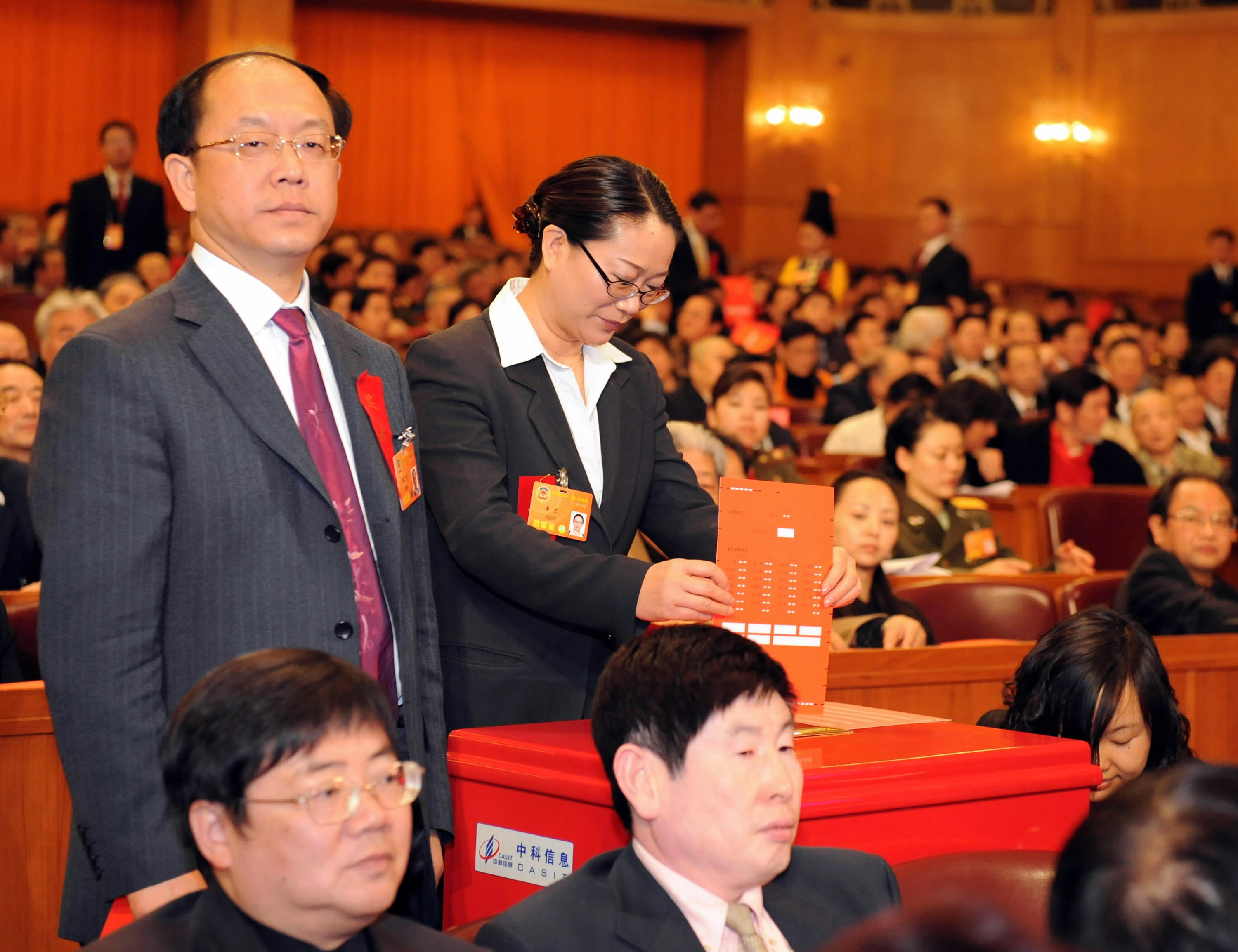
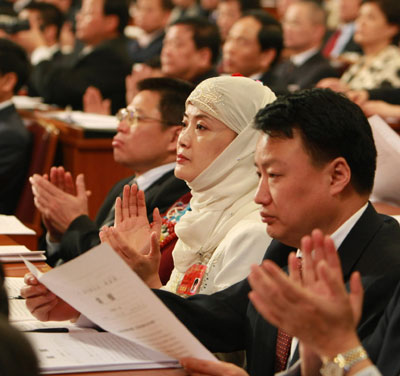
Members of democratic parties are important constituent parts of the CPPCC. In the composition of the CPPCC, they form a relatively large percentage of members, standing committee members and leaders. They also make up a considerable proportion of the CPPCC's special committee members and leaders, including in the CPPCC working organs. When the First Session of the 10th National Committee of the CPPCC was held in March 2003, for instance, 1,343 members of democratic parties and personages without party affiliation served as members of the CPPCC National Committee, accounting for 60 percent of the total; of them 195 served as members of the standing committee, accounting for 65.2 percent of the total, and 13 were elected vice-chairpersons of the CPPCC National Committee, accounting for 54.2 percent of all vice-chairpersons. Altogether, 336,000 democratic party members and personages without party affiliation served as members in CPPCC provincial, city and county committees. In the name of their respective parties, members of democratic parties express their ideas at CPPCC meetings, and their rights for conducting inspections, putting forward motions, reporting on and reflecting public opinions, and participating in investigations and inspections are fully respected and guaranteed. The major roles of CPPCC members from democratic parties are as follows:
-- Participating actively in political consultation.Representatives of democratic parties make full use of various consultative forms provided by the CPPCC to conduct discussions and air their views and suggestions on major state and local policies, as well as significant issues relating to politics, economy, culture and social life, on CPPCC work participated in and shared by all democratic parties, and on major CPPCC internal affairs and patriotic united front work. Every New Year's Day and during the annual plenary session of the CPPCC National Committee, major CPC Central Committee leaders would discuss state affairs with democratic parties. All CPPCC members, including those from democratic parties, are entitled to attend major conferences of the National People's Congress as nonvoting delegates to discuss major state issues and air their views and suggestions on important issues relating to major state policies and people's livelihood. The continuously enriched content of the meetings of the CPPCC standing committees, of the chairpersons, of secretaries-general and of special committees has created favorable conditions for democratic parties to participate more widely in the work of political consultation. In recent years, democratic parties have taken an active part in special consultative conferences focusing on major topics of economic and social development held by the CPPCC and government departments concerned. For instance, in 2006 they participated in special conferences focusing on "Further Promoting the Strategy for the Development of the Western Region" and "Implementing the State's Mid- and Long-term Scientific and Technological Development Plan," during which they pooled their wisdom and voiced their expert opinions extensively, giving substantial support to the government's work in the related areas.
-- Exercising democratic supervision.Democratic parties exercise their supervisory role on the implementation of the Constitution, laws and regulations, the implementation of major guiding principles and policies, and the work of state organs and their functionaries through CPPCC inspections, speeches at CPPCC meetings or in other ways. CPPCC members from democratic parties also exercise democratic supervision by participating in investigations and inspections organized by CPC committees and relevant government departments, or as special supervisors of judicial organs and government departments. From 1997 to 2006, central committee representatives of the democratic parties spoke (including handing in written speeches) 370 times at meetings of the CPPCC National Committee, addressing a series of significant issues relating to reform, development and social stability, such as accelerating the optimization and upgrading of industrial structures, promoting the development of cyclic economy, paying due attention to the management of disasters and the establishment of an emergency response system, safeguarding and guaranteeing the legitimate rights of migrant workers, improving the social security system, strengthening cultural construction in rural areas, securing inputs into education, especially basic education, proactively promoting education run by private sectors, accelerating the construction of the public health system, promoting reunification of the motherland and opposing secession, and developing cross-Straits economic and trade exchanges. Commenting freely on state affairs at the political forums of CPPCC conferences, their speeches represent the pooling of the wisdom of their parties, and many of their views and suggestions have been adopted.
-- Participating in and discussing state affairs in a deep-going way.CPPCC members from democratic parties have conducted investigations and research into key issues in Chinese political, economic, cultural and social life, and on problems of common concern to the people. Reflecting public opinion and sentiment, they have made a large number of comments and suggestions to the CPC and state organs by way of investigation reports, motions and proposals, or in other ways. From 1990 to 2006, more than 2,400 proposals were raised by democratic parties and their CPPCC members at national conferences of the CPPCC, dealing with such issues as the early legislation of an "anti-secession law," taxation reform in the rural areas, working hard to create a sound environment for the development of the non-public-owned economy, establishing a supervision mechanism for social security funds and setting up a social security system in rural China. Many of these proposals have either been adopted and implemented, or given rise to the enactment of relevant laws, or provided important reference for policy-making.