CHINA> Focus

|
CHINA> Focus
|
|
A proper house for everyone is the goal
By Wang Ying (China Daily)
Updated: 2008-11-14 07:30 Ye Jinxiang couldn't hide her joy while talking about a phone call she received from Luwan District Housing Security Center on Oct 28. The 52-year-old retiree was told that her application for government low-rent housing aid had been approved, and she would get a monthly subsidy of at least 620 yuan ($90) from November.
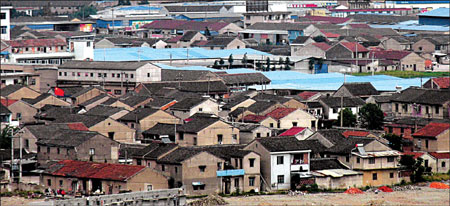
That call meant a world to her, for she and her 19-year-old son can now move out of their dank 9.9-sq-m, second-floor tenement in Shanghai's Ruijin Road into a bigger flat. The room is so small that she often has to spend the night at her mother's house. She returns the next morning to ensure that her son, who attends a university in Shanghai, gets whatever he needs. That's important for her because she wants him to concentrate on his studies. All that will change now that she has been granted the government subsidy. She plans to lease out the room and move to a decent apartment, which she says would be a gift to her son. Ye is one of the 7.47 million urban families that will benefit from the upgraded national welfare housing program, which will get 900 billion from the central government and local governments across the country between 2009 and 2011. The welfare housing plan, listed on top of the country's 4-trillion-yuan stimulus package, will help about 13 million low-income families to move from their average 10-sq-m rooms to bigger and better houses. That will be in addition to the government help that has enabled people like Ye to move into bigger homes. About 4 million housing units will be built and rented out to low-income families in urban areas, Qi Ji, deputy minister of housing and urban-rural development, said on Wednesday. The government will spend 300 billion yuan a year on housing projects, attracting another 600 billion yuan of investment from the cement, iron and steel, construction, home decoration and electrical appliances sectors, and creating 2-3 million jobs. It will help about 2.2 million families of forest and State farm workers, and miners to move from shanties to better houses.
The expanded national welfare-housing program will help stabilize the housing and real estate sectors, which grew by only 1.6 percent last month, the lowest in two years, said Yin Zhongli, a research scholar with the Chinese Academy of Social Sciences. Above all, the program will ensure that a housing safety net is established for the poor both in urban and rural areas, said Li Jingguo, director of research center for urban development and environment under the Chinese Academy of Social Sciences. The real estate sector has contributed largely to urban coffers. That has prompted local governments to neglect the financing of low-rent and smaller flats for years, Li told Sina.com in an online interview on Wednesday. So it's time the governments corrected their policy and stopped thinking about immediate profits. Qi said the housing fund from the central government would mainly help people like Ye, especially those in fund-starved central and western China. Taiyuan, capital of Shanxi province, for instance, had 42,547 families living below the poverty line till June last year. And since the city got just 7.29 million yuan as housing aid in the past four years, only families with a per capita space of 4 sq m or less could get housing aid. But the new program is set to change that. Even Shanghai had a strict threshold, when the low-rent housing program was launched in 2001. Only families with less than 5-sq-m space per member and an average income less than 280 yuan were eligible for assistance. The low-rent level has been lowered several times since then. It is 7 sq m and 800 yuan now, Tang Daping, deputy bureau chief of Housing and Land Administration Bureau of Shanghai's Luwan district, said. By the end of October, 40,124 families were eligible for low-rent housing projects in Shanghai, with 36,971 of them getting monthly subsidies and 2,903 getting low-rent apartments. And since thousands of low-income people had applied for welfare housing, a public draw of lots was arranged on Oct 19 to ensure houses are distributed fairly. |
主站蜘蛛池模板: 亚洲综合国产精品第一页| 无码专区 人妻系列 在线| 8AV国产精品爽爽ⅤA在线观看| 亚洲av无码精品色午夜蛋壳| 在线播放国产不卡免费视频| 成人亚洲一级午夜激情网| 久久碰国产一区二区三区| 久久精品国产亚洲av热一区| 麻豆国产成人AV在线播放| 无码国产精品一区二区免费i6| 免费十八禁一区二区三区| 免费大片黄国产在线观看| 亚洲乱码国产乱码精品精| 妇女自拍偷自拍亚洲精品| 久久精品av国产一区二区| 成人欧美一区二区三区在线观看| 欧美黑人性暴力猛交高清 | 影音先锋2020色资源网| 中文亚洲爆乳av无码专区| 好爽毛片一区二区三区四| 国产在线不卡免费播放| 在线观看中文字幕码国产| 亚洲自拍另类| 国产蜜臀久久av一区二区| 伊人欧美在线| 1区2区3区4区产品不卡码网站 | 中国丰满熟妇av| 久久精品国产99国产精品严洲 | 欧美怡红院视频一区二区三区| 国产成人亚洲欧美二区综合| 7777久久亚洲中文字幕蜜桃 | 国产不卡一区二区在线视频| 久久99精品久久久久久青青| 亚洲国产日韩a在线亚洲| 亚洲无码a∨在线视频| 无码综合天天久久综合网| 欧美在线人视频在线观看| 欧美激情成人网| 国产一区二区日韩在线| 操国产美女| 午夜免费无码福利视频麻豆|